Baked Chicken Recipes: 10 Juicy Ideas for Busy Weeknights
Table of Contents
For a busy weeknight, these baked chicken recipes start with evenly seasoned chicken breasts for speed, a one-pan potato bake for minimal cleanup, or a casserole for a complete meal. A brine is a saltwater soak used before cooking to season chicken and help it retain moisture.
Some nights call for dinner in a hurry; others leave room for a dish that cooks while you handle the rest of the evening. These baked chicken recipes include quick breast dinners, sauced chicken, potato pans and casseroles, with choices for different cuts and appetites. Your schedule matters as much as the flavor. Pick a cut and cooking method that match the time and cleanup you have. Choose the style that fits tonight’s schedule, then keep a meat thermometer nearby for a dependable doneness check.
How to Bake Juicy Chicken Breasts
For juicy baked chicken breast, even out the thickness, season the surface and use a thermometer instead of relying on the clock alone. Chicken must reach 165°F internal temperature before serving.
Lean meat can dry out when thin ends finish long before the center. A little prep helps each piece cook more evenly and carry flavor through its surface.
Brining and Even Thickness
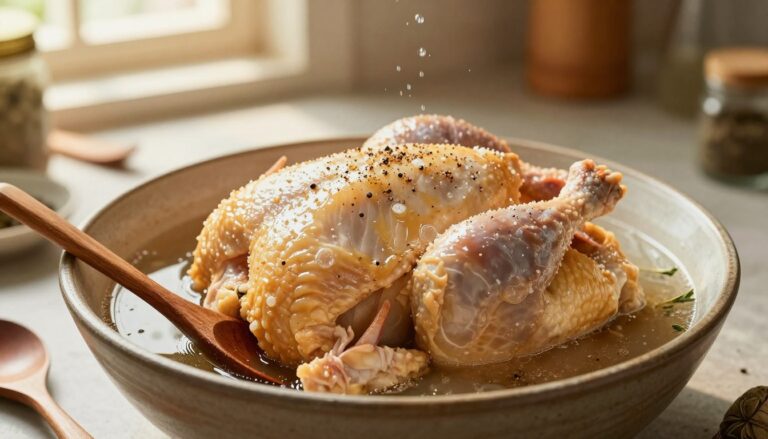
A chicken brine can help a breast stay moist, but skip the soak if the package says the chicken is enhanced or contains a salt solution. Pat chicken dry with paper towels before seasoning.
One brine method mixes 2 cups lukewarm water, ¼ cup salt and 2 cups cold water. Soak chicken for 15 minutes, or refrigerate it for up to 6 hours. A separate method for 2 pounds of chicken uses 8 cups water, 2 tablespoons kosher salt and optional 1 tablespoon sugar. Soak for 30 minutes, never longer than 45 minutes.
These are separate recipes, so keep each salt amount and soak time with its own method. After brining, remove chicken from the liquid and dry it well. Pound thicker areas until the breast has an even thickness, or cut a large breast horizontally into thinner pieces.
Seasoning That Browns Well
Rub a thin coat of oil over each breast so the seasoning sticks and the surface browns. For four breasts, mix 1½ tablespoons brown sugar, 1 teaspoon paprika, 1 teaspoon dried oregano or thyme, ¼ teaspoon garlic powder, and ½ teaspoon each salt and pepper.
For a different flavor, coat 2 pounds of chicken with 1 tablespoon oil. Add 2 teaspoons smoked paprika, 1½ teaspoons garlic powder, 1 teaspoon onion powder and ½ teaspoon black pepper. These blends offer distinct flavor paths, so choose one rather than combining them.
High Heat, Temperature and Resting
One recipe for 150-180 gram breasts pounds them to 1.5 centimeters, then bakes at 425°F for 18-20 minutes. It rests for 3-5 minutes. Another method bakes breasts at 450°F for 15-18 minutes, then rests them for 5-10 minutes.
Breast size and thickness change the cooking time, so start checking before the recipe’s low end. Insert a meat thermometer into the thickest part without touching the pan. A glass baking dish may have a maximum recommended temperature of 425°F, so check its rating before using a 450°F method.
Resting allows the temperature to settle and the juices to remain in the meat as you slice. Confirm that the thickest part has reached 165°F before serving, including after any carryover cooking during the rest.
10 Baked Chicken Recipes for Weeknight Dinners
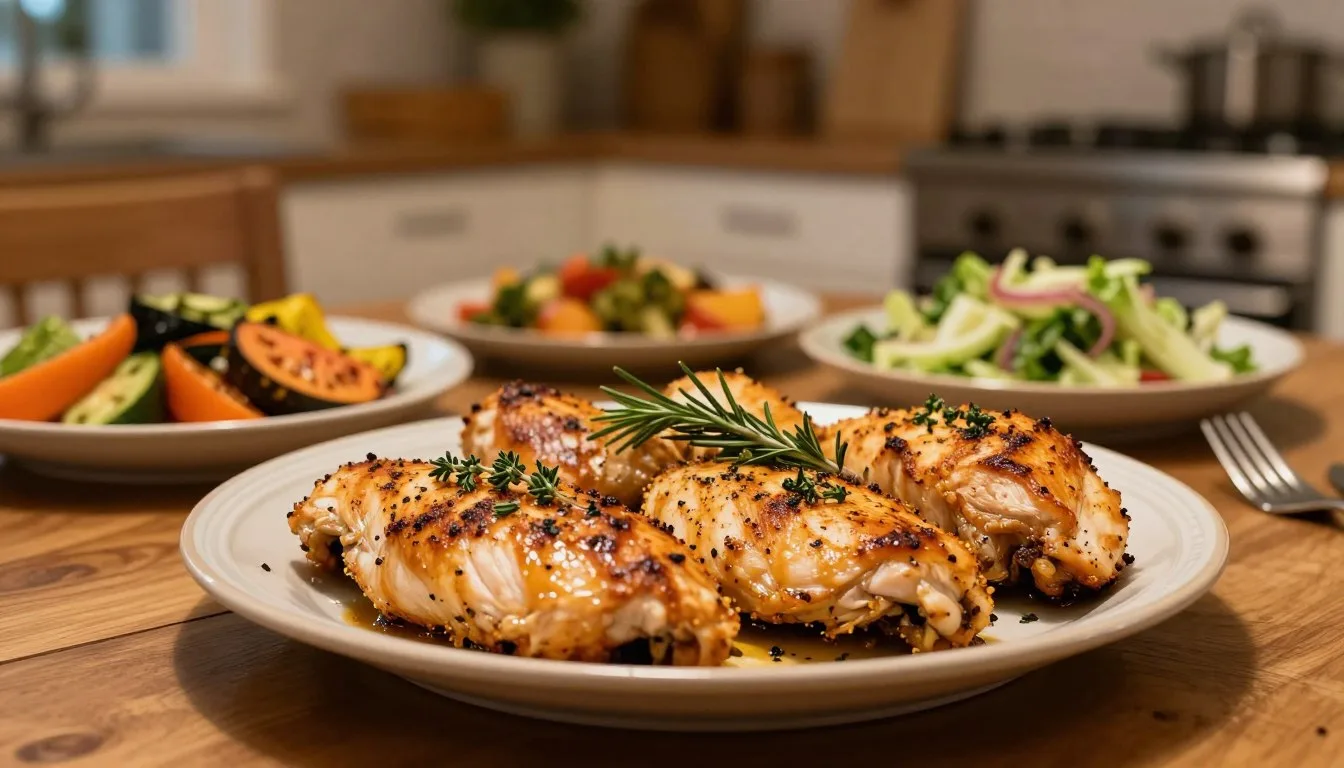
The quickest way to settle on dinner is to choose a flavor first, then match it to a breast, a sauced bake or a casserole. Simple baked chicken recipes for dinner can start with a few pantry staples, while a casserole gives you a fuller meal in one dish.
Oil, chicken and a compact seasoning blend make baked chicken recipes for dinner with few ingredients. Here are ten options, from fast breast dinners to oven-baked casseroles.
- Paprika-oregano chicken breast: a fast breast dinner with familiar pantry spices.
- Garlic-herb chicken breast: a simple baked chicken option with a savory, leafy finish.
- Lemon-pepper chicken breast: a quick, bright choice for a plain weeknight plate.
- Honey-lime glazed chicken breast: a fast breast dinner with a sweet-tangy coating.
- Italian baked chicken: a sauced option with Italian herbs and tomato flavor.
- Pesto chicken: a sauced breast bake with a rich basil finish.
- Baked chicken Parmesan: a crisp-topped, sauced dinner that works as a baked main dish.
- Chicken Marsala: a sauced bake with a deep, savory flavor.
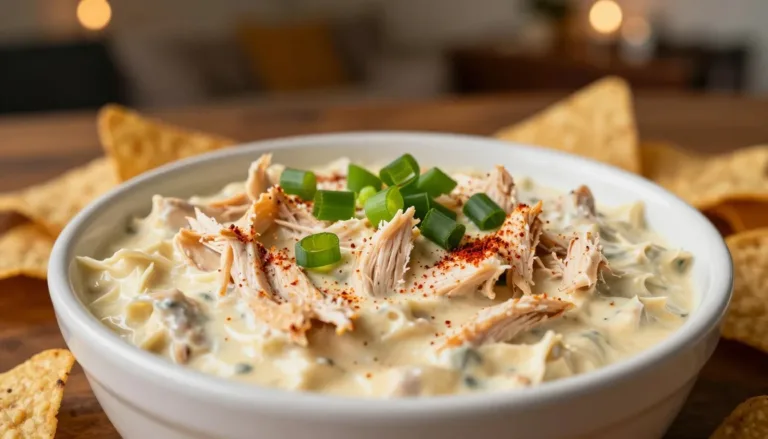
- Baked Buffalo chicken casserole: a spicy, complete casserole for sharing.
- Mediterranean chicken bake: a one-pan dinner with bold, savory flavors.
Paprika-oregano and garlic-herb breasts are good pantry-friendly starting points. Choose one for a quick dinner, or use a casserole when you want the main dish and other ingredients to bake together.
For the least hands-on cleanup, pick a single-pan idea rather than a recipe that needs separate stovetop components.
How Long Should Different Chicken Cuts Bake?
For a general starting point, boneless breasts often bake for 25-35 minutes at 375°F, while bone-in cuts and whole birds need their own ranges. Use time to plan, then check the thickest part with a meat thermometer.
Oven temperature and piece size affect how quickly chicken cooks. The ranges below are guides, not a substitute for a safe internal temperature.
Breast Size and Thickness
At 450°F, a 4-6 ounce breast may need 12-15 minutes, while an 8-10 ounce breast may need 20-22 minutes. Larger or thicker pieces take longer because heat needs more time to reach the center.
| Cut or size | Oven temperature | Approximate time | What changes the timing |
|---|---|---|---|
| 4-6 oz breast | 450°F | 12-15 minutes | Thickness and shape |
| 6-8 oz breast | 450°F | 15-20 minutes | Thickness and starting chill |
| 8-10 oz breast | 450°F | 20-22 minutes | Size and thickness |
| Boneless breast, general guide | 375°F | 25-35 minutes | Breast size and oven heat |
These 450°F ranges differ from the general 375°F guideline because the hotter oven uses a shorter bake. A thick breast may still need more time than a thinner piece of the same weight.
Bone-In Cuts and Whole Birds
At 400°F, chicken thighs generally bake for 30-40 minutes, wings for 40-50 minutes and a whole chicken for 75-90 minutes. Bone-in pieces often take longer than boneless cuts because the bone affects how heat moves through the meat.
A crowded pan can also change the schedule. When pieces sit close together, heat and browning may be less even than when they have room around them.
Begin checking early when pieces are smaller or thinner, since a few extra minutes can dry out lean breast meat.
Sauces and Seasonings for More Flavor
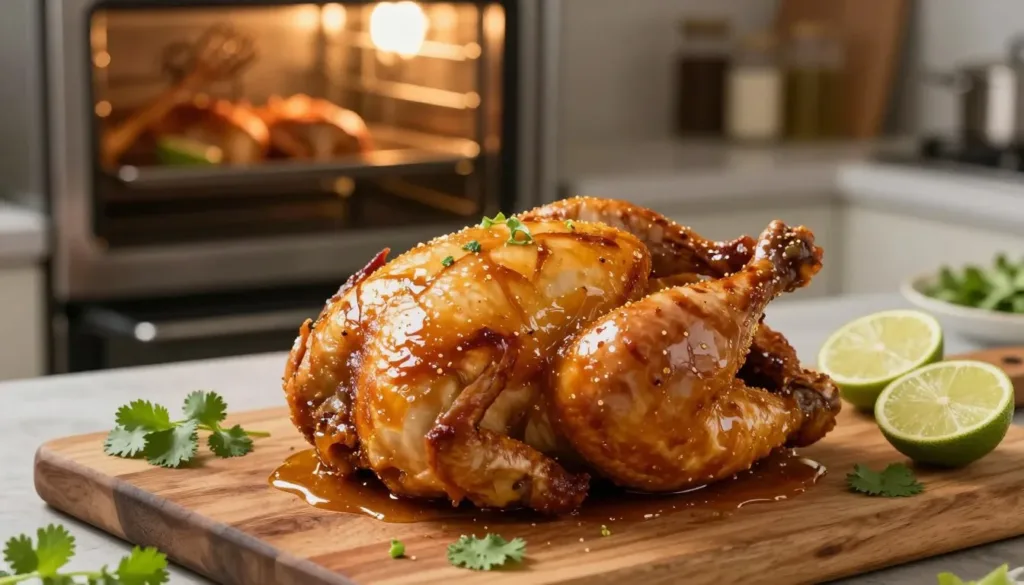
A sauce or spice blend can change the flavor of a familiar chicken dinner without changing the basic oven method. Choose a finish based on whether you want a light glaze, a dry rub or sauce on the side.
Sugary glazes can brown fast near the end of baking. Keep an eye on the chicken as the surface darkens, especially after adding honey or barbecue sauce.
Honey-Lime and Sweet-Tangy Glazes
Honey-lime gives chicken a sweet, tangy finish. Brush on a light layer near the end of baking, or serve the glaze beside the chicken for more control over each portion.
Honey mustard offers another sweet-tangy route, with a creamy edge that suits a simple breast dinner. A glaze can add flavor quickly, but a thick coating may brown before the center finishes cooking.
Garlic, Herb and Paprika Options
For a dry rub, combine garlic powder, paprika, black pepper and dried oregano or thyme. Add a little oil so the mix clings to the chicken. A small amount of salt can round out the flavors when the chicken has not been brined.
Salt-free seasoning blends are easier to control when chicken has already been brined. Try Italian seasoning, Cajun seasoning, za’atar, taco seasoning or Everything Bagel seasoning for a different direction.
Barbecue, Teriyaki and Other Finishes
Barbecue sauce brings a smoky, sweet finish, while teriyaki adds a savory-sweet coating. Honey mustard is a gentler choice for a familiar dinner. Each works as a brush-on sauce or a dip served alongside the cooked chicken.
Serve sauce on the side when you want to avoid a dark or sticky exterior. That also lets each person choose how much goes on their plate.
- Honey-lime: sweet and tangy, best watched near the end.
- Garlic-herb paprika: a savory dry rub with pantry spices.
- Barbecue: a smoky, sweet sauce served on or beside the chicken.
- Teriyaki or honey mustard: two easy paths to a glossy finish.
Keep a sweet glaze under close watch during its final minutes so it browns rather than scorches.
Can You Bake Chicken and Potatoes in One Pan?
Yes, chicken and potatoes can bake together in one pan, with the potato size and chicken cut determining the schedule. Arrange the pieces in a single layer for more even cooking and browning.
Bone-in thighs suit this meal because they bake alongside the potatoes without needing a separate pan. Choose the seasoning and oven temperature that fit the dinner you want.
Oregano-Thyme Chicken Thighs
This version pairs bone-in, skin-on thighs with baby potatoes and herbs. Use a pan wide enough to hold everything in one layer; crowding can slow cooking and make browning less even.
| Ingredient | Amount | Role |
|---|---|---|
| Bone-in, skin-on chicken thighs | 8 | Main protein |
| Baby potatoes | 1 lb | Hearty side |
| Red onion | 1 | Savory flavor |
| Garlic cloves | 2 | Sharp flavor |
| Olive oil | 2 tbsp | Coats the ingredients |
| Dried oregano | 2 tsp | Herb seasoning |
| Fresh thyme | 2 tsp | Herb seasoning |
| Paprika | ½ tsp | Color and mild spice |
Bake the chicken and vegetables at 425°F for 45 minutes. Cut larger potatoes into smaller pieces so they can cook alongside the thighs.
Lemon Chicken with Potatoes
For a lemon-forward version, use 8 thighs and drumsticks weighing about 2½ pounds, plus 1½ pounds baby potatoes. Toss them with ¼ cup olive oil and ¼ cup lemon juice, then bake uncovered at 400°F for 55-65 minutes.
Check that the potatoes are fork tender and the chicken is cooked through. For extra color, broil for 3-5 minutes, then let the pan rest for 5 minutes.
Check that the potatoes are fork tender as well as confirming the chicken is cooked through.
Which Chicken-and-Rice Casserole Fits Your Night?
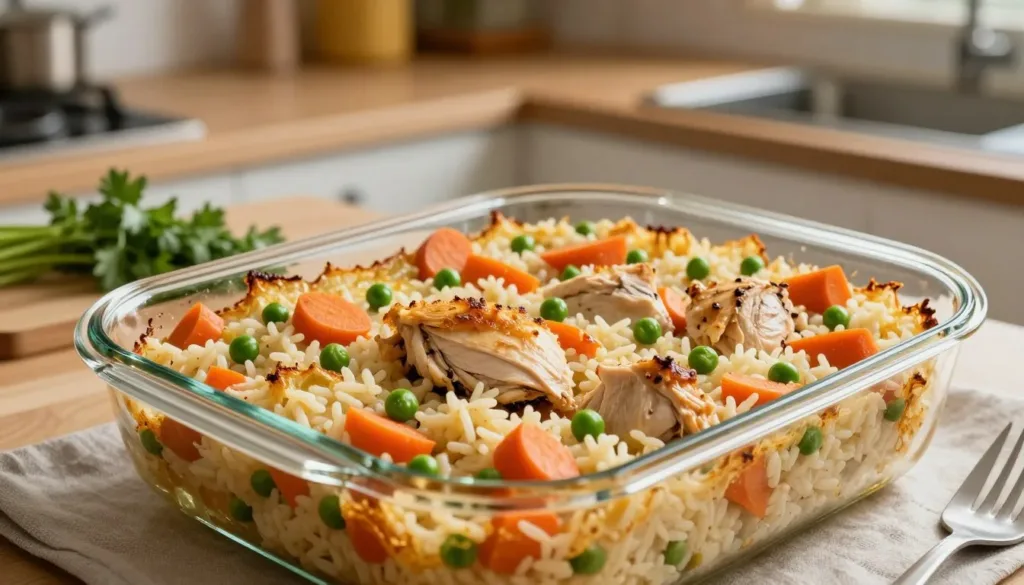
Choose the brown-rice casserole when you want the rice and raw thighs to cook together, or the cheesy version when cooked chicken is already on hand. Cooked chicken gives the shorter bake; raw chicken needs a longer, recipe-specific cook.
The brown-rice option needs a longer covered bake. The cheesy casserole uses cooked rice and chicken for a quicker oven finish.
Brown Rice, Carrots and Chicken Thighs
For the brown-rice bake, combine 6 boneless, skinless thighs weighing 4 ounces each, 1½ cups brown rice and 3 cups boiling-hot chicken stock. Add 2 pounds sliced carrots, then cover and bake at 375°F for 65 minutes.
Stir in a 12-ounce bag of frozen peas after baking, then rest the dish for 3-4 minutes. Larger thighs need more time: 6-ounce boneless thighs took 1 hour 30 minutes, while 7-ounce bone-in thighs took 1 hour 45 minutes.
Cheesy Rice with Cooked or Raw Chicken
The cheesy version uses a 9-by-13-inch dish, 3 cups cooked chicken, 3-3½ cups cooked rice and a 12-16-ounce bag of frozen vegetables. Bake it covered at 375°F for 20 minutes, then uncovered for 5 more minutes.
| Version | Chicken and rice base | Oven method | Key adjustment |
|---|---|---|---|
| Brown-rice bake | 6 raw thighs, 1½ cups brown rice | Covered at 375°F for 65 minutes | Stir in peas after baking |
| Cheesy casserole, cooked chicken | 3 cups cooked chicken, 3-3½ cups cooked rice | Covered 20 minutes, uncovered 5 minutes at 375°F | Use cooked rice and chicken |
| Cheesy casserole, raw chicken | Cubed raw chicken, 3-3½ cups cooked rice | Longer bake at 375°F | Bake for 40 minutes, not 20 |
For the cheesy casserole, cooked chicken keeps the bake shorter, while raw cubed chicken requires 40 minutes. That dish keeps up to 4 days refrigerated or 3 months frozen.
Add frozen peas after the brown-rice bake, not before its covered cooking time.
How Do You Roast a Whole Chicken for Dinner?
A whole chicken is a practical dinner centerpiece when you match its weight to an unstuffed roasting time or plan extra time for stuffing. Use a meat thermometer to check the thickest part and the center of any stuffing.
Thaw the bird fully before roasting so the timing fits its weight. Raw poultry should not be washed, since splashing water can spread germs around the kitchen.
Thaw and Prepare the Bird
A frozen 3-4 pound chicken can thaw in cold water in 2-3 hours. Change the water every 30 minutes. In a refrigerator, the same size bird takes 1-2 days or longer.
Keep raw poultry apart from ready-to-eat foods while you prepare it. Pat the skin dry with paper towels if you want a drier surface for roasting.
Roast by Weight and Oven Temperature
An unstuffed 3-4 pound chicken takes 1¼-1½ hours at 350°F. An unstuffed 5-7 pound roasting hen takes 2-2¼ hours at that same temperature.
A separate guide gives about 1 hour 15 minutes for a 4-pound unstuffed chicken at 325°F. Keep these estimates tied to their stated oven temperatures instead of treating them as one range.
Stuffing and Doneness Checks
Stuffing adds 15-30 minutes to the roast, and a stuffed raw bird must bake at 325°F or higher. Check the center of the stuffing after the bird’s stand time; it must reach 165°F.
Use this short checklist before the bird goes into the oven:
- Thaw the chicken completely.
- Do not wash raw poultry.
- Verify the stuffing temperature after its stand time.
For a stuffed bird, check the center of the stuffing after its stand time and serve only when it has reached 165°F.
What Should You Serve with Baked Chicken?
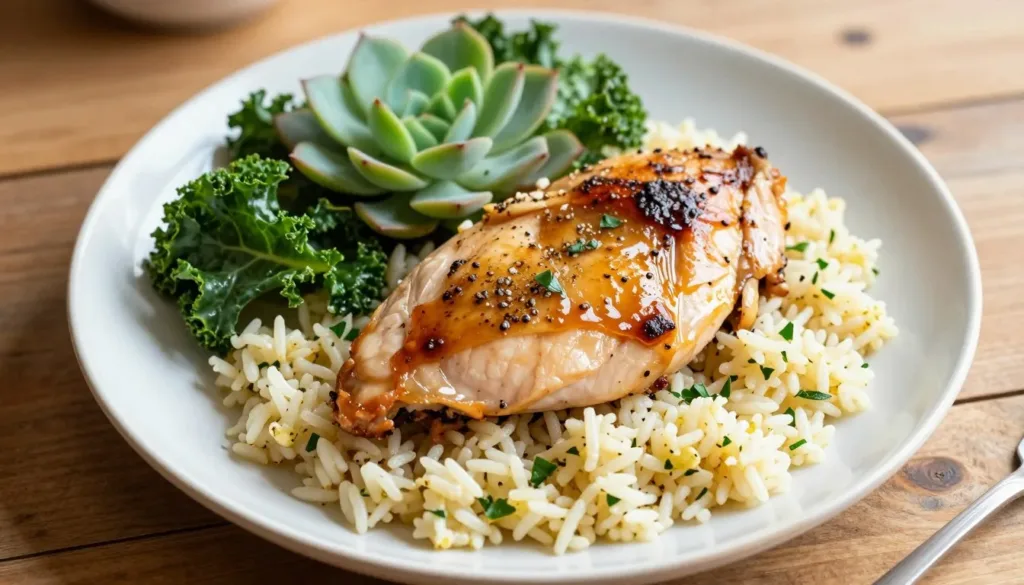
Pair chicken with a starch and a vegetable for a complete plate, or slice it into a grain bowl when you want a flexible lunch. Let the chicken guide the side instead of building a second complicated dish.
Rice or potatoes make a heartier plate, while vegetables or salad keep dinner lighter. Garlic butter rice with kale works well beside baked chicken breast, and roasted asparagus adds a fresh, simple side.
For another warm side, roast Brussels sprouts or broccoli while the chicken cooks. A green salad gives you a crisp contrast, especially with a sauced or richly seasoned piece of chicken.
Cooked chicken also fits meals beyond the dinner plate. Slice it into pasta, wrap it with vegetables, or add it to a grain bowl with greens and a simple dressing.
These pairings help you make one protein work across more than one meal without repeating the same plate. Save the richer starch for a filling dinner, then use leftover slices in a wrap or bowl.
Keep the side simple enough that it can cook while the chicken rests.
How to Store and Reheat Cooked Chicken
Refrigerate cooked chicken for 3-4 days or freeze it for up to 4 months, while a cheesy chicken and rice casserole has its own 3-month freezer limit. Cool and store leftovers promptly in an airtight container.
Divide a large batch into smaller portions so it cools and reheats more easily. Keep casserole leftovers within their own storage window rather than applying the general chicken freezer limit.
To reheat chicken in the oven, add a splash of broth or water and cover the dish with foil. Warm it at 350°F until hot. The added moisture and cover help limit drying.
You can also microwave chicken in a covered dish using short intervals. Check the center between rounds, especially when reheating thick pieces or several portions together.
Use clean utensils when packing leftovers, and seal the container after the chicken has cooled. Paper towels can help absorb excess moisture from skin, but they do not replace a tight lid.
Reheat only the portion you plan to eat, adding a little broth or water to help prevent dry leftovers.
Conclusion
A fast seasoned breast, a one-pan potato bake and a rice casserole each solve a different kind of busy-night dinner. Match the recipe format to the time and cleanup you have tonight.
A simple dinner can still feel cared for when the chicken is well seasoned and cooked to a safe temperature. The right cut also helps you avoid extra prep when the evening is already full.
Choose a cut, check whether the package says the chicken is enhanced or pre-brined, and set out a meat thermometer before cooking. Pick the format that suits tonight, then check your chicken’s thickest part with a thermometer before serving.
FAQ
Can you bake chicken breasts straight from frozen?
How long should baked chicken breast rest before slicing?
Is it worth brining chicken breast before baking?
How can you tell baked chicken is done without cutting into it?
Can you use table salt instead of kosher salt in a chicken brine?
How do you reheat baked chicken without drying it out?
What Did You Think? Rate This Recipe
Absolutely Tender and Packed with Flavor!
I followed this guide step by step and the beef shank came out amazingly tender and full of flavor. The tips on maintaining moisture made all the difference. Highly recommended for anyone trying this cut for the first time!