Easy Beef Bowl Recipe for a Delicious Weeknight Dinner
A savory-sweet skillet of beef, rice, and crisp toppings makes a fast, customizable dinner. After a packed day, you need food that feels satisfying without taking over the evening. This beef bowl recipe gives you a Korean-inspired ground beef version with a rice base and flexible toppings.
Table of Contents
Gochujang is a fermented Korean chili paste used to add savory heat. You can adjust the amount to suit your taste, then choose toppings your family enjoys. The prep is simple, and the meal takes about 20 minutes when rice is ready or cooks alongside the beef.
Keep the core combination simple, then adjust the spice and toppings to suit your table.
What Goes Into a Balanced Beef Bowl?
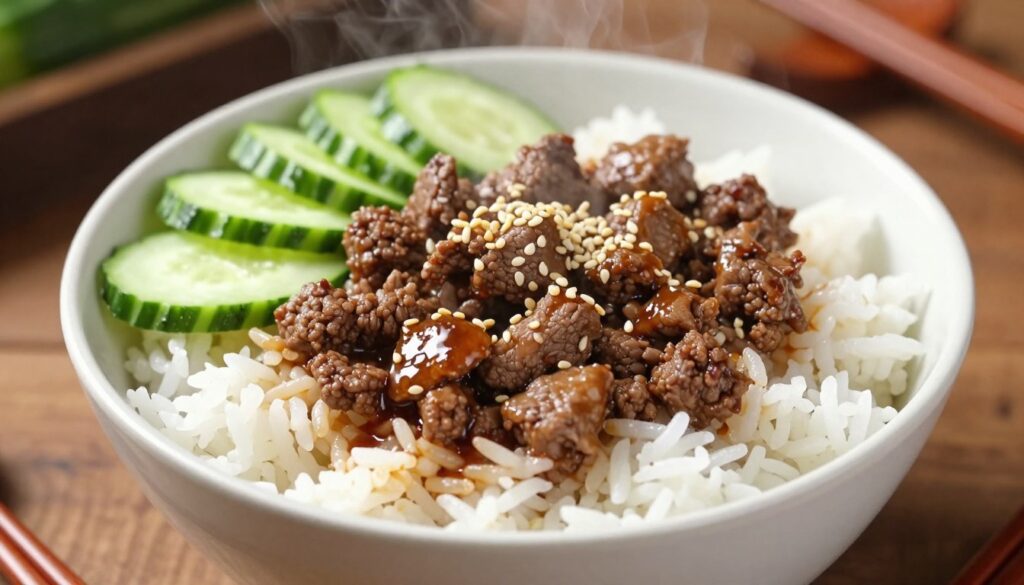
A satisfying bowl usually combines a base, seasoned beef, a sauce, and a fresh or crunchy finish. Each part adds something useful, from a filling foundation to a bright contrast. Use enough sauce to season the beef without soaking the base.
Rice is a familiar base, while ground beef brings savory flavor and enough substance for dinner. Soy sauce and ginger make a simple seasoning, and cucumber adds a cool, crisp bite. The ingredients can stay basic, or you can add more color and texture at serving time.
| Component | Examples | What it contributes |
|---|---|---|
| Base | Rice | Filling foundation |
| Beef | Ground beef | Savory main component |
| Sauce | Soy sauce and ginger | Savory-sweet seasoning |
| Toppings | Cucumber and sesame seeds | Freshness and texture |
You can mix and match the four parts to fit your pantry and appetite. A bowl with tender rice and seasoned beef needs only one or two toppings to feel complete. Keep wet toppings separate until serving if you want the rice to stay fluffy.
Easy Beef Bowl Recipe: Ingredients and Amounts
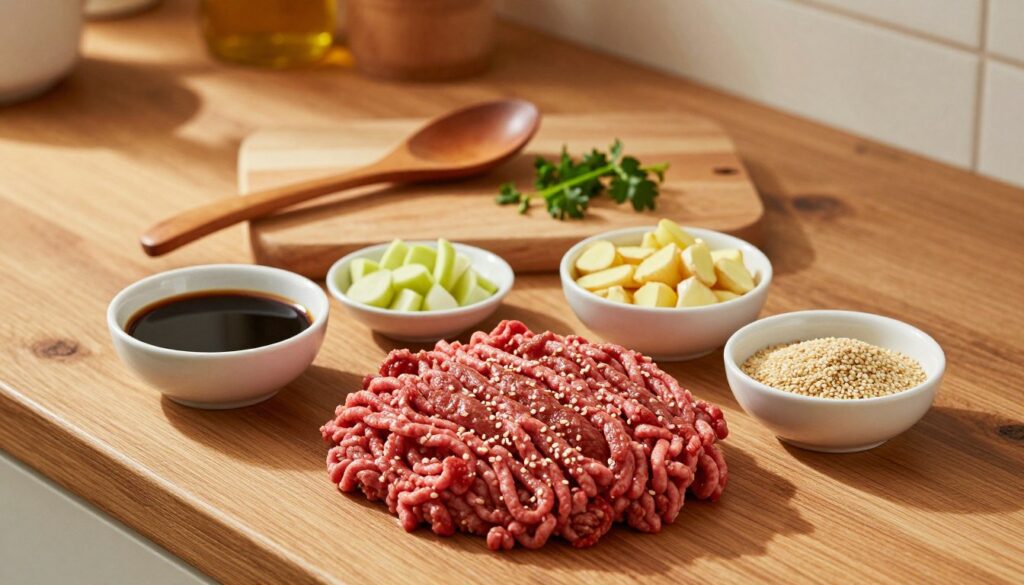
For four servings, gather 1 pound of lean ground beef and the measured sauce ingredients before heating the skillet. Plain gochujang is the chili paste for this Korean-inspired version. The beef and sauce amounts form the recipe’s core, while the topping amounts can shift.
Choose low-sodium soy sauce if you prefer a less salty result. The sugar balances the savory ingredients, and ginger and garlic bring a warm, sharp flavor. Toasted sesame seeds and sesame oil add a nutty finish without needing a long list of spices.
- Beef and sauce: 1 pound lean ground beef, 4 garlic cloves, 1 teaspoon ginger, 3 tablespoons soy sauce, 2 tablespoons granulated sugar, 2 tablespoons water, 2 teaspoons gochujang, 1/4 teaspoon black pepper.
- For the skillet and finish: 1 tablespoon neutral oil, 1 tablespoon toasted sesame seeds, and 1 teaspoon toasted sesame oil.
- Rice: 4 cups cooked white rice.
- Toppings: 1/2 medium cucumber, 1 medium carrot, 1/4 small cabbage, and 1 scallion.
These ingredients give you a balanced mix of soft rice, savory beef, and crisp vegetables. You can change how much cucumber, carrot, or cabbage you use without changing the sauce balance. Keep the beef and sauce measures steady for the intended flavor.
The sesame seeds are already toasted, so they add aroma as well as a little crunch. Neutral oil works well because it does not compete with the sesame or ginger. If you use a different soy sauce, taste the finished beef before adding extra salt.
Measure the sauce components together first so the sugar and chili paste are ready to whisk into an even mixture.
How Do You Cook the Beef and Sauce?
Brown the beef in a hot skillet while you whisk the measured sauce in a small bowl. Small pieces brown evenly and are easy to portion over rice. Plan on about 10 minutes of prep and 10 minutes of cooking.
Brown the beef safely
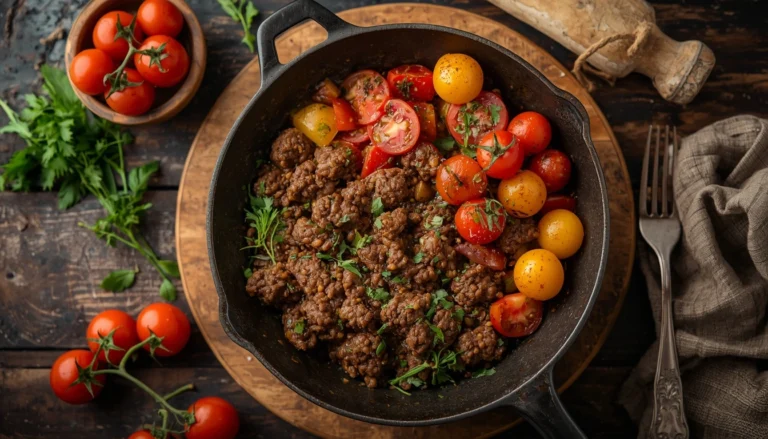
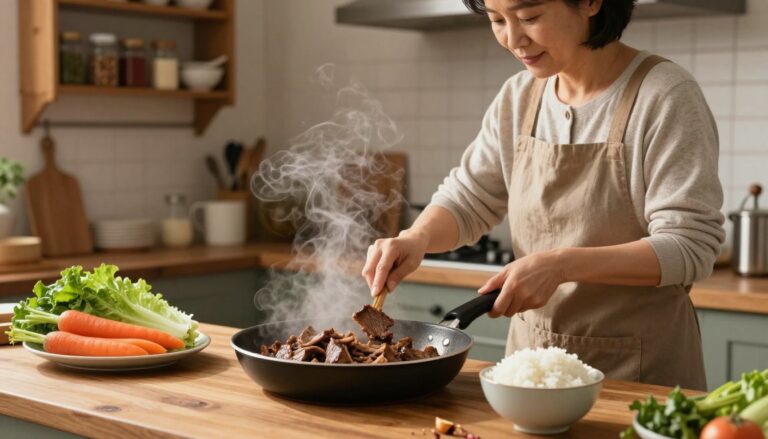
Warm the neutral oil in a skillet over medium-high heat. Add the beef, then break it into small pieces with a spoon or spatula. Cook for about 6 minutes, stirring now and then, until the meat browns.
Whisk the sauce ingredients while the beef cooks, so they are ready when the meat is done. If the skillet holds a pool of excess grease, carefully drain it before adding the sauce. Keep the pan steady and avoid splashing hot fat.
Color alone does not confirm safe doneness. The thickest portion of raw ground beef must reach 160°F, the USDA FSIS minimum. Check the center with a food thermometer, especially when the pieces are large or the pan is crowded.
Simmer the sauce and finish off heat
Pour the whisked sauce into the skillet after the beef browns. Stir until the beef is coated, then let the mixture cook together for about 1 minute. The sauce should cling to the meat instead of collecting in a thin pool.
Turn off the heat before stirring in the sesame oil and sesame seeds. That brief pause keeps their aroma from facing continued high heat. Spoon the beef over the prepared rice, then add your chosen toppings at the table.
An easy beef bowl recipe can be ready in about 20 minutes when the rice is already cooked or cooks alongside the beef. Use a food thermometer to confirm the ground beef reaches 160°F before serving.
Which Rice or Base Should You Use?
Choose white or jasmine rice for the quickest familiar pairing, or cauliflower rice when you want a lower-carbohydrate base. White rice gives the sauce a mild background, while brown rice and quinoa have a chewier bite. Have your base ready before the beef leaves the skillet.
A beef bowl recipe with rice is the classic weeknight arrangement, but the beef also works over noodles or cauliflower rice. For Japanese gyudon, short-grain rice is common; U.S. stores may label it sushi rice. The Korean-inspired skillet version can use cooked white rice without needing a special grain.
- White or jasmine rice: a familiar, tender base.
- Short-grain rice: a stickier texture for beef and sauce.
- Brown rice or quinoa: a chewier grain option.
- Cauliflower rice: a lower-carbohydrate alternative.
Jasmine rice has a light scent and soft texture, while brown rice stands up to a hearty serving of beef. Quinoa gives you another grain choice when rice is not on the menu. Noodles make the bowl feel closer to a saucy skillet supper.
For cauliflower rice, serve the beef soon after heating the base, so excess moisture does not thin the sauce. You can also set out two bases when people at the table want different portions. Have the base cooked or nearly ready before the beef comes off the heat so the bowl can be served warm.
Which Toppings Add Crunch and Freshness?
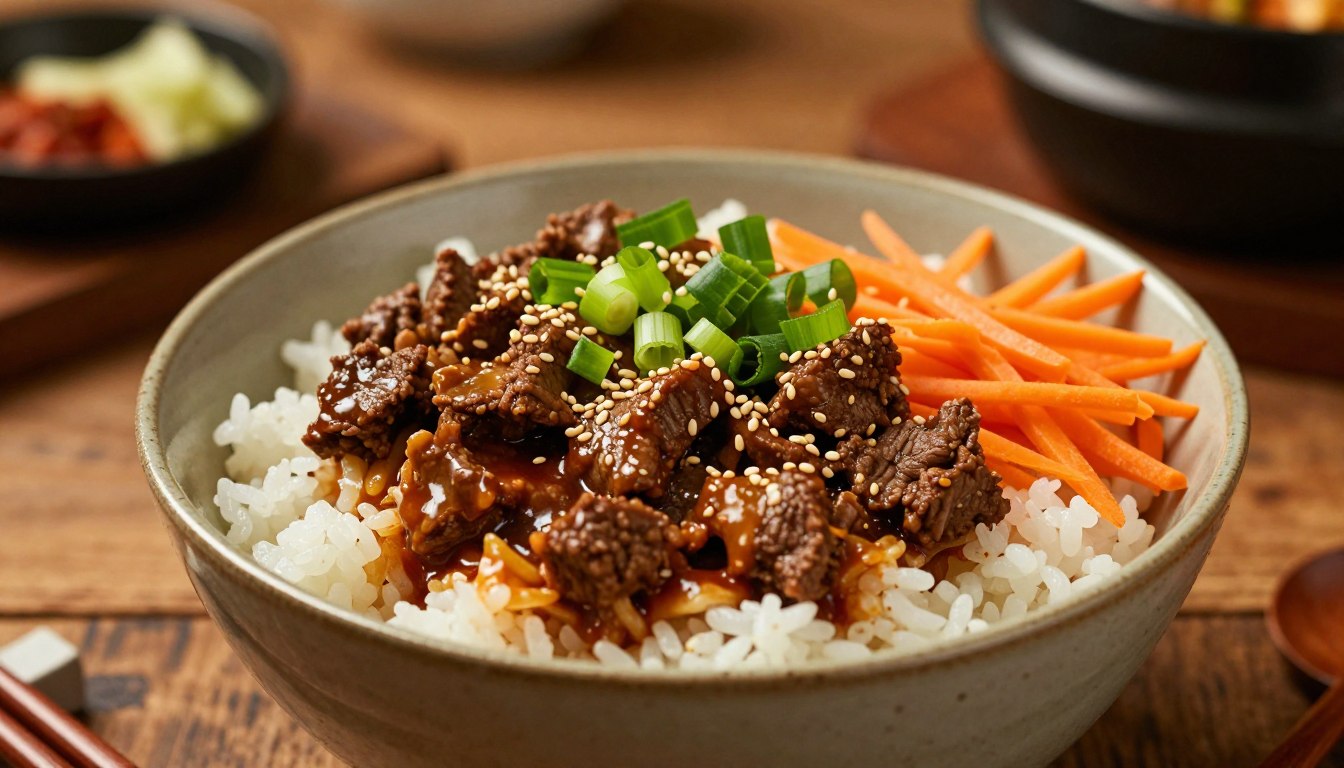
Crisp cucumber and shredded carrot give the rich beef an immediate fresh contrast. Raw vegetables add cool crunch, while kimchi brings tang and heat. Add toppings after heating to keep fresh textures intact.
| Topping | Examples | Texture or flavor |
|---|---|---|
| Crisp vegetables | Cucumber and shredded carrot | Cool crunch |
| Sharper vegetables | Radish and cabbage | Peppery bite and crunch |
| Fermented or spicy finish | Kimchi | Tang and heat |
| Final garnish | Green onions, sesame seeds, or a fried egg | Fresh aroma, nuttiness, or a richer finish |
Slice cucumber thinly or cut it into matchsticks for easy bites. Shredded carrot and cabbage fit neatly on a spoon with the beef and rice. Radish adds a sharper, peppery note, so a small amount can be enough.
A little kimchi or radish can brighten a rich bowl without changing its basic flavor. Green onions add a fresh scent, and a fried egg makes the meal more filling. Sesame seeds give the top a nutty finish, especially when you scatter them over the hot beef.
Keep the toppings in small dishes if everyone wants a different mix. That makes it easy to build beef bowls with more or less crunch, heat, or richness. Add sesame seeds and green onions after cooking so they keep their aroma and texture.
How Can You Change the Korean-Inspired Flavor?
A Korean beef bowl can stay mild and sweet-savory or take on more chili heat with gochujang. Gochujang gives the sauce fermented depth as well as spice. These are separate sauce approaches, not amounts to combine.
A Korean beef bowl recipe often uses ground beef for a quick skillet meal. The table shows two gochujang sauces and a bulgogi-inspired marinade, each with its own balance. Pick one approach rather than adding every listed ingredient to the main sauce.
| Sauce approach | Chili amount or style | Salty liquid | Sweet or aromatic notes |
|---|---|---|---|
| Quick gochujang sauce | 1 tablespoon gochujang | 1/4 cup low-sodium soy sauce | Honey, ginger, sesame oil, and rice vinegar |
| Hotter gochujang sauce | 2-3 tablespoons gochujang | 1/2 cup tamari or soy sauce | Ginger juice and maple syrup or honey |
| Bulgogi-inspired marinade | Korean red pepper flakes | Soy sauce | Brown sugar, sesame oil, garlic, ginger, and mirin |
The quick gochujang sauce combines 1 tablespoon gochujang, 1/4 cup low-sodium soy sauce, 1 tablespoon honey, 2 teaspoons grated ginger, 1 1/2 tablespoons sesame oil, and 2 tablespoons rice vinegar.
The hotter option uses 2-3 tablespoons gochujang, 1/2 cup tamari or soy sauce, 2 tablespoons ginger juice, and 2 tablespoons maple syrup or honey. Those larger sauce amounts belong to that version, not the main recipe. A Korean beef bowl with gochujang can be adjusted to taste by starting with less chili paste.
Some bowls use thin-sliced boneless ribeye or top sirloin instead of ground beef. Partially freeze the steak for 30 minutes to make thin slicing easier. A bulgogi-inspired marinade can flavor the sliced meat before cooking, with Korean red pepper flakes providing heat.
A creamy gochujang broth bowl is a different format, not simply a saucier version of this skillet meal. It uses 1/4 cup gochujang, 1 cup low-fat cottage cheese, and 3 cups chicken broth with 1 pound of 96/4 ground beef. Each serving has 1 cup rice and 1 cup broth, and lists 36 grams of protein.
Other ground beef bowls use different meat and rice amounts, so their nutrition details do not transfer to this recipe. One version uses 1 1/4 pounds of 93/7 ground beef over 2 cups cooked white rice. Another uses 1 1/2 pounds of ground beef with 2-3 tablespoons gochujang.
Start with less gochujang than the recipe calls for if you are unsure how much heat your household enjoys.
Japanese Gyudon, Mexican Bowls, and Chipotle-Style Bowls
Gyudon is the Japanese beef-and-rice option, while a burrito bowl builds a more customizable meal around rice, beans, and toppings. The cooking style changes the bowl’s character more than the word “bowl” does. Gyudon uses thin-sliced beef simmered with onion in a sweet-savory broth.
A traditional beef bowl recipe can refer to gyudon, a Japanese beef bowl recipe served over rice. Its broth can combine soy sauce, Japanese sake, mirin, and sugar in a 2:2:2:1 ratio. Kombu, a dried sea vegetable, can simmer with the onion and broth ingredients for 10 minutes.
Japanese gyudon with simmered beef
Once the broth is ready, add thin-sliced beef and simmer it covered for 8 minutes, then uncovered for 7 minutes. The onion softens in the broth, and the beef takes on its sweet-savory flavor. Spoon the mixture over rice while it is warm.
A steak can be partially frozen for 30 to 45 minutes before you slice it thinly for gyudon. That helps you cut even pieces across the grain. If thin-sliced beef is already available, use it directly.
Mexican burrito bowls with familiar toppings
A Mexican beef bowl recipe can combine rice, black beans, corn, tomatoes, shredded cheese, and ground beef. One version uses 1 pound of lean ground beef and 1 cup of jasmine rice, and it can be ready in 30 minutes or less.
Add sour cream, cilantro, green onions, tomatoes, guacamole or avocado, jalapeños, or salsa. You can keep the toppings in separate bowls, letting each person build a meal with their preferred amount of heat. Black beans and corn make the rice and beef more substantial.
A chipotle-style bowl at home
For a chipotle-style bowl at home, layer rice with seasoned beef, beans, corn, tomato or salsa, cheese, and avocado or guacamole. Add jalapeños or sour cream if those suit your plate. This is a practical home-style combination, not an exact copy of a restaurant bowl.
Keep the beef seasoning simple enough to work with the other toppings. A spoonful of salsa adds moisture, while avocado softens the sharper flavors. Slice steak across the grain after partially freezing it if thin-sliced beef is unavailable.
How Should You Prep, Store, and Reheat Beef Bowls?
Preparing the rice, beef, and vegetables separately makes it easier to assemble portions without softening the fresh toppings. Separate containers let you pack meals for different days or preferences. Cool cooked parts before sealing them for storage.
Prep the components separately
Cook the rice and beef ahead, then keep fresh vegetables apart until serving. The sauce for the main recipe can be made 1 day ahead and kept chilled. Portioning the parts separately also makes it easier to add a different base later.
- Cook the rice, then let it cool.
- Cook the beef, then let it cool.
- Pack fresh vegetables separately.
- Combine the portions when serving.
Use clean containers and divide large batches into smaller portions. Smaller portions cool faster and are easier to heat for one meal. Keep sauce with the beef rather than pouring it over uncooked vegetables.
Store and reheat leftovers
Refrigerate cooked Korean ground beef for up to 4 days or freeze it for up to 3 months. Burrito bowl leftovers can stay refrigerated in airtight containers for up to 4 days, but freeze them for up to 2 months. Use the shorter freezer limit for burrito bowl portions.
Refrigerate cooked food promptly in airtight containers. Reheat a serving until steaming hot, stirring once so the center warms evenly. If the sauce thickens in the refrigerator, add a small splash of water to loosen it as it heats.
Keep fresh vegetables out of the reheating container when possible, then add them after the hot parts are ready. Rice and beef can be reheated together if the portion is small and you stir it well. Thaw frozen beef overnight in the refrigerator before reheating it.
How Can You Adapt the Bowl for Different Needs?
You can change the protein or base while keeping the same savory-sweet cooking approach. Simple swaps can help match the meal to your pantry or food needs. Lean ground beef limits excess grease, while fattier beef may need draining after browning.
- Ground turkey or chicken can replace ground beef for a different ground meat.
- Tamari can replace soy sauce when you need a gluten-free alternative.
- Cauliflower rice gives you a lower-carbohydrate base.
- Use less gochujang or red pepper for a milder result.
Ground pork is another option for Korean-inspired bowls. Cook any substitute fully, then taste it with the sauce before serving. Different meats may bring their own flavor, so the finished bowl can feel familiar without tasting exactly the same.
Read packaged labels when gluten matters, since sauces and seasonings can contain ingredients you may not expect. Tamari often works in place of soy sauce, but packaged products can differ. Check the label on the exact item you plan to use.
You can also serve cauliflower rice alongside regular rice when people want different portions. Keep the sauce amount steady at first, then adjust only after tasting the cooked beef. Taste the sauce before serving and adjust salt or heat in small increments.
What Is the Viral Cottage Cheese and Sweet Potato Beef Bowl?
The viral version pairs taco-seasoned beef and roasted sweet potatoes with cottage cheese, avocado, and hot honey. The contrast combines warm, savory meat with cool cottage cheese and sweet heat. One version serves four with 1 pound of lean ground beef and 1 cup cottage cheese.
Cottage cheese, roasted sweet potato, and taco-seasoned beef
Cut the sweet potatoes into pieces and roast them at 400°F for 20 minutes, flipping them halfway through. Add taco-seasoned ground beef, cottage cheese, avocado, and hot honey to each serving. This recipe lists 33 grams of protein per serving.
The roasted sweet potato forms the base, while cottage cheese adds a cool and creamy element. Avocado brings a soft texture, and hot honey adds a sweet, spicy finish. You can adjust the honey to control how much heat reaches each bite.
A national grocery average for ground beef was $6.79 per pound, as reported October 14, 2026. That average followed a 13-cent-per-pound drop, about 2%, during the 30 days after increased imports began. It is a national average, not a guaranteed price at your local store.
Hot honey and creamy gochujang variations
A hot honey version uses 1 pound of 93/7 lean ground beef and 1 1/2 pounds of sweet potato. It lists 41 grams of protein per serving, which differs from the cottage cheese version’s estimate.
The creamy gochujang broth bowl takes a different path, using cottage cheese blended with chicken broth and chili paste. It serves broth and rice with ground beef rather than roasted sweet potato. Its listed protein value belongs to that recipe alone.
Treat nutrition figures as recipe-specific estimates, since ingredient choices and serving sizes change the total.
Conclusion
A skillet of savory-sweet beef, a warm base, and fresh toppings is an easy formula to make your own. The Korean-inspired version is a flexible starting point for a weeknight meal, not a fixed set of toppings or one required base.
Changing the rice, vegetables, or chili level gives you a different dinner without changing the core cooking method. Choose your base and one crisp topping, then set out the sauce ingredients before you start cooking.
FAQ
What do you put in a beef bowl?
What type of beef is used for beef bowls?
What is the best sauce to use in a beef bowl?
How to make the viral beef bowl?
How to make a Japanese style beef bowl?
How to make a Mexican beef bowl?
What is in a Korean beef bowl?
How to make a beef chipotle bowl at home?
What Did You Think? Rate This Recipe
Absolutely Tender and Packed with Flavor!
I followed this guide step by step and the beef shank came out amazingly tender and full of flavor. The tips on maintaining moisture made all the difference. Highly recommended for anyone trying this cut for the first time!