Beef Bourguignon Recipe: 10 Tips for Fall-Apart Tender Beef
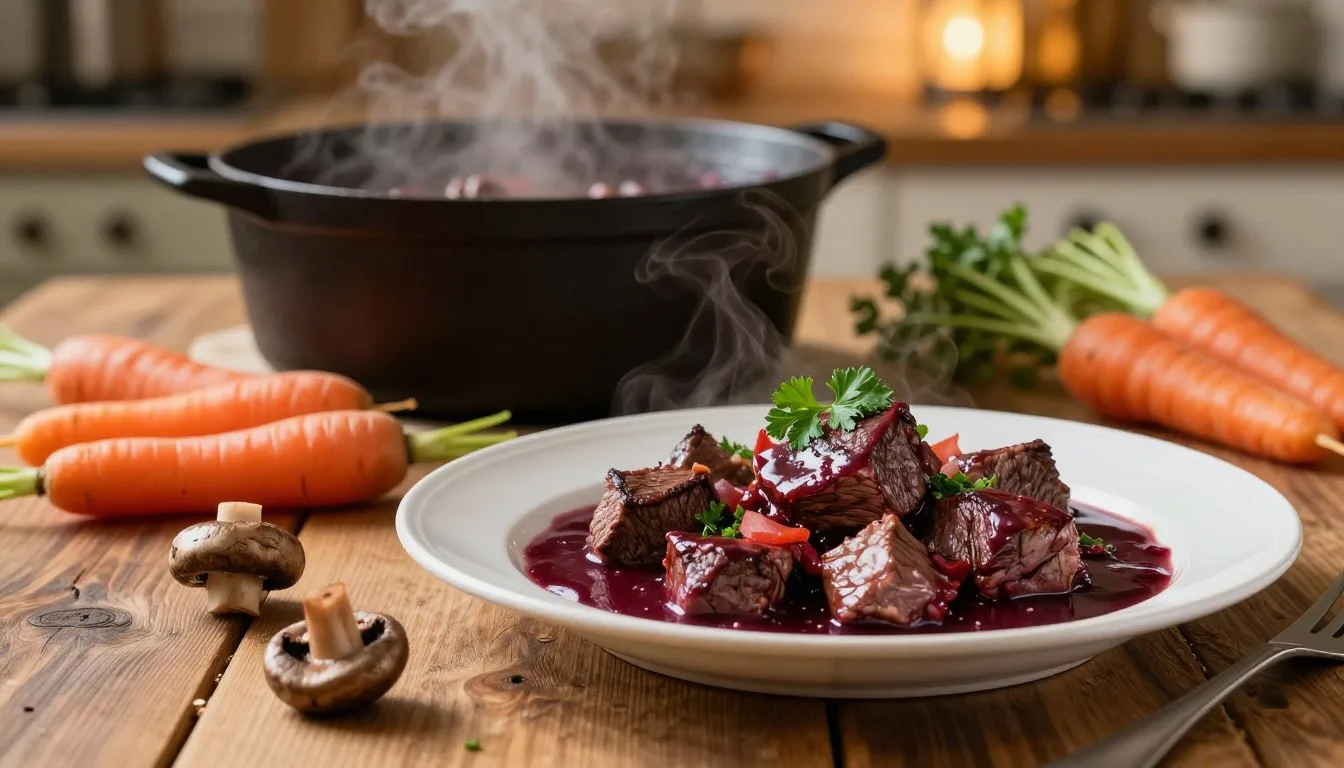
This beef bourguignon recipe turns well-browned beef and red wine into a slow-braised stew with tender, spoon-soft chunks. It suits a cozy dinner when you can give the pot time to work.
Table of Contents
The smell of bacon, herbs, and wine filling your kitchen is part of the pleasure. The method is simple, but each step matters: browning builds flavor, and slow cooking softens the beef. You will learn how to make the stew in a Dutch oven, choose a good wine, and serve it with a side that catches the sauce. Plan on about 1 ½ hours in the oven, plus time for prep and browning. The beef needs time to turn tender, so a hotter oven is not a shortcut. Use the steps and checks below to guide the cooking, rather than relying on the clock alone. Give yourself time for the beef to become tender rather than turning up the heat to rush it.
What Defines a Classic Beef Bourguignon?
The name points to Burgundy, the eastern French region associated with this red wine-braised beef stew. Its deep sauce and familiar finishing vegetables set it apart from a simple beef stew, with red wine shaping the whole dish. Braising means cooking food slowly in a small amount of liquid in a covered pot.
The region’s food and wine traditions give boeuf bourguignon its name and style. Burgundy has long been linked with this dish, though recipes have changed over time. A National Geographic history of boeuf bourguignon traces the dish through old dictionaries, travel guides, and cookbooks.
Burgundy origins and the braise
A classic beef bourguignon builds flavor in layers, then lets the covered pot cook slowly. The beef grows tender as it braises in liquid, while the wine, herbs, and browned bits form a rich sauce. This method gives the stew a depth that a quick simmer cannot match.
Red wine is more than a splash for color. It adds acidity and a deep, rounded flavor that balances the meat. The finished sauce should taste full and savory, not sharp or strongly alcoholic.
A traditional version also uses beef, bacon, carrots, and onions. These ingredients cook together to form the base, but the smaller finishing vegetables bring their own texture and flavor. That mix makes the stew hearty without making every bite the same.
Bacon, vegetables and finishing garnishes
Bacon adds salt and smoky flavor to the pot. Carrots and onions soften as they cook, while pearl onions and mushrooms are often browned separately and added near serving. Their shape and texture stand out against the slow-cooked beef.
A simpler beef stew may use broth, meat, and a few basic vegetables. Beef bourguignon is known for its red wine sauce and characteristic finishing elements. The contrast matters: tender beef and soft vegetables sit beside browned mushrooms and whole pearl onions.
Traditional ingredients can vary from kitchen to kitchen, but each has a clear role. Bacon brings savory depth, wine forms the sauce, and the vegetables give it balance. Remember that the wine, bacon and finishing vegetables give the dish its recognizable character.
Beef Bourguignon Recipe: Ingredients and Method
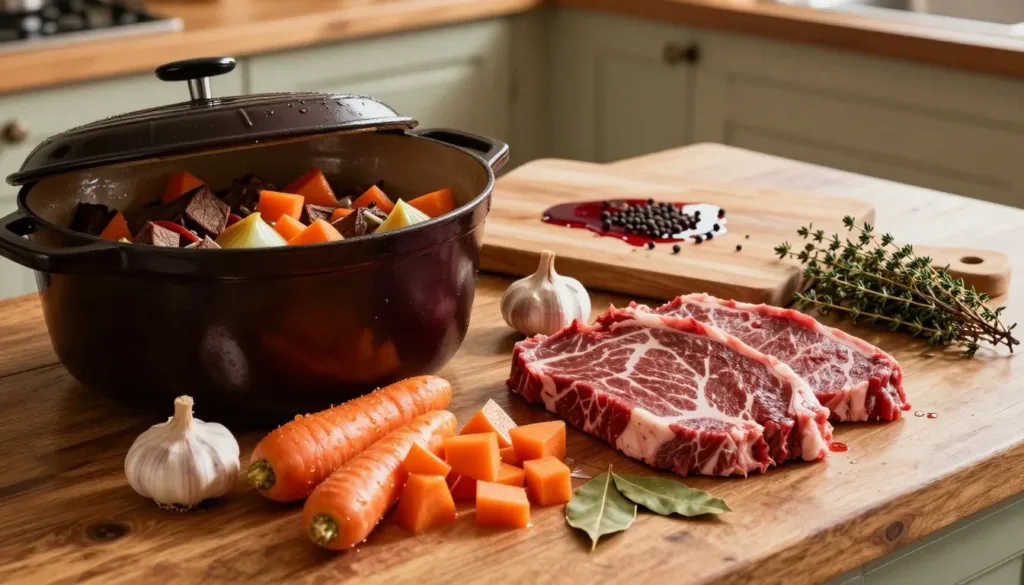
For 4 to 6 servings, start with 3 pounds of chuck, 5 ounces of bacon and a 750-milliliter bottle of dry red wine. This Dutch oven method gives the beef time to become tender without rushing the sauce. The dependable choice is a slow oven braise with browned beef, drinkable wine, and enough time to reach tenderness.
An easy beef bourguignon recipe depends on careful browning and a steady oven, not hard-to-find ingredients. An authentic French beef Bourguignon recipe uses the same patient approach, with beef, bacon, vegetables, and red wine. The best beef bourguignon recipe is the one that gives the beef time to turn spoon-tender.
Ingredients for the Dutch oven
Gather these ingredients before you start. Cut the beef into even pieces, and set the thyme and bay leaves beside the stove.
- 3 pounds boneless beef chuck, cut into 2-inch cubes
- 5 ounces lardons, pancetta, or bacon
- 1 large yellow onion, chopped, and 1 medium carrot, chopped
- 3 garlic cloves, minced, 1 tablespoon tomato paste, and 3 tablespoons flour
- 750 milliliters dry red wine and 1 cup low-sodium beef broth
- 5 thyme sprigs, 2 bay leaves, salt, pepper, and optional chopped parsley
- 3 tablespoons butter, 8 ounces pearl onions, and 8 ounces cremini mushrooms
Oven-braising steps
Use the same Dutch oven for the base so the browned bits stay in the sauce. Keep the pearl onions and mushrooms aside for the final stage.
- Render the bacon. Set the Dutch oven over medium heat and cook the bacon until browned and its fat melts. Lift the bacon onto a plate, leaving the fat in the pot.
- Brown the beef in batches. Pat the cubes dry, season them with salt and pepper, then arrange them in one layer. Brown each batch for 10 to 15 minutes, turning the pieces as needed. Add a little oil if the pot looks dry. The beef starts cooking here, but it is not fully cooked.
- Soften the onion and carrot. Add them to the pot and stir over medium heat until they begin to soften. Scrape up browned bits as their moisture loosens them.
- Build the sauce. Stir in the garlic and tomato paste, then cook for 1 minute. Sprinkle in the flour and cook for 1 minute more. Pour in the wine and broth, scraping the base of the pot as the liquid heats. Return the beef and bacon, then add thyme and bay leaves.
- Cover and braise. Bring the liquid to a gentle simmer, cover the pot, and place it in a 350°F oven. Braise for about 1 ½ hours, then check a large piece. It should give easily to a fork. While the pot cooks, brown the pearl onions and cremini mushrooms in butter in a separate pan. Add them near serving, then taste the sauce and adjust the salt and pepper.
The oven should keep the liquid at a gentle simmer, not a hard boil. Check the beef before serving because cube size and the cut can affect how quickly it softens. If the sauce looks too thick before the beef is tender, stir in a little broth.
Let the stew settle briefly before serving, then remove the thyme stems and bay leaves. A sprinkle of parsley adds fresh color, though it is optional. Test a large beef cube with a fork before serving, and continue the braise if it still resists.
Choose Beef for a Tender Braise
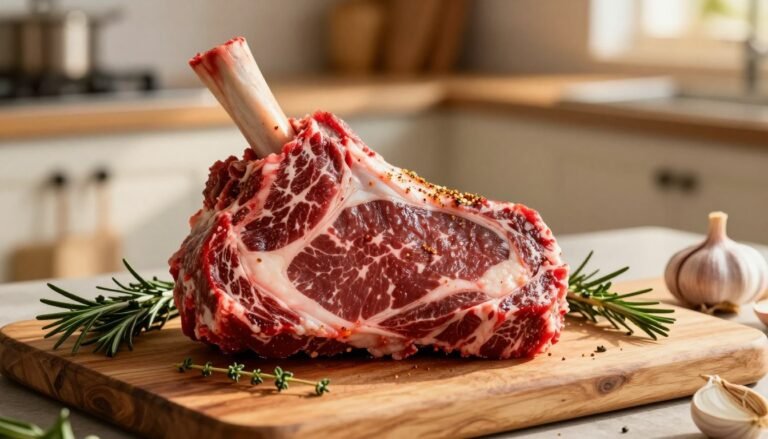
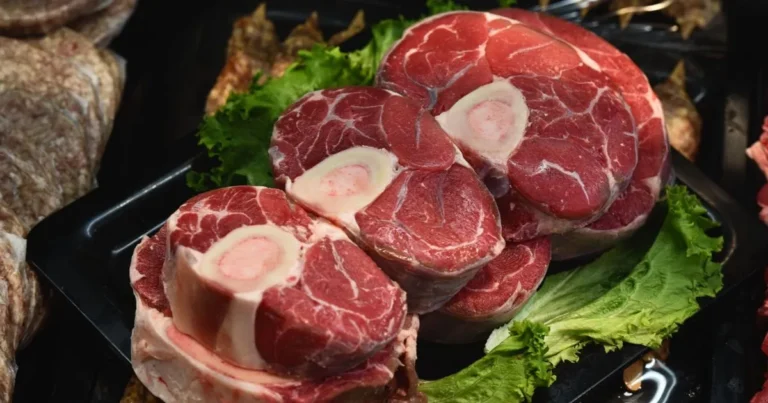
Chuck is the most dependable choice for a tender, classic pot of beef bourguignon, while short ribs offer a richer alternative. If you wonder, “Why is my beef bourguignon meat tough?”, the usual fix is more slow cooking, not a hotter oven. Keep tough cuts at a gentle heat until a fork slips into the beef easily.
Chuck has enough fat and connective tissue to handle a long braise. Brisket also softens with slow cooking, while lean sirloin can dry out if you cook it too long. Short ribs bring extra richness and a deeper meat flavor.
How chuck, brisket, sirloin and short ribs compare
| Cut | What it contributes | Best fit |
|---|---|---|
| Chuck | Balanced fat and beef flavor | Reliable classic stew |
| Brisket | Firm grain and rich flavor | Long, slow braise |
| Sirloin | Leaner meat with less fat | Shorter, careful braise |
| Short ribs | Rich flavor and extra fat | Richer stew |
Cutting the meat into even 2-inch chunks helps them cook at a similar pace. Leaner cuts are less forgiving if the braise runs long, so begin checking them early. For the usual stew, chuck gives you a good balance of flavor and texture.
Browning and seasoning before braising
Seasoning beef ahead gives salt time to work into the surface. Let it stand at room temperature for at least 30 minutes, or chill it for up to 24 hours. Pat the beef dry before browning so moisture does not slow the sear.
- Buy a whole roast when practical, then cut it yourself.
- Cut even 2-inch cubes for steady cooking.
- Season the beef and let it rest before cooking.
- Pat it dry and brown it in batches without crowding.
For a small savory boost, stir in 2 teaspoons anchovy paste, 1 tablespoon soy sauce, 1 tablespoon Worcestershire sauce, and 1 tablespoon unsweetened chocolate. These additions are optional, not a secret requirement. They add depth without changing the stew’s basic character.
Tough, fatty cuts need low, slow cooking until spoon-tender. Raising the oven temperature can make the outside cook faster while the center stays firm. If a fork still meets resistance, keep the covered pot at a gentle simmer until the beef yields easily.
Choose a Dry Red Wine
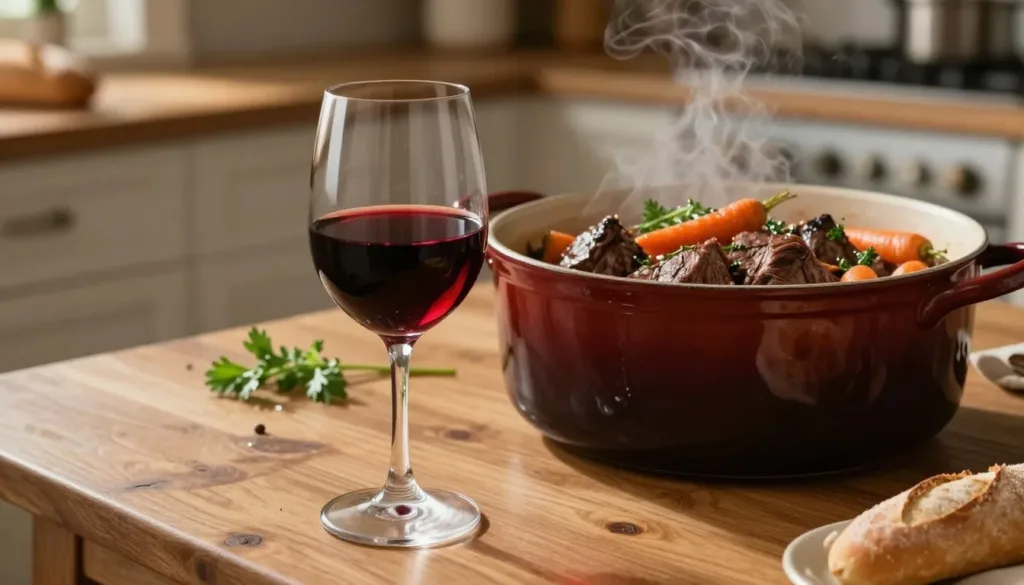
Pinot Noir is the closest straightforward substitute for Burgundy because traditional Burgundy is made from Pinot Noir grapes. Choose a dry red wine you would enjoy drinking, with enough character to flavor the sauce. You do not need an expensive bottle for the recipe.
Pinot Noir is a natural fit for a classic beef bourguignon recipe with wine. It brings a lighter body and fruit notes that do not overpower the beef. Cabernet and Merlot are also suitable dry red choices.
| Wine | When to choose it | Flavor role in the stew |
|---|---|---|
| Pinot Noir | For a Burgundy-style match | Light body, gentle fruit |
| Cabernet | For a fuller red wine | Firm, bold flavor |
| Merlot | For a softer dry red | Round, smooth flavor |
The wine’s flavor concentrates as it cooks, so a very sweet or harsh bottle can throw off the sauce. A dry wine keeps the taste balanced and works well with the beef, bacon, and herbs. Pinot Noir is the simplest Burgundy stand-in, while Cabernet and Merlot give you other good options.
Use a bottle you would pour into a glass at dinner. You do not need to match a specific label or spend more for a bottle marked “cooking wine.” Choose a dry bottle you would enjoy drinking rather than a wine labeled for cooking.
Finish with Pearl Onions and Mushrooms
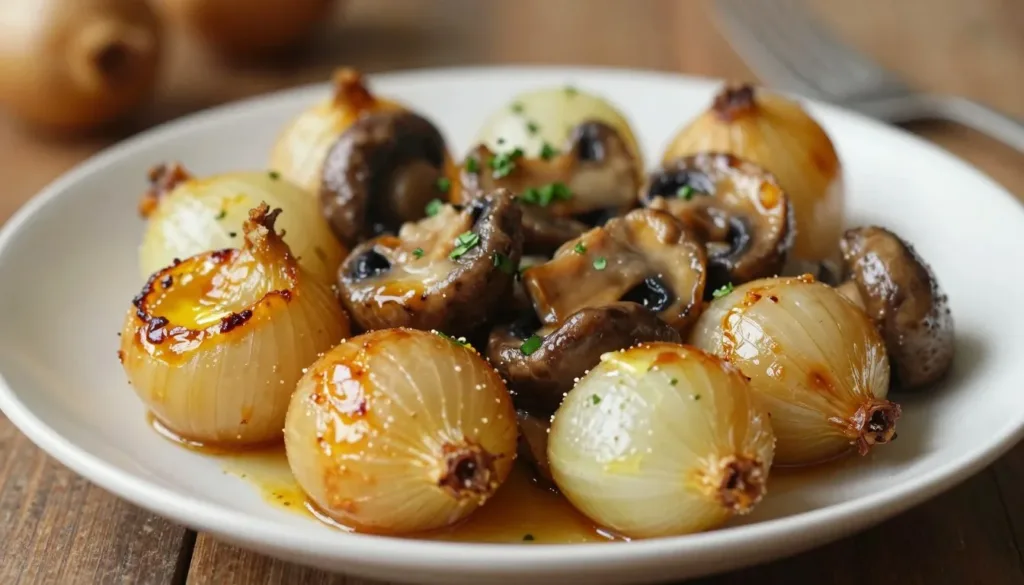
Cook the pearl onions and mushrooms separately so they keep their shape and browned flavor through the final braise. Their own texture stands out when they join the sauce near serving. Adding them at the end keeps the mushrooms from turning soft and the onions from breaking apart.
While the beef braises, melt butter or use reserved bacon fat in a skillet. Frozen pearl onions are a convenient choice, and you can add them to the pot or spoon them over each serving. Season the vegetables to taste.
For good color, give the mushrooms room in the pan. Cook them for about 5 minutes on one side, then 5 to 7 minutes on the other, until golden. Crowding traps steam, so work in batches if your skillet is small.
Use butter for a clean, rich flavor, or choose the bacon fat left from cooking the meat. A light sprinkle of salt and pepper is usually enough. Chopped parsley can add a fresh note just before serving.
The finished stew should have both soft vegetables in its sauce and browned vegetables that keep their shape. Add the pearl onions and mushrooms when the beef is tender, or divide them over bowls for a clear, even garnish. Add the browned vegetables at the end so they stay distinct in the finished sauce.
Adapt the Method to Your Cooking Equipment
A Dutch oven gives you the most direct route from stovetop browning to a steady oven braise, but you can adapt the cooking vessel. A gentle heat matters more than the type of pot. Keep checking tenderness because appliance times are guides, not guarantees.
You can use a stovetop pot, slow cooker, or pressure cooker. Browning the beef and bacon first still builds flavor, even when another appliance does the longer cooking. Keep the cooking liquid at a gentle simmer instead of a hard boil.
Stovetop and slow-cooker options
For stovetop braising, use low heat and check the pot now and then. The liquid should barely simmer, with only a few small bubbles breaking the surface. Adjust the heat if it starts boiling hard.
A slow cooker gives the beef a steady, covered cooking space. Brown the bacon and beef in a pan first, then soften the vegetables and add the liquid. Transfer everything to the slow cooker and cook for 6 hours on high or 8 hours on low.
Slow cookers can vary in heat, so check the beef near the end of the suggested time. A piece that still feels firm needs more cooking, even if the clock has reached its mark. Add the cooked garnishes near serving to help them hold their shape.
Pressure cooker and short-rib variation
A pressure cooker speeds up the covered cooking stage. One method uses high pressure for 30 minutes, followed by a tenderness check. Let pressure release as directed for your cooker before opening the lid.
Short ribs suit a longer oven method that gives their rich flavor time to develop. Braise them at 300°F for 1.5 hours, then cook them for 1 hour more with carrots and mushrooms. This timing is a separate short-rib variation, not the same schedule as pressure cooking.
Pieces may soften at different rates, even when you follow the same method. Test a large piece with a fork, and give the pot more time if the meat resists. Whichever appliance you use, check that the beef is tender before serving.
Store and Reheat the Stew Safely
Refrigerate leftover beef bourguignon in an airtight container for up to 3 days, or freeze it for up to 3 months. Safe thawing also matters when you start with frozen beef. Cook beef right away after thawing it in cold water or in the microwave.
Let leftovers cool, then pack them in a container with a tight lid. Keep frozen stew in a suitable airtight container, and thaw it in the refrigerator before reheating. These steps help protect both the sauce and the tender beef.
- Refrigerate leftovers in an airtight container for up to 3 days.
- Freeze the stew for up to 3 months.
- Thaw beef in the refrigerator at 40°F or below, in cold water inside a leak-proof bag, or in a microwave.
- Cook beef immediately after cold-water or microwave thawing.
For refrigerator thawing, keep raw beef at 40°F or below and cook it within 1 to 2 days after it thaws. For cold-water thawing, change the cold tap water every 30 minutes. Beef thawed in a microwave also needs to go straight into cooking.
Beef thawed in the refrigerator can be refrozen without cooking. Beef thawed in cold water or a microwave must be cooked before you freeze it again. Cooking beef from frozen can take about 50% longer than cooking fresh or fully thawed beef.
Reheat leftover stew over low heat on the stove, stirring now and then, or warm it in a microwave. Heat only the amount you plan to eat, and stir microwave portions so they warm evenly. Cook beef immediately after thawing it in cold water or in the microwave.
Serve It with a Simple Side
Mashed potatoes are the easiest match for soaking up the rich sauce. Their soft texture gives the red wine sauce room to shine, while the beef stays at the center of the plate. A simple side lets the stew remain the focus.
Buttered noodles, rice, and crusty bread are easy alternatives. Each catches the sauce without adding strong flavors that compete with the beef. Choose the one that best suits the meal and the people at your table.
A green salad offers a cool, crisp contrast to the stew’s rich taste. Green beans also make a lighter vegetable side, especially when you keep their seasoning simple. Both bring freshness without taking over the dish.
Keep the plate balanced and let the sauce coat the side rather than bury it. A small amount of parsley can brighten the bowl, while a side of carrots echoes the stew’s vegetables. Noodles work well when you want a neat, easy-to-serve plate.
For a cozy dinner, place the pot on the table with mashed potatoes or warm bread nearby. Rice gives you a lighter base, and green beans add a fresh bite. Add a crisp green side if you want a lighter contrast on the plate.
Conclusion
A tender result comes from well-browned beef, a suitable dry red wine and a slow, steady braise. Bacon, mushrooms, and pearl onions give the sauce its familiar savory edge, but patience does the most for the meat. Take your time with the browning and let the covered pot cook gently.
Choose a drinkable dry red wine and make the stew for a meal you can give time to. The work is simple, but the long, slow cook rewards a quiet afternoon at home. Set out your Dutch oven and choose your wine before you begin.
FAQ
What is a substitute for Burgundy wine in beef bourguignon?
Can beef bourguignon be frozen?
What cut of beef is good for bourguignon?
What is the secret to beef bourguignon?
What is the world’s best beef bourguignon recipe?
What is the best wine to make beef bourguignon?
What is the secret ingredient in beef bourguignon?
What Did You Think? Rate This Recipe
Absolutely Tender and Packed with Flavor!
I followed this guide step by step and the beef shank came out amazingly tender and full of flavor. The tips on maintaining moisture made all the difference. Highly recommended for anyone trying this cut for the first time!