Delicious Korean Ground Beef Recipes: 5 Quick Ways to Cook and Serve
Korean ground beef recipes are quick skillet meals that turn seasoned beef into a rice bowl, with bulgogi-style and gochujang versions suiting different tastes. After a long day, a warm bowl can make dinner feel settled without asking you to spend the evening cooking. The meat cooks fast, and you can choose a sweet-savory sauce or one with chili heat.
Table of Contents
These flexible meals work well for busy weeknights because you can pair the beef with rice and vegetables you already have. They take inspiration from Korean flavors, but a quick home-cooked bowl is not automatically a traditional Korean dish. If you want to explore more options, check out our beef recipes for simple and flavorful meal ideas. Banchan means small Korean side dishes served alongside a meal. Those sides, plus a choice of fresh toppings, can make a simple dinner feel complete without adding much time.
Pick the flavor direction you want before you start cooking, since the sauce determines whether the bowl is sweet-savory or spicy.
How Korean Ground Beef Relates to Bulgogi and Bibimbap
A quick minced-beef bowl is usually called Korean beef or bulgogi-style ground beef, rather than traditional bulgogi. The name points to a familiar flavor, while the meat and cooking method differ from the sliced beef used for classic bulgogi.
Traditional bulgogi uses marinated sliced beef, while a fast ground-beef version is an adaptation. Bibimbap means mixed rice bowl, not ground beef; it can include beef, but its name describes the assembled meal.
Bulgogi-style ground beef
Bulgogi is a well-known Korean beef dish made with thin slices of marinated meat. A quick skillet version swaps those slices for ground beef, which cooks in minutes and is easy to spoon over rice. You may see it called Korean beef, Korean ground beef, or bulgogi-style beef.
The word “style” matters: it signals that the seasoning takes cues from bulgogi, not that the recipe follows the same preparation. This makes it a handy name for a weeknight dish without treating every quick rice bowl as a traditional recipe.
Bibimbap and other Korean beef dishes
Bibimbap is a mixed rice bowl commonly topped with seasoned sautéed vegetables, marinated meat, often beef, a fried egg, sesame, and bibimbap sauce. A version for three to four servings combines 100 grams, or 3.5 ounces, of beef mince with three cups of steamed rice, plus eggs, spinach, bean sprouts, shiitake mushrooms, and carrots. Bibimbap ingredients and amounts show how the toppings can vary.
Other familiar Korean beef dishes include bulgogi and galbi, grilled beef ribs often served with rice and side dishes. Bibimbap may use beef or other toppings, so it is not simply another name for Korean beef. The University of Arkansas’ K-Food center news story reports survey findings that Korean food is well known across many cities.
Banchan are small Korean side dishes served alongside a meal, and they may include vegetables or fermented foods. Treat “bulgogi-style” as a flavor cue for this quick version, not as a claim that the cooking method is identical.
Korean Ground Beef Sauce: Seasoning and Flavor Balance
A balanced Korean-style sauce pairs salty soy sauce with sweetness, sesame aroma, and, if you want heat, gochujang. Start with the balance you like: soy sauce seasons the meat, brown sugar softens its salt, and sesame oil adds a nutty smell.
Garlic and ginger bring savory depth, while gochujang adds chili heat. A little vinegar or rice wine can brighten a sweet sauce, and black pepper gives it a warm, mild bite.
The amounts below show three distinct styles. Sweet rice wine and mirin add sweetness and depth, while vinegar gives bibimbap sauce a sharper edge.
| Sauce style | Soy sauce and chili | Sweetener or acid | Sesame or aromatics |
|---|---|---|---|
| Bulgogi | 4 tbsp soy sauce | 2-3 tbsp brown sugar; 2 tbsp sweet rice wine | 1 tbsp sesame oil; 1 tsp pepper |
| Gochujang bowl | 2 tbsp light soy sauce; 1 tbsp gochujang | 1 tbsp mirin; 1 tbsp sugar | 1 tsp sesame oil |
| Bibimbap sauce | 2 tbsp gochujang; 1 tbsp water | 1 tbsp sugar; 1 tsp vinegar | 1 tbsp sesame oil; 1 tbsp toasted sesame seeds; 1 tsp minced garlic |
The bulgogi profile is sweet and savory, with soy sauce and sesame oil carrying most of its familiar taste. The gochujang bowl sauce adds direct chili flavor, so use it when you want the beef itself to taste spicy.
Bibimbap sauce is often served as a topping sauce. Its gochujang, sesame, sugar, water, vinegar, and garlic create a bold finish, but it is not automatically the sauce to cook into the beef.
For a mild dinner, keep the meat sauce free of chili and let each person add heat at the table. Taste the sauce before adding it to the skillet, since reducing it will concentrate its salt and sweetness.
Korean Ground Beef Recipes for Dinner
For a fast weeknight dinner, start with 1 lb of 90%-lean ground beef and the 15-minute bulgogi-style skillet. This simple recipe is an easy starting point because it needs one pan and a short ingredient list.
Have the rice hot by the time the beef finishes, and the meal comes together without a long wait. Simple ground beef and rice recipes are easiest to serve when the rice is ready as the meat leaves the skillet.
15-Minute Ground Beef Bulgogi
Use 1 lb of ground beef, preferably 90% lean, for this fast bulgogi-style recipe. Its sauce combines 4 tbsp soy sauce, 2-3 tbsp brown sugar, 2 tbsp sweet rice wine, 1 tbsp sesame oil, and 1 tsp pepper.
Brown the beef in a skillet, then add the mixed sauce and cook until it coats the crumbles. The full cooking time is about 15 minutes. A listed serving has 386 calories and 1,149 milligrams of sodium. The recipe’s nutrition listing applies to that specific serving, not every ground beef bowl.
Sweet-Savory Beef and Rice
For another simple Korean ground beef recipe, cook 1 lb of 90%-lean beef with ¼ cup packed brown sugar, ¼ cup reduced-sodium soy sauce, and 2 tsp sesame oil. The sweeter sauce makes a straightforward beef rice bowl.
Spoon the cooked beef over 2 cups of hot cooked white or brown rice. Finish it with green onions and sesame seeds. One listed serving provides 238 calories, 25 grams of protein, 8 grams of fat, and 610 milligrams of sodium.
That nutrition count belongs to the stated recipe and serving, rather than all versions of Korean beef. Rice portions, beef, and sauces can change the total.
Onion-Simmered Bulgogi-Style Beef
For a more savory option, combine ¼ cup soy sauce, 2 tbsp rice wine vinegar, 1 tbsp plus 2 tsp brown sugar, 2 tsp sesame oil, 1 tsp ginger, and 1 tsp garlic. Cook 1 lb ground beef with ½ small yellow onion.
Stir the sauce into the beef and onion, then simmer for 6-10 minutes. Serve it over white rice with scallion, sesame seeds, and a soft-boiled egg. This version takes longer to simmer than the quick skillet, but its sauce has time to settle around the beef.
These recipes offer different ways to make Korean ground beef for dinner: a fast bulgogi-style skillet, a sweet rice bowl, or an onion-simmered beef recipe. If sodium matters to you, compare the soy sauce label and the portion size before choosing between recipe versions.
How to Cook Beef Mince Korean Style
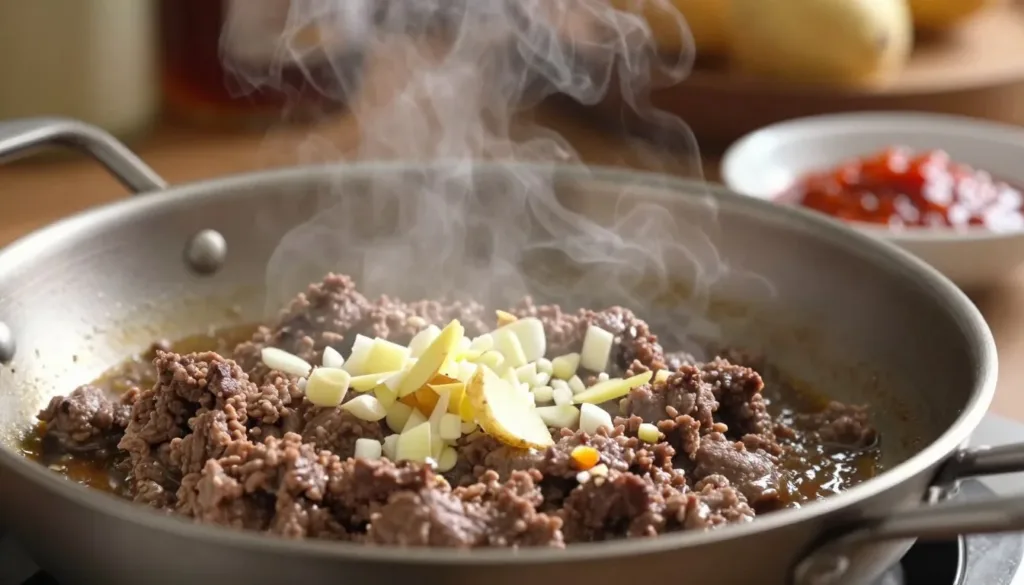
For evenly browned Korean-style beef, give the meat room in a hot skillet before stirring in the sauce. The key is to let moisture escape first, so the beef browns instead of steaming in its own juices.
Brown the ground beef for about 3-5 minutes, then simmer one skillet sauce for about 2 minutes. The exact time shifts with the pan’s heat and the amount of meat.
Brown the beef in a hot skillet
Use this four-step method for a repeatable skillet meal:
- Heat a wide skillet over medium-high heat before adding the ground beef.
- Break the meat into the crumble size you want, leaving it undisturbed at first.
- Drain excess fat if the pan holds more than you need for moist beef.
- Stir in the sauce and simmer until it clings to the cooked crumbles.
A hot pan helps the meat brown, but crowding can release moisture and slow that process. Cook in batches if the beef covers the pan in a thick layer.
Coat it with sauce and finish cooking
Once the beef has browned, break up any large pieces and check the pan. A little fat can help carry flavor, while a pool of grease can make the sauce feel heavy.
Drain only the excess, then pour in the sauce and stir so it reaches the meat. Keep the heat steady as the liquid bubbles. The sauce should reduce enough to cling, rather than disappear completely.
Pan size, heat, and the amount of beef all affect how quickly moisture cooks away. If the sauce still looks thin, give it another brief simmer and stir often. A little remaining moisture keeps the beef from drying out after cooking.
Stop reducing the sauce when it coats the meat but the crumbles still look moist.
Build a Korean Ground Beef Rice Bowl
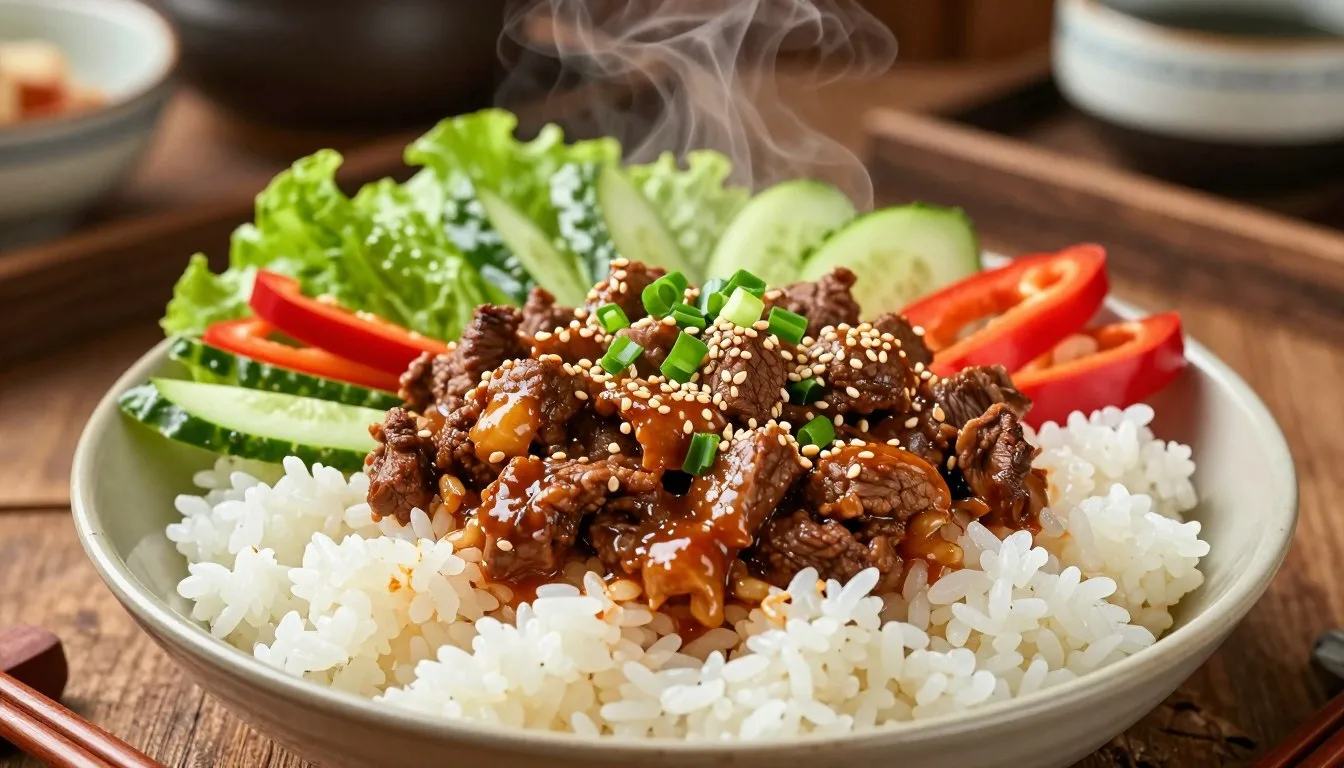
A gochujang beef bowl combines spicy-sweet skillet beef with rice, fresh vegetables, and an egg in one customizable meal. This complete bowl uses a larger batch of beef, so you can portion it across several servings.
For the main formula, use 2 lb of 93/7 ground beef with 1 tbsp gochujang, 2 tbsp soy sauce, 2 tbsp rice vinegar, and 1 tbsp brown sugar. Add the remaining seasonings and vegetables to shape the beef’s flavor.
Cook the gochujang beef
Along with the sauce, this recipe uses garlic, ginger, sesame oil, fish sauce, bell pepper, salt, pepper, and green onion. Cook the beef in a skillet, breaking it into small crumbles as it browns.
Stir in the gochujang, soy sauce, rice vinegar, brown sugar, and seasonings. Add the bell pepper and cook until the beef is done and the sauce coats it. Another Korean-style bowl formula calls for 10 oz, or about 280-300 grams, of ground beef; keep each ingredient amount with its own recipe.
Assemble the bowl
Start with rice, then add greens or cabbage and a portion of the cooked beef. Place cucumber, carrot, avocado, and a fried egg around the beef for a mix of crisp, creamy, and warm bites.
Top each bowl with green onions and cilantro. Sesame seeds can add a nutty crunch, and you can adjust each serving without changing the beef mixture.
One listed serving of the assembled recipe has 440 calories, 40 grams of carbohydrates, 31.5 grams of protein, and 17.7 grams of fat. Those figures describe that serving, not a general estimate for every bowl; rice and toppings change the totals.
Keep the fresh vegetables and egg separate if you are packing the bowl for later.
What to Serve With Korean Ground Beef
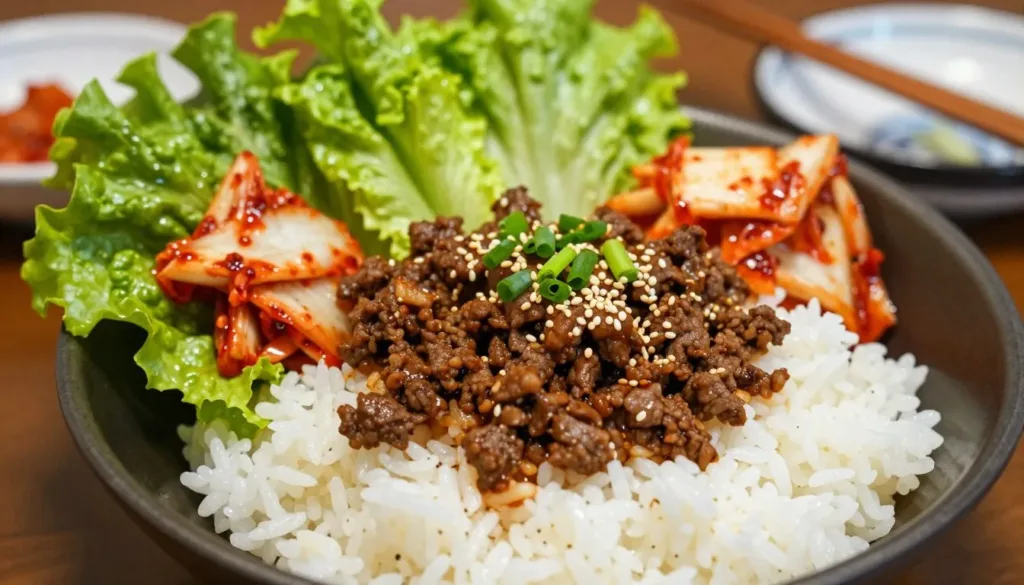
A bowl of hot rice is the simplest partner for Korean ground beef, while crisp vegetables and kimchi make the meal feel more balanced. Add contrast with fresh crunch or a sharp, tangy side.
Rice gives the beef a mild base, and kimchi brings a bright fermented tang. Kimchi is a traditional banchan made from salted, fermented vegetables, most often Chinese cabbage or Korean radish.
Choose a rice or grain base
White rice is an easy match for the sauce, while brown rice adds a firmer bite. You can also use noodles when you want a different feel from a rice bowl.
| Serving format | Base | Fresh or crunchy additions | Finish |
|---|---|---|---|
| Rice bowl | Cooked rice | Cucumber and carrot | Sesame seeds or green onion |
| Lettuce wraps | Lettuce leaves | Rice and kimchi | A small spoonful of beef |
| Noodles | Thin noodles | Spinach or other greens | Sesame seeds or green onion |
Add vegetables and banchan
Thinly sliced carrots, cucumber, and green onions add fresh texture beside the beef. Kimchi is eaten as a side dish with almost every Korean meal, and a small serving can cut through a rich or sweet sauce.
These choices add more vegetables without repeating the bowl’s main toppings:
- Steamed broccoli
- Snap peas
- Cucumber salad
- Bean sprouts
- Quick wilted Napa cabbage
Try wraps or noodles
Lettuce leaves turn the beef into a hand-held dinner when you want something other than another rice bowl. Add a little rice or kimchi inside, then fold the leaf around a small portion of meat.
Thin noodles can take the sauce well, especially with spinach or another green mixed through. To serve Korean ground beef with noodles, keep the portion of beef modest so the bowl stays easy to toss and eat.
If serving kimchi to someone new to it, start with a small side portion because its fermented tang and heat can dominate a mild beef sauce.
Store, Reheat, and Handle Ground Beef Safely
Use a food thermometer rather than color alone to confirm that ground beef has cooked safely. The temperature to reach is 160°F (71.1°C), checked at the thickest part of the meat.
Cooked ground beef leftovers generally keep in the refrigerator for 3-4 days, or in the freezer for 3-4 months for best quality. These storage ranges apply to leftovers, not the temperature check for cooking.
Use a clean food thermometer and place its tip in the beef, away from the pan. Check more than one spot if the meat sits in large clumps. The 160°F minimum temperature is the safety target for ground beef.
After dinner, move leftovers into shallow airtight containers and refrigerate them promptly. Shallow containers help the food cool faster than a deep pot left on the counter.
Store crisp toppings apart from the cooked meat and rice. That keeps vegetables from going limp and makes it easier to reheat only what you plan to eat.
Warm leftovers until they are steaming hot throughout. You can use a pan or microwave, stirring the food so heat reaches the center rather than only warming the edges.
If you froze cooked beef, thaw it in the refrigerator before reheating. Keep raw meat separate from cooked food and clean any tools or surfaces that touched it.
Label the container with the cooking date so you can use refrigerated leftovers within the recommended window.
Adjust the Sweetness, Heat, and Ingredients
The easiest way to customize this dinner is to keep the cooking method and adjust the sauce to your household’s taste. Small changes to sweetness, spice, or protein can make the same skillet work for different eaters.
Changing the protein can change how much fat the pan releases, so drain only what the pan needs. Use these simple adjustments as a starting point:
- Reduce the brown sugar for a less sweet sauce.
- Add gochujang or red pepper flakes for more heat.
- Swap in ground turkey, pork, chicken, tofu, or plant-based ground beef.
- Choose tamari with a gluten-free label instead of soy sauce.
- Keep the beef mild and offer extra heat at the table for mixed spice preferences.
If you change the protein, watch the pan as it cooks. Lean turkey may leave little fat, while another ground meat can release more. Tofu and plant-based ground beef may also brown or crumble differently.
For a smaller batch, measure the sauce with a tablespoon or cup and scale it to the amount of protein. Garlic cloves, oil, sugar, and pepper are easy to adjust, but add strong seasonings in small amounts.
Check labels on sauces and substitutes when avoiding gluten, since the ingredient name alone does not guarantee a gluten-free product.
Conclusion
A satisfying bowl starts with one clear choice: keep the beef sweet-savory or give it a gochujang kick. That choice helps you set the sauce before the skillet gets hot, and it keeps dinner simple.
You do not need a special shopping trip to make the meal work. Use vegetables already in your kitchen, then add fresh toppings to suit each plate. A little planning lets the rice and beef finish close together, which matters on a busy night.
For your next dinner, set out the ingredients you want to use and start the rice before heating the skillet.
FAQ
What is Korean ground beef called?
How to season ground beef for Korean beef?
How to cook beef mince Korean style?
What are some popular Korean beef dishes?
What is an easy recipe for Korean beef?
What Did You Think? Rate This Recipe
Absolutely Tender and Packed with Flavor!
I followed this guide step by step and the beef shank came out amazingly tender and full of flavor. The tips on maintaining moisture made all the difference. Highly recommended for anyone trying this cut for the first time!