Chicken Thigh Recipe: 12 Easy Ways to Cook Juicy Thighs
Table of Contents
Choose from 12 easy chicken thigh recipes, from crisp oven-baked thighs to quick skillet, sheet-pan, air-fryer and grilled dinners. A chicken thigh recipe can make a juicy weeknight dinner without a long list of steps.
These ideas cover two recipes for each of six cooking approaches, so you can choose by flavor and cooking style. The sections also help you pick a cut and cook it safely.
Match a recipe to the time you have, the cut in your refrigerator and the flavor you want.
Start with the cooking method and cut that fit your evening. Then choose a flavor that suits the rest of your meal.
Key Takeaways
- Choose bone-in, skin-on thighs for crisp skin.
- Pick boneless, skinless thighs when speed matters.
- Use a thermometer to check doneness.
- Give chicken room in a pan or air-fryer basket.
- Match sauces and sides to your cooking method.
Which Chicken Thigh Cut Fits Your Cooking Plan?
Bone-in, skin-on thighs suit a crisp roast, while boneless, skinless thighs are the practical pick when you want dinner to cook faster. The cut changes the pace: bone-in pieces take longer than boneless pieces, and skin helps create a crisp exterior. Choose the cut that fits your cooking time and the texture you want.
Chicken thighs come in four common forms, with bone and skin sold in different combinations. The table matches each cut to a useful cooking plan.
| Cut | Bone | Skin | Best fit |
|---|---|---|---|
| Bone-in | Yes | Yes | Crisp oven or air-fryer cooking |
| Boneless, skinless | No | No | Quick skillet or grill cooking |
| Bone-in | Yes | No | Longer braises |
| Boneless, skin-on | No | Yes | Faster cooking with browned skin |
Boneless chicken thighs are often handy for fast meals, while bone-in pieces work well when you have more time. Skin adds texture and browns as it cooks. Chicken breasts are leaner and shaped differently, so they may not finish at the same time as thighs.
During the October 5-30, 2026 trading period, fresh conventional parts sold FOB in the United States averaged 171.68 cents per pound for boneless, skinless thighs and 82.94 cents for bone-in thighs. These are USDA trading-period prices, not a current store quote. The USDA Agricultural Marketing Service also posts its Poultry Weighted Average report.
Use this short list when you need to decide quickly:
- Choose bone-in, skin-on for crisp skin.
- Choose boneless, skinless for speed.
- Choose bone-in for a longer braise.
- Choose skin-on when browned skin is part of the meal.
Package labels name the cut clearly, but check both details before buying. Check the package label for both bone and skin before choosing a recipe.
Chicken Thigh Recipe in the Oven: Two Reliable Options
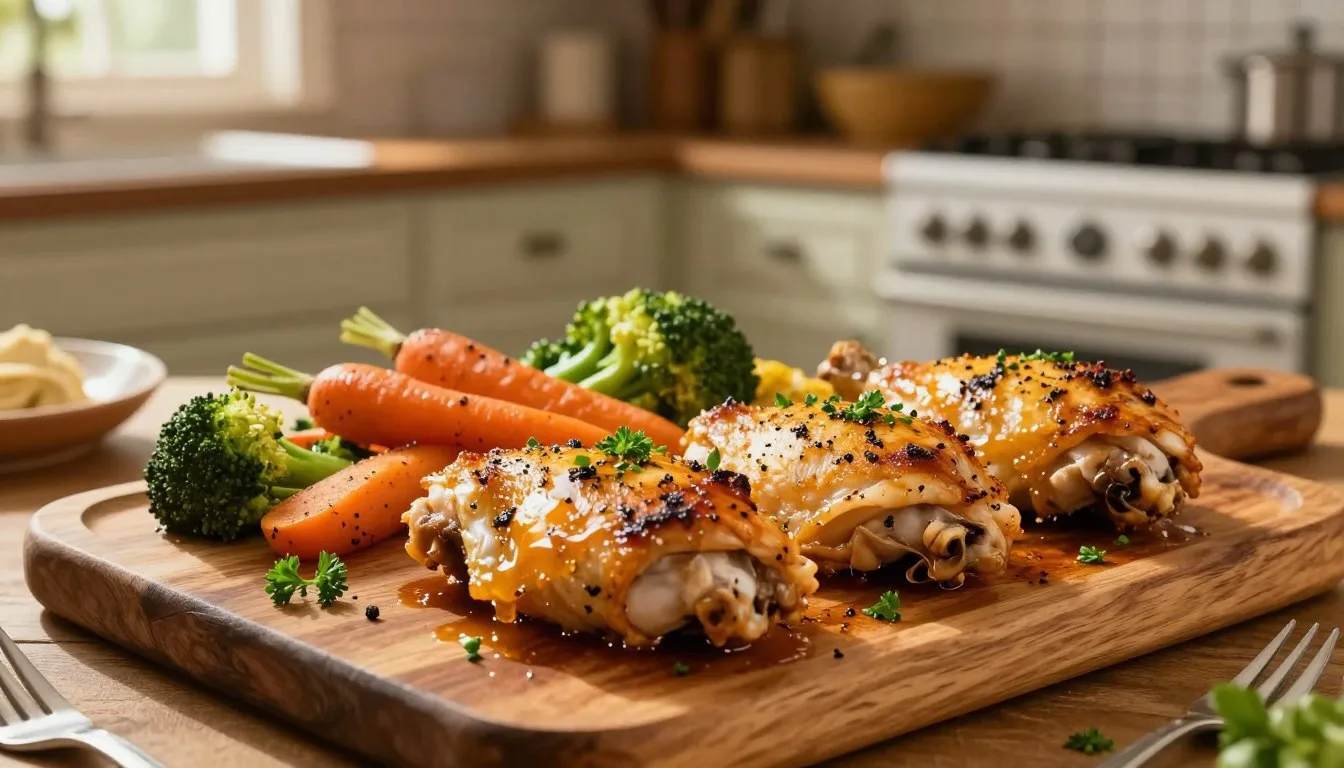
At 400°F, bone-in, skin-on thighs take 25-30 minutes, while boneless, skinless thighs take 20-25 minutes before you check their temperature. An oven-baked chicken thigh recipe works best when you match time to the cut. These ranges are starting estimates, since piece size and your oven affect cooking. The instant-read thermometer, not the timer, decides doneness.
At the same temperature, bone-in, skinless thighs take 20-25 minutes, and boneless, skin-on thighs take 25-30 minutes. Baked chicken thighs need a thermometer check rather than time alone.
| Cut | Skin | Bone | Time at 400°F |
|---|---|---|---|
| Bone-in | Yes | Yes | 25-30 minutes |
| Boneless | No | No | 20-25 minutes |
| Bone-in | No | Yes | 20-25 minutes |
| Boneless | Yes | No | 25-30 minutes |
A simple oven-baked chicken thigh recipe starts with one layer of seasoned chicken. Follow these steps:
- Heat the oven to 400°F.
- Dry and season the chicken.
- Arrange the pieces in one layer.
- Check the thickest portion with an instant-read thermometer.
Crispy Paprika Bone-In Thighs
For 3 pounds of bone-in thighs, combine 2 tablespoons olive oil, 1 teaspoon each garlic powder, smoked paprika and mustard powder, 1/2 teaspoon sea salt, and 1/2 teaspoon thyme. Pat the skin completely dry, then coat each piece with the seasoning. Leave space between pieces so hot air can reach the edges.
A recipe using this amount of chicken gives a 30-40 minute estimate at 400°F. Bone-in thighs may reach 175-185°F for a tender texture, though 165°F remains the safe minimum. Keep the texture goal separate from the safety check.
Lemon-Garlic Baked Thighs
For a brighter flavor, season the chicken with lemon, garlic, olive oil and herbs. The lemon sharpens the savory garlic, while herbs bring a fresh note without covering the meat’s taste. This flavor profile works with skin-on or skinless pieces.
Check the thickest meat near the end of the estimated range, then cook longer if needed. Smoked paprika can scorch at 425°F, so watch the seasoning closely after 20 minutes.
Skillet Chicken Thigh Recipes with Quick Pan Sauces
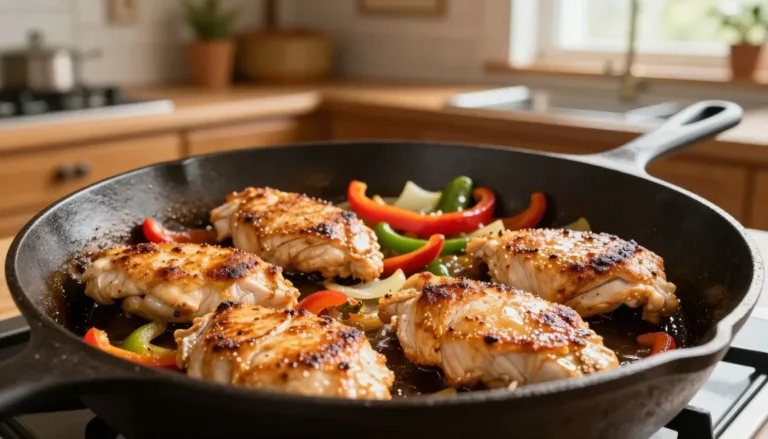
A skillet dinner can deliver browned chicken and a quick sauce in the same pan. The pan juices build flavor as the chicken cooks, and a few fresh ingredients can turn them into dinner’s sauce. Cook in batches when the pan cannot hold the pieces with space around them.
Two skillet chicken thigh recipes take different routes: one uses bright tomatoes and spice, while the other brings garlic and white wine together.
Cherry Tomato and Za’atar Skillet Chicken
This 25-minute recipe uses cherry tomatoes, lemon, garlic, za’atar and paprika. Za’atar brings a savory herbal note, while paprika adds warmth. As the tomatoes soften in a covered skillet, they release juices that mingle with the spices.
Lemon brightens the sauce and balances the soft, sweet tomatoes. Spoon the tomatoes and pan juices over the chicken before serving. Keep the lid on while the tomatoes soften, then uncover the pan so excess liquid can cook down.
Spanish Garlic Chicken
Spanish garlic chicken cooks in one skillet in just over 30 minutes. Brown boneless pieces first to build a rich base, then add garlic, thyme, bay leaf and white wine. As the wine reduces, it picks up flavor from the browned bits in the pan.
Let the liquid reduce until it coats the chicken instead of pooling around it. A crowded pan releases moisture and encourages steaming, which slows browning. If the pieces do not fit with room between them, cook them in batches and return them to the sauce.
Keep the heat steady once the sauce goes in, so it simmers rather than boils hard. Leave room around the chicken so it browns instead of releasing moisture into a crowded pan.
Boneless Chicken Thigh Recipes for Fast Dinners
Boneless, skinless thighs are the fast choice when you want a lemony dinner without a long oven roast. A bright spice mix suits boneless chicken thighs because it adds flavor without a lengthy cooking plan. Fast cooking still calls for an instant-read thermometer check.
For a skinless chicken thigh recipe, use lemon, garlic and herbs when you want a bright, flexible meal. The two ideas below bring different spice levels to quick dinners.
20-Minute Lemon Chicken
This recipe seasons boneless, skinless thighs with oregano, cumin, coriander and nutmeg. A quick citrus-and-spice marinade gives the meat a fresh, fragrant flavor. The mix works on an outdoor grill or an indoor griddle, so you can use the cooking surface that suits your kitchen.
Cook the pieces for about 6 minutes per side on a grill or griddle. Turn them once, then check the thickest part before serving. Add extra lemon at the table if you want a sharper finish.
Honey-Mustard Boneless Thighs
For a sweet-tangy option, coat boneless pieces with honey, mustard, garlic and herbs. The glaze clings to the chicken and adds a mellow sweetness beside the sharp mustard. Turn the pieces as they cook so the glaze coats them evenly.
Honey can darken fast in a hot pan, especially where it touches the metal. Watch the heat closely and add a little water if the glaze thickens before the chicken finishes. The chicken still needs a temperature check, even when the outside looks browned.
Keep the honey glaze moving and lower the heat if it begins to darken before the chicken is done.
Sheet-Pan Chicken Thigh Dinners with Vegetables
A sheet pan lets the chicken juices and vegetable seasonings mingle while dinner cooks in one layer. This one-pan setup makes a coordinated meal with less stovetop work. Dense vegetables may need a head start or smaller pieces so they finish with the chicken.
Greek chicken brings lemon, garlic and oregano dressing across the chicken and vegetables. Shawarma uses warm spices and a cool salad for a different balance.
Greek Sheet-Pan Chicken
This 45-minute dinner combines boneless, skinless thighs with zucchini, bell pepper, tomato, olives and feta. A lemon dressing with garlic and oregano coats both the chicken and vegetables. The ingredients share the pan, so their flavors mix as they roast.
Add feta near the end if you want it warm without losing its shape. The olives bring a salty bite, while lemon cuts through their richness. You can serve the pan meal as it is, with the vegetables alongside each piece.
Chicken Shawarma with Cucumber-Tomato Salad
For shawarma, cut boneless thighs into bite-size pieces and roast them with onion, lemon, olive oil and warm spices. The small pieces catch browned edges as they cook. Serve them with cucumber-tomato salad and tahini sauce or tzatziki.
Cut dense vegetables smaller than quick-cooking ones, or start them before adding the chicken. That small change helps potatoes or thick onion wedges soften in time. Cut vegetables to similar sizes so they roast at a similar pace.
Air-Fryer Chicken Thighs with Crisp Edges
An air fryer suits you when you want browned edges without heating a full-size oven. Its moving hot air can brown the outside quickly, but airflow needs room around each piece. Do not crowd the basket, because stacked chicken blocks airflow.
Bone-in pieces need more time than boneless pieces. A small air fryer may need several batches, even if that adds a little hands-on time.
Paprika-Garlic Air-Fryer Thighs
For a simple seasoning route, coat the thighs with garlic, paprika, salt, pepper and a little oil. Paprika gives the surface a warm color, while garlic keeps the flavor familiar. Turn the pieces during cooking if your air fryer browns one side faster.
Use similar-sized pieces in one batch when possible. If the basket is small, cook fewer thighs at a time and keep finished pieces warm while the next batch cooks.
Ras el Hanout Air-Fryer Thighs
Ras el hanout, a North African spice blend, gives chicken a fragrant, layered flavor. One version pairs the blend with lemon, garlic and olive oil, and takes about 30 minutes. The lemon keeps the spice profile lively rather than heavy.
Bone-in and boneless pieces will not finish together if their size differs greatly. Check each piece before serving, even when the batch looks evenly browned. Arrange pieces in a single layer and check each piece for doneness before serving.
Grilled Chicken Thighs for Smoky, Bright Meals
Grilling gives thighs a smoky edge, while lemon or ginger-soy keeps the flavor profile bright. A short marinade brings flavor to the surface, but it does not tell you whether the center is done. Marinade time never replaces a doneness check.
Sumac and charred lemon make a tart, earthy pairing. Huli-style chicken leans sweet and savory, with ginger and soy brushed on as the meat turns.
Sumac-Grilled Thighs with Charred Lemon
Marinate the thighs for at least 30 minutes with sumac, onion, garlic, lemon and Aleppo pepper. Sumac has a tart note that works well with the onion and citrus. Grill the chicken for about 10 minutes, then serve it with charred lemon and pickled onions.
The charred lemon adds a smoky, sharp finish at the table. Pickled onions bring crunch and a sour bite beside the warm spices. Check the chicken’s temperature even when the outside has clear grill marks.
Huli-Style Ginger-Soy Grilled Thighs
Huli means “turn” in Hawaiian and describes turning meat on the grill. For a Huli-style meal, season thighs with ginger and soy, then turn them as they cook. Brush on sauce near the end for a glossy, savory finish.
Keep raw chicken on its own plate while it waits by the grill. Move cooked pieces to a clean plate, not the one that held raw thighs. Keep a clean plate ready for cooked chicken rather than reusing the plate that held raw thighs.
Slow-Cooker and Braised Chicken for Hands-Off Meals
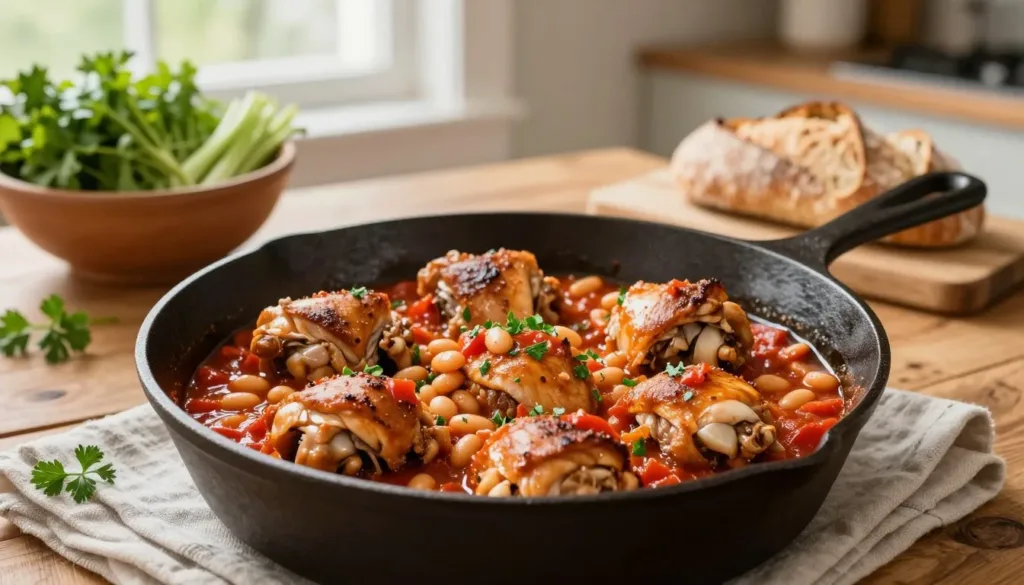
Choose a braise or slow cooker when you want the thighs tender enough to serve with their cooking liquid. A slow cooker offers mostly hands-off gentle heat, while stovetop-to-oven braising starts by browning the meat. Covered, moist cooking makes tender chicken, not crisp skin.
Choose the method by how much flavor you want to build before adding liquid. A slow cooker suits a meal that can cook gently while you handle other tasks. Braising gives you a browned base and a rich sauce in the same dish.
For a tomato-and-bean braise, brown the thighs, then simmer them with tomato sauce, beans and herbs. The liquid softens the meat and becomes part of the meal. Serve it in a bowl so you can spoon the sauce over each portion.
Chicken Marbella combines capers and olives with dried apricots. The result pairs briny, salty flavors with fruit’s sweetness. It suits a slow roast or braise, where the fruit softens in the cooking liquid.
Jamaican brown stew chicken often marinates with spices and vegetables before the chicken gets seared and stewed. That order brings color to the meat before the moist cooking begins. You get a deep, savory dish, though the covered pot will not keep the skin crisp.
If crisp skin matters, brown it separately or choose a dry-heat method instead.
Sauces and Marinades That Change the Flavor
A sauce or marinade can take the same chicken thighs in a sweet, bright, savory or warmly spiced direction. Small flavor changes can give a familiar recipe a new feel without changing its cooking method. Sugary sauces can darken quickly over direct heat.
Choose a pairing based on the flavor you want, then adjust its strength to suit the rest of dinner.
- Honey and Dijon make a sweet-tangy glaze.
- Soy, ginger and garlic give teriyaki-style flavor.
- Lemon and herbs make a bright marinade.
- Tomato and smoked paprika suit a savory braise.
A honey-mustard glaze can combine honey, Dijon mustard, garlic, herbs, smoked paprika and apple cider vinegar. The vinegar gives the sweet glaze a sharp edge. Add it late during high-heat cooking, or use gentler heat when the sauce stays on longer.
Chicken teriyaki can get its main flavor from four ingredients beyond the chicken. Soy brings salt, ginger adds warmth, and sugar gives the sauce its familiar shine. Keep the balance in mind when serving it with other salty foods.
For a marinade, let lemon and herbs bring out the chicken’s savory flavor without a thick coating. A tomato-and-paprika mix works better when you want a soft, spoonable braise. Add sugar-rich glaze near the end of high-heat cooking so it does not scorch.
Is a Chicken Thigh Recipe Healthy?
Boneless, skinless thighs can fit a balanced meal, and removing the skin lowers the listed fat compared with a raw boneless thigh with skin. Portion and preparation matter because oil and sauce change the meal. Raw nutrition values are not totals for cooked meals.
USDA FoodData Central data published in May 2026 lists the following values for raw and cooked portions. The raw figures describe the meat before cooking.
| Preparation and serving | Calories | Protein | Fat |
|---|---|---|---|
| Raw boneless, skinless, per 3 oz (85 g) | 150 | 17 g | 8.4 g |
| Raw boneless, skinless, per 100 g | 177 | 20 g | 9.9 g |
| Roasted boneless, skinless, no added fat, per 100 g | 187 | 24.5 g | 9.5 g |
Per 100 g, raw boneless thighs with skin have 229 calories and 18 g fat. Raw boneless, skinless thighs have 177 calories and 9.9 g fat per 100 g. Those are raw values, not cooked-meal totals.
A raw bone-in thigh with skin has about 178 calories, 13 g protein and 13.8 g fat per 3 oz (85 g). Cooking changes water weight, and a serving may include oil or sauce. Compare like-for-like raw or cooked portions rather than treating those nutrition values as interchangeable.
Seasoning and Prep Choices for Better Flavor
A short seasoning list can make thighs taste distinct without requiring a complicated marinade. One blend leans toward Italian herbs, while another brings smoky paprika, mustard and thyme. Check the salt in a premixed seasoning before adding more.
For 3 pounds of bone-in, skin-on thighs, one blend uses 2 tablespoons olive oil, 2 teaspoons each salt, garlic powder, onion powder and Italian seasoning, plus 1 teaspoon each black pepper and paprika.
A second 3-pound blend uses 2 tablespoons olive oil, 1 teaspoon each garlic powder, smoked paprika and mustard powder, 1/2 teaspoon sea salt and 1/2 teaspoon thyme. It has less salt and a sharper smoky flavor than the Italian-herb mix.
Use these swaps to shift a blend without changing the cooking method:
- Italian seasoning gives a familiar herb profile.
- Smoked paprika adds a smoky note.
- Mustard powder brings sharper savory flavor.
- Thyme or rosemary adds an herbal note.
Premixed blends can vary in salt, even when their names sound alike. Taste the blend before seasoning the chicken, then add salt only if it needs more. This helps keep the meat’s flavor clear instead of overly salty.
Crush dried herbs between your fingers before adding them to help release their aroma. Check the salt in a premixed seasoning before adding more to the chicken.
Sides That Turn Chicken Thighs into Dinner
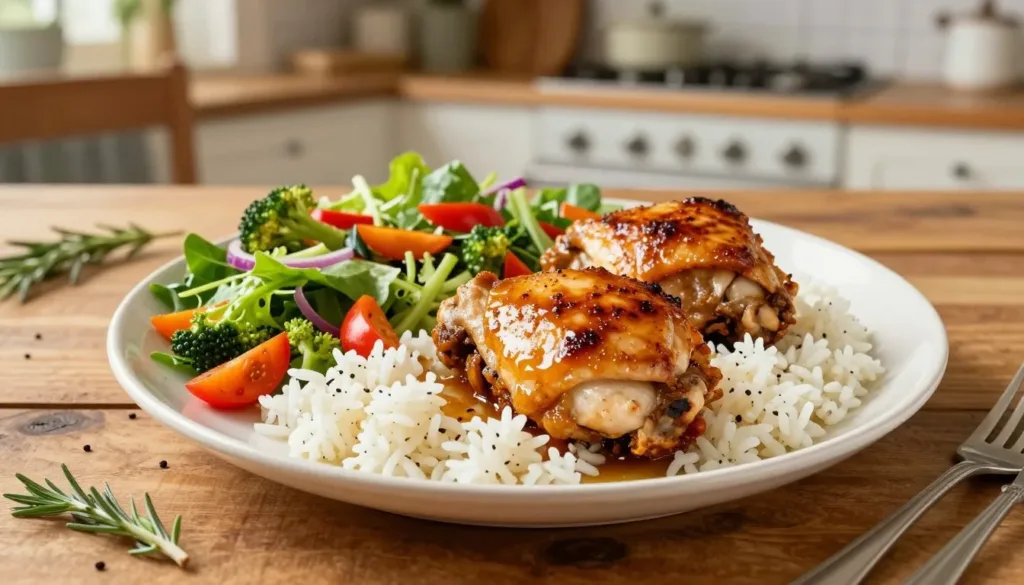
Match the side to the juices: rice catches a thin sauce, while bread or potatoes suit a thicker one. Choose sides that fit the way the chicken is cooked, so dinner feels complete without crowding the plate. Rich sauces pair well with something crisp or green.
Lemon-herb chicken works with rice or orzo and a green salad. Tomato-braised thighs suit crusty bread or potatoes, which can catch the sauce. Grilled spiced thighs pair well with rice, salad and a cooling sauce.
A Greek sheet-pan meal can combine chicken with zucchini, bell pepper, tomato, olives and feta. The vegetables make the chicken feel like a full meal without another pan. You can also add rice if you want a grain beside the roasted vegetables.
A halal cart-style plate pairs chicken with yellow rice, lettuce, tomatoes and white sauce. The mix of grain, fresh vegetables and creamy sauce gives each bite a different texture. It is a useful model for balancing a strongly seasoned thigh recipe.
One-pan chicken and orzo combines chicken with orzo and fennel, then finishes with lemon zest. Potatoes or vegetables can roast beside chicken when you cut them to cook at a similar pace. Add a crisp salad or a green vegetable when the main dish is rich or heavily sauced.
How to Check Chicken Thigh Doneness Safely
Chicken thighs are safe when the thickest part reaches the USDA minimum internal temperature of 165°F. Use an instant-read thermometer to check the meat, since color and cooking time alone cannot confirm its temperature. 165°F is the safe minimum for every chicken cut.
Insert the thermometer into the thickest part of the meat, keeping its tip away from bone. Check more than one piece when the thighs differ in size.
A thin piece may reach the safe mark before a large one. Check the reading in the largest thigh, then test other pieces that look smaller or cook faster. Bone can heat differently from the meat and give a misleading reading if the tip touches it.
Some recipes cook thighs above the safety minimum for a more tender texture. That is a texture choice, not a change to the food-safety rule. The USDA safe minimum temperature remains 165°F for chicken.
Do not use clear juices, browned skin or a set glaze as proof that the center is done. Those signs describe the surface, not the exact heat inside the meat. Take the reading in the thickest meat, not against the bone.
How to Store and Reheat Chicken Thighs
Refrigerate cooked chicken promptly and plan to use it within 3-4 days. Quick storage keeps leftovers ready for another meal, while a covered container limits mess and helps protect the meat. Reheat only the portion you plan to eat.
Raw chicken also needs a clear storage plan. Use these limits as a guide:
| Chicken state | Storage location | Time |
|---|---|---|
| Raw chicken | Refrigerator | 1-2 days |
| Frozen chicken parts | Freezer, best quality | Within 9 months |
| Cooked chicken leftovers | Refrigerator | 3-4 days |
Baked thigh leftovers can stay in a covered container in the refrigerator for up to 4 days. Frozen chicken parts keep their best quality when used within 9 months. Keep raw poultry separate from ready-to-eat foods while it waits.
Turn cooked thighs into another meal with these simple options:
- Shred the meat into chicken salad.
- Fold pieces into rice or grain bowls.
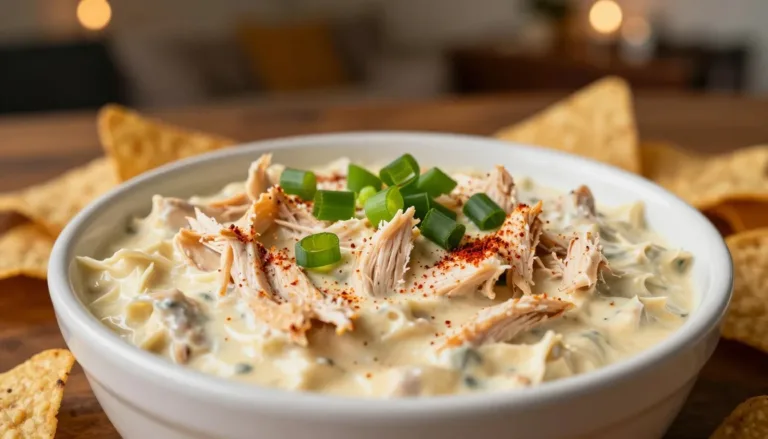
- Mix them into a saucy dish such as buffalo chicken dip.
Reheat a portion until it is warm all the way through. Repeated reheating dries the meat and adds extra handling, so take out only what you plan to serve. Chill leftovers in a covered container and reheat only the portion you plan to eat.
Common Mistakes That Dry Out Chicken Thighs
The most common cause of dry thighs is relying on a fixed timer instead of checking the piece you are cooking. A recipe time is an estimate, and both cut and size affect how quickly a thigh cooks. Use the thermometer reading to decide when to stop.
A 6-ounce piece may finish before a larger thigh, even when both come from the same package. Fix these common problems at the point where they start.
Using one time for every cut and size can leave a small piece dry or a large one underdone. At 400°F, boneless, skinless thighs take an estimated 20-25 minutes, while bone-in, skin-on thighs take 25-30 minutes. Check the actual piece rather than copying one timer setting.
Crowding a pan traps moisture and stops the chicken from browning well. Leave space between pieces or cook them in batches. The same rule applies to a small air-fryer basket.
Damp skin will not crisp as well as dry skin. Pat it dry before seasoning when crispness is the goal. This step helps the surface brown instead of steaming under a layer of moisture.
Applying a sugary glaze too early over high heat can burn the outside before the center is done. Add the glaze near the end or lower the heat. Adjust the cooking time to the cut and size, then use the thermometer reading to decide when to stop.
Conclusion
A good chicken thigh dinner starts with matching the cut to the cooking method you have time for. Boneless, skinless thighs suit faster meals, while bone-in, skin-on thighs work well when crisp skin is the goal. Pick one of the 12 chicken thigh recipes and check the package for the cut you need.
Keep an instant-read thermometer close, since color and timing cannot confirm the center’s temperature. Choose one flavor idea, gather its ingredients and check the thickest thigh with an instant-read thermometer before serving.
FAQ
Can you cook chicken thighs straight from frozen?
How long can chicken thighs stay in a marinade?
Can you substitute chicken breasts for thighs in a thigh recipe?
Should chicken thighs rest before serving?
Is it safe to rinse raw chicken thighs?
Can you reheat chicken thighs more than once?
What Did You Think? Rate This Recipe
Absolutely Tender and Packed with Flavor!
I followed this guide step by step and the beef shank came out amazingly tender and full of flavor. The tips on maintaining moisture made all the difference. Highly recommended for anyone trying this cut for the first time!