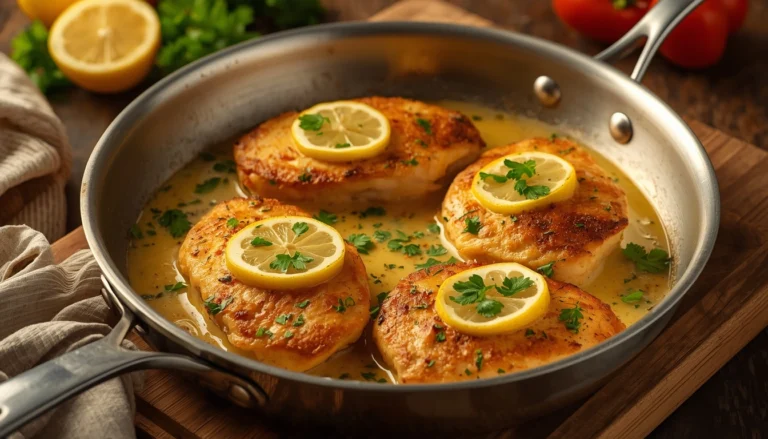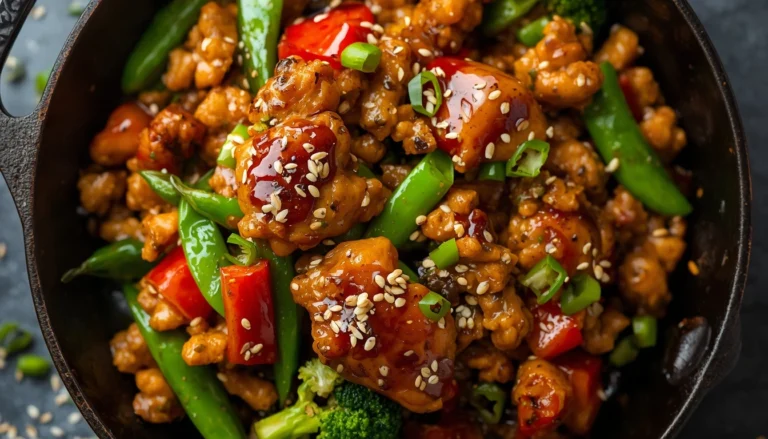
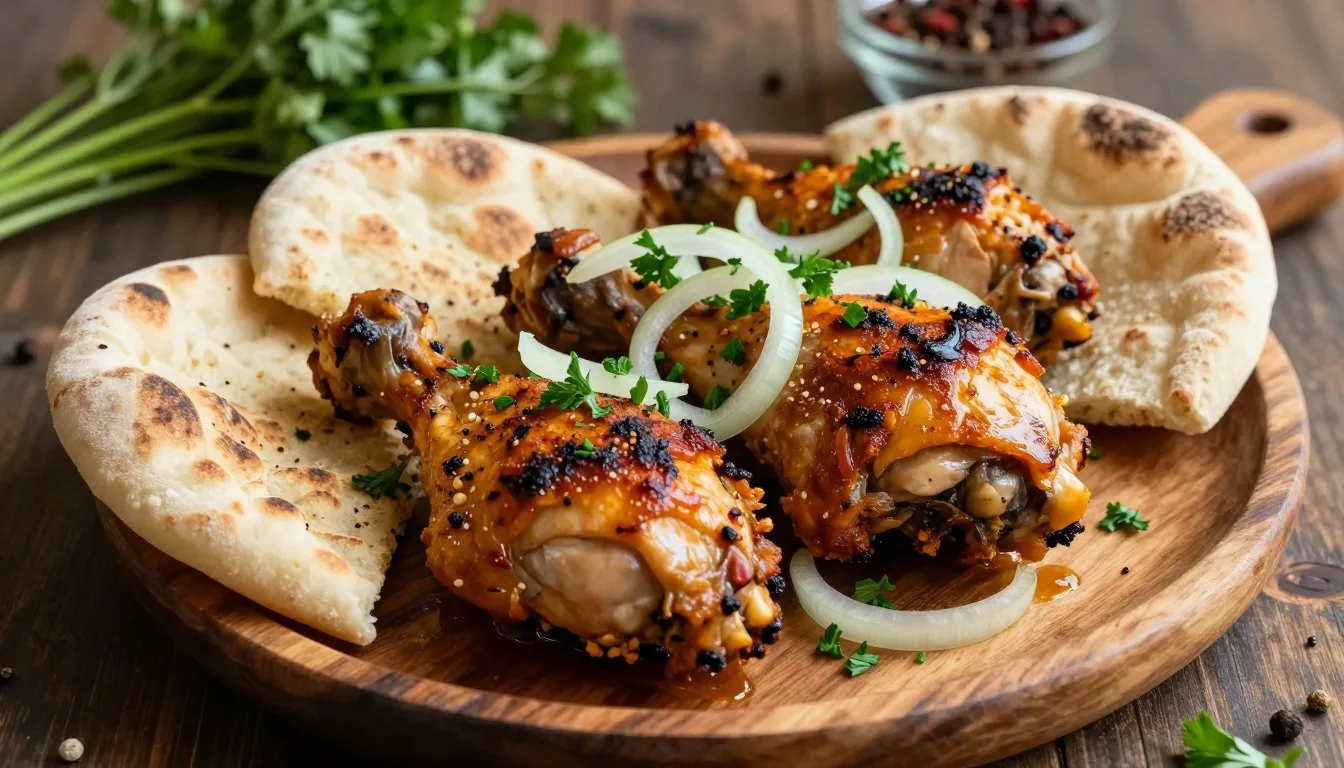
Chicken Shawarma Recipe: 6 Easy Ways to Cook It (Oven, Grill & Skillet)
Table of Contents
You can follow this chicken shawarma recipe to make juicy, boldly spiced chicken at home with boneless thighs, a simple marinade, and an oven, grill, or skillet. That familiar warm spice and savory smell can turn an ordinary meal into something worth gathering around. Shawarma-style cooking means meat is seasoned, stacked or arranged for roasting, then sliced for wraps or plates.
You do not need a vertical rotisserie to get a satisfying result. This recipe uses a cumin-forward, lemon-and-garlic marinade that works well with boneless, skinless thighs in several home kitchens. You can serve the chicken in pita wraps or build bowls with rice and fresh toppings.
Choose a cooking route that suits your time and equipment, then make enough for a weeknight meal or a table of guests. Use a food thermometer to make sure the chicken is safely cooked, whichever method you choose.
What Makes Shawarma Different From Other Spiced Chicken?
Traditional shawarma cooks seasoned meat on a slowly turning vertical spit, but you can make a shawarma-style version without one. The turning spit shapes the classic method, slowly roasting stacked meat so cooks can slice browned edges as it turns.
Shawarma is a Middle Eastern dish traditionally made with seasoned meat stacked on a vertical rotisserie. Chicken, lamb, and beef are common choices, and the meat cooks as the spit turns beside a heat source. The slow roast browns the outer layer while the inner meat continues to cook.
At home, an oven, grill, or skillet recreates the flavor without copying that equipment. Your chicken is marinated and cooked in pieces or whole thighs, then sliced for serving. That gives you the spices and browned edges associated with shawarma, with tools most home cooks already have.
The word does not point to one fixed spice blend. Cooks and recipes use different mixes, so one version may lean more on cumin while another has stronger notes of cinnamon, cardamom, or pepper. An Indian-style variation can shift the spice balance, but it is not the defining Middle Eastern profile.
When you cook it at home, call the result shawarma-style chicken, not meat shaved from a vertical rotisserie.
Shawarma Seasoning and Marinade Ingredients
Cumin, coriander, garlic, and cardamom give shawarma seasoning its warm, savory backbone. Each spice adds a different note: cumin is earthy, coriander is bright, garlic brings savory depth, cinnamon adds warmth, and cardamom has a fragrant edge.
A Lebanese blend makes about 1¼ cups and uses roughly 3 tablespoons for every 2-3 pounds of meat. Keep the blend dry for a quick rub, or stir some into a wet marinade with lemon juice and olive oil. The table compares that measured blend with two named flavor profiles.
| Blend | Ingredients and amounts | Yield or use |
|---|---|---|
| Lebanese blend | 4 tablespoons each kosher salt and ground cumin; 4 teaspoons each ground coriander, garlic powder, cinnamon, ginger, and allspice; 2 teaspoons each ground cardamom, turmeric, black pepper, paprika, and Aleppo pepper; optional cayenne | About 1¼ cups; use about 3 tablespoons per 2-3 pounds of meat |
| New York Times marinade profile | Lemon juice, olive oil, garlic, salt, black pepper, cumin, paprika, turmeric, cinnamon, and crushed red pepper | Ingredient profile; no new measurements listed here |
| The Spice House blend | Coriander, sumac, cumin, cinnamon, cardamom, pepper, turmeric, allspice, and cloves | Ingredient profile; use as a dry rub or mix with olive oil or yogurt |
A sealed jar of Lebanese seasoning keeps in a cool, dry place for up to 6 months. Label the jar with its blend name, especially if you keep more than one spice mix in the pantry.
The dry Lebanese seasoning blend
Make the Lebanese blend when you want one jar for several meals. Its salt and cumin form the largest amounts, while smaller measures of warm spices give it a layered taste. Aleppo pepper adds mild heat, and optional cayenne can push the mix hotter.
You can also use a store-bought shawarma blend. The Spice House mix includes sumac and cloves, which give it a different flavor from the Lebanese blend. A Lebanese chicken shawarma recipe often uses warm spices, but recipes do not all share one exact formula.
The lemon, oil, and spice marinade
Lemon juice adds tang, and olive oil helps the spices coat the meat. Garlic adds a strong savory note. The New York Times recipe includes lemon juice, olive oil, garlic, salt, black pepper, cumin, paprika, turmeric, cinnamon, and crushed red pepper.
RecipeTin Eats uses ground coriander, cumin, cardamom, cayenne, smoked paprika, salt, black pepper, lemon juice, olive oil, and garlic for 2 pounds of boneless, skinless thighs. An Indian-style chicken shawarma recipe can use a different spice balance, but that is a variation rather than the defining Middle Eastern profile. Leave cayenne out or reduce it when you want the aromatic spices without much heat.
Marinating the Chicken for Flavor
Give the chicken at least 1 hour in the refrigerator for the marinade to flavor the meat. More time builds a deeper taste, and the New York Times recipe uses a window of 1-12 hours for boneless, skinless thighs.
Keep the chicken covered in the fridge for 1-12 hours; the longer end gives the flavors more time to develop. A zip-top bag works well because you can turn it to coat the meat. A covered bowl also works, provided it has enough room to turn and coat every piece.
- Whisk the lemon juice, olive oil, garlic, and spices in a bowl until combined.
- Add the chicken and turn each piece until the marinade coats it evenly.
- Cover the bowl or seal the bag, then refrigerate the chicken.
- Take the chicken out only when you are ready to cook.
A simple chicken shawarma recipe needs no special container or tool for this step. If you use a bowl, choose one wide enough to move the thighs without spilling the liquid. A bag takes less fridge space and can be flipped without opening it.
Keep raw chicken covered and refrigerated throughout marinating.
How to Make a Chicken Shawarma Recipe in Six Ways
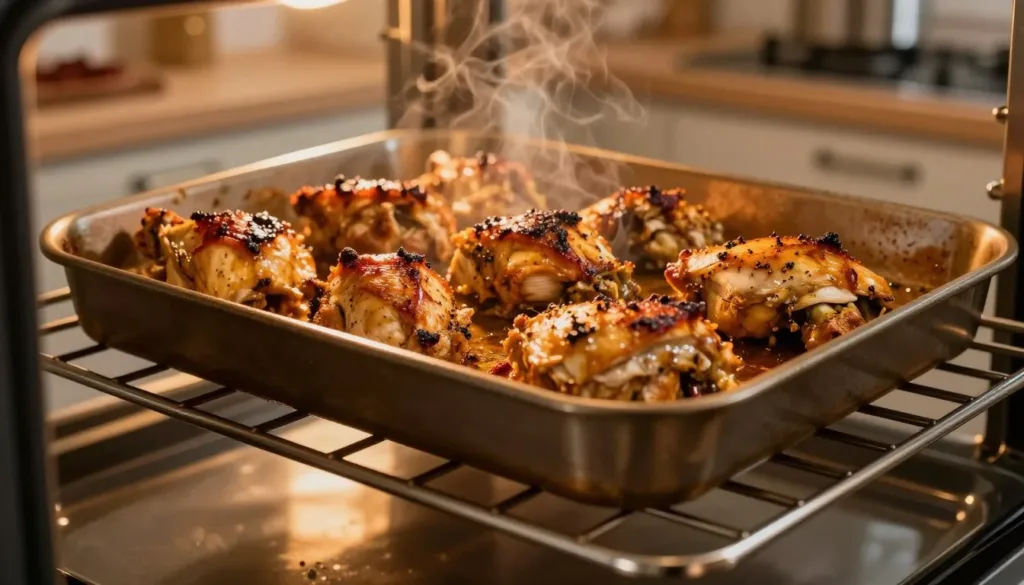
Choose the oven for hands-off batch cooking, the grill for char, or the skillet when you want to cook indoors. Your best route depends on the cut and the tools you have nearby.
Use the grill when you want char, the oven for an easy batch, and the skillet for practical indoor cooking. The six methods below use different cuts, heat levels, and clocks, so follow the timing for your chosen route. Grill heat and piece size can change how quickly the chicken cooks.
The best chicken shawarma recipe for your kitchen is the one that suits your meal plan. Whole thighs need little prep, while smaller pieces cook quickly and can pick up browned edges across a pan. Check each method with a food thermometer in the next section.
Whole thighs in the oven
Heat the oven to 425°F for a simple chicken shawarma recipe in the oven. Arrange whole marinated thighs in a baking dish or on a rimmed pan, leaving a little space between them. Roast for about 30-40 minutes.
This route asks for the least cutting before cooking. The thighs stay whole as they roast, so they are easy to turn into slices for wraps or bowls afterward. Place the pan on the center oven rack for steady heat.
Ovens can heat unevenly, and thigh size affects the finish. Check the thickest piece with a thermometer rather than relying on the clock alone. If the pieces need more time, return the pan to the oven and check again.
Sliced chicken on a sheet pan
Cut the thighs into smaller slices before arranging them in one layer on a sheet pan. Roast at 450°F for 12-15 minutes. The thinner pieces cook faster than whole thighs and expose more edges to the heat.
You can broil the pan for 1-3 minutes at the end if you want extra browning. Watch closely, since thin pieces can darken fast under the broiler. Turn the pan if one side browns more quickly than the other.
This is a useful choice when you want shawarma-style strips without a second pan. Do not stack the pieces, because crowded chicken releases moisture and softens instead of browning. Check the center of a thick slice before serving.
Oven-roasted chicken crisped in a skillet
Roast the chicken at 400°F for about 15 minutes, then slice it into strips. Heat a skillet and crisp the strips in batches for 3-4 minutes. The oven cooks the meat first, and the skillet adds browned edges at the end.
Use this method when you want a large batch but still like the crisp texture of pan-cooked chicken. Work in batches so the strips touch the hot pan instead of sitting in a pile. Use a clean plate for the cooked pieces.
Thicker thighs may need additional oven time, so check the center before slicing. The skillet step is for browning, not a substitute for checking doneness. Keep the first batch warm while you crisp the rest.
Thighs on a direct-heat grill
Preheat the grill to medium-high for direct-heat cooking. Set whole thighs over the heat and cook them for about 4-6 minutes per side at a grill temperature near 500°F. This gives the outside a charred flavor.
Grill heat can rise or fall while you cook, and thick thighs take longer than thin ones. Keep the lid closed between checks to help hold heat. Move a piece to a cooler area if the outside browns before the center cooks.
This is the top pick when you want a smoky, charred edge. Use the thermometer guidance in the next section to check the thickest thigh. Do not judge doneness by grill marks alone.
Grilled pieces on skewers
Cut the thighs into thicker, even pieces and thread them onto skewers. Leave a little space between pieces so heat can reach their sides. Grill the skewers over medium-high direct heat, turning them as they brown.
Skewers keep small pieces from falling through the grates. Metal skewers are ready to use, while wooden skewers should be soaked before grilling so they are less likely to burn. Use a grill basket if you do not have skewers.
The cook time depends on the size of the pieces and the grill’s heat. Check a thick piece with a thermometer before you pull the skewers off. Keep the pieces similar in size so they finish at about the same time.
Sear first, then finish in the oven
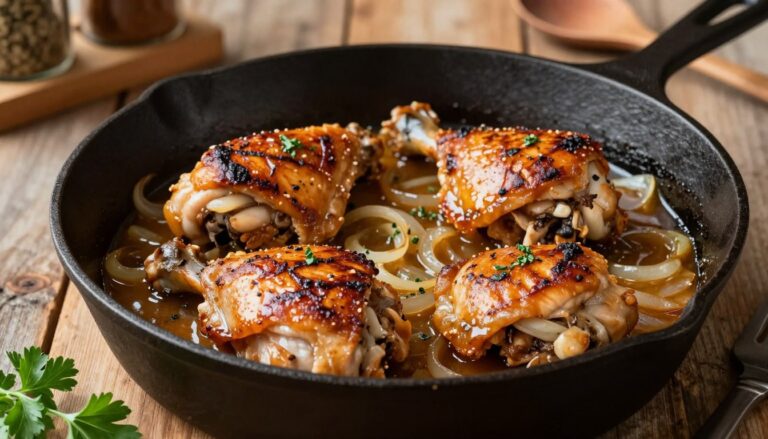
Heat a cast-iron skillet, then sear whole thighs for about 2 minutes per side. Transfer the skillet to a 450°F oven and cook for 25-30 minutes. This method gives you a browned surface before the oven finishes the center.
Use oven-safe cast iron and take care when moving the hot pan. The handle will stay hot, so use an oven mitt when you check or remove it. If you do not have cast iron, sear in an oven-safe pan instead.
Cut the thighs into even portions if they vary a lot in size. Check the thickest piece near the end of the oven time, then cook longer if needed. Leave space between pieces on a sheet pan so they roast instead of steaming.
Safe Doneness, Resting, and Slicing
Check the thickest piece with a food thermometer and make sure it reaches 165°F. The center reading matters most, because a browned surface does not show whether the inside is safe.
Chicken needs an internal temperature of 165°F for safe doneness. Place the thermometer in the thickest part of the chicken without touching the pan or bone. Check a few pieces when their sizes differ.
| Situation | Temperature or rest | What to do |
|---|---|---|
| Safe chicken doneness | 165°F internal temperature | Measure the thickest part with a food thermometer |
| Grilled thigh texture | 175°F or up to 195°F | These figures describe one grilled-thigh recipe’s texture guidance, not a new safety minimum |
| After roasting | Rest for 2 minutes | Let the chicken rest before slicing |
Some grilled-thigh recipes suggest 175°F or even 195°F for a softer, more tender texture. Those figures describe texture guidance for thighs, not a replacement for the 165°F safety minimum. A thermometer reading of 165°F confirms safe doneness.
Resting helps the juices stay in the meat as you cut it. After roasting, a 2-minute rest gives the juices time to settle before slicing. Cut across the meat into thin strips, which are easier to fit inside pita.
Return the thermometer to the thickest piece if the reading is below the safe temperature.
Sauces That Balance the Spices
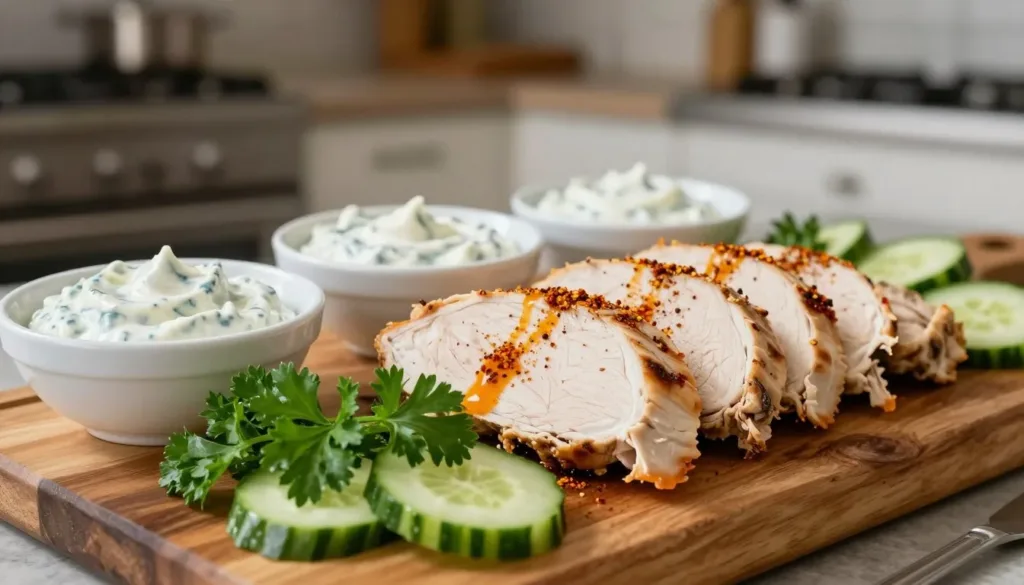
A cool or tangy sauce balances the warm spices and browned edges. A spoonful can change the whole bite, so choose a sauce that fits how strong you want the garlic or lemon flavor.
Sauce is optional, and serving it on the side lets everyone choose the amount. These three familiar choices each bring a different taste and texture to the chicken.
- Toum: garlic, lemon, salt, and olive oil make a smooth, intensely garlicky sauce.
- Tahini sauce: tahini, lemon, garlic, and water make a nutty, lemony pour.
- Tzatziki: yogurt and cucumber make a cool, creamy sauce.
Toum is bold, so a little goes a long way. Tahini has a nutty taste that sits well beside the spices, while tzatziki brings a cool dairy note. You can offer more than one so guests can choose a flavor.
A bowl of tahini sauce can also be thinned with water until it pours easily. Keep each sauce in its own serving dish, especially when you have guests who avoid dairy. Serve a strong garlic sauce in a small bowl so it does not overwhelm the chicken.
Pita Wraps, Bowls, and Plates
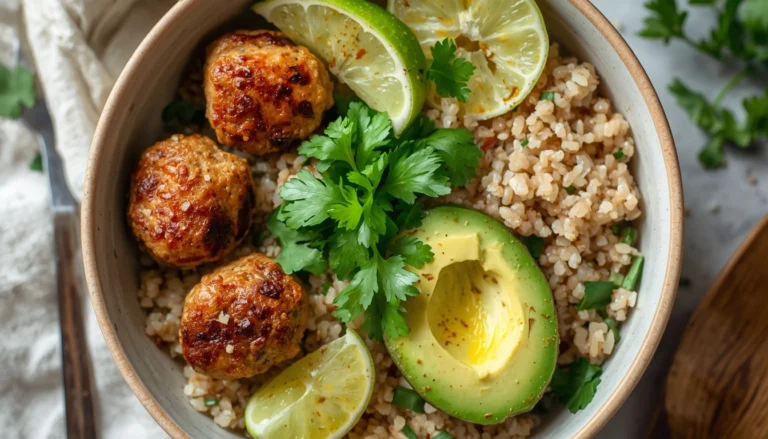
Warm pita, crisp vegetables, and a spoonful of sauce turn sliced shawarma chicken into an easy wrap. A build-your-own spread also lets each person choose how much bread, rice, salad, and sauce to add.
Two pounds of thighs can serve 4-6 people in the New York Times recipe. Use the table to shape that chicken into a wrap, a rice bowl, or a full plate.
| Serving style | Base | Fresh additions | Sauce or side |
|---|---|---|---|
| Pita wrap | Warm pita bread | Lettuce, tomato, onion | Toum, tahini, or tzatziki |
| Rice bowl | Cooked rice | Salad and pickles | Tahini sauce or yogurt sauce |
| Shawarma plate | Flatbread and rice | Salad, tomato, and onion | Dips served on the side |
A wrap is easy to carry, while a bowl gives you room for extra rice and salad. For a plate, set out flatbread, rice, salad, and dips so the chicken stays at the center. Add pickles for a sharp, salty bite beside the warm meat.
Warm pita bread briefly before filling it, then add chicken and toppings without overstuffing. A smaller amount of filling makes the bread easier to fold and eat. Put the toppings and sauces in separate bowls when everyone is assembling their own meal.
Make-Ahead Prep and Leftover Storage
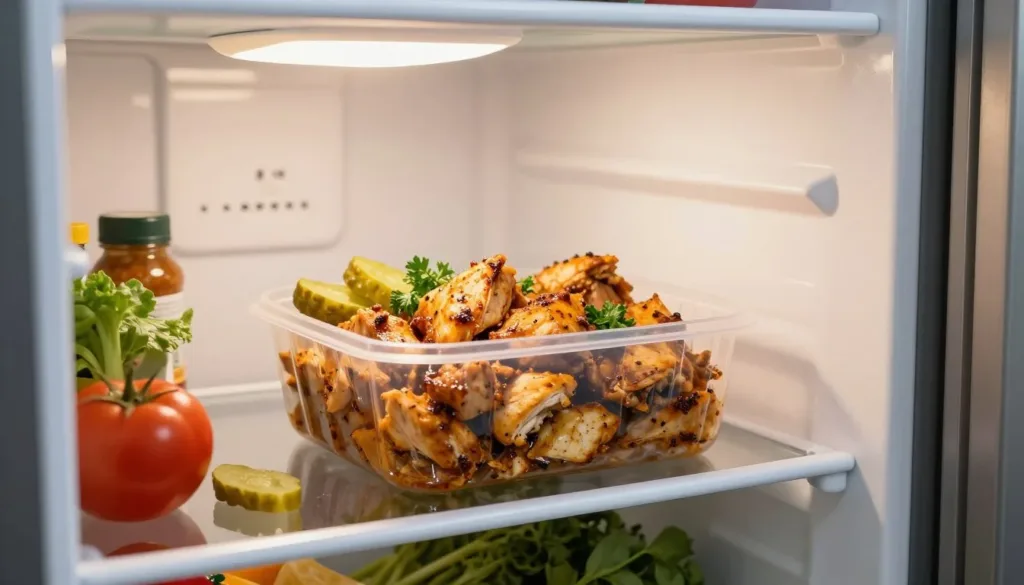
Make the dry seasoning ahead and keep it in a sealed jar in a cool, dry place. A ready jar saves a small step when you want to make the meal on a busy night.
Refrigerate cooked chicken in a sealed container for up to 4 days. You can freeze cooked chicken for 2-3 months, then thaw portions in the refrigerator before reheating.
Store chicken in a container that seals well, and divide a large batch into meal-size portions. Smaller portions cool and reheat more easily than one deep pile. Keep the lid closed between uses to limit drying.
Reheat the chicken until hot throughout. A skillet with a small splash of liquid can help keep the meat moist as it warms. Stir or turn the pieces so they heat evenly, then serve them once hot.
Frozen portions can be thawed in the fridge before reheating. Keep the dry spice jar away from steam and heat near the stove, since moisture can make the blend clump. Label frozen portions with the date so you can use them within the recommended storage window.
Chicken Breast Swaps and Flavor Adjustments
You can use chicken breast or tenderloin, although boneless, skinless thighs are the juicier, more forgiving choice. Lean cuts need closer attention because they can dry out if they cook too long.
Breast and tenderloin work in a chicken shawarma recipe, but check them carefully with a thermometer. A University of Nebraska-Lincoln recipe uses 1 pound of boneless, skinless breast for 8 servings; that yield is specific to that recipe, not a universal portion guide.
- Use breast or tenderloin when thighs are not available.
- Reduce or omit cayenne for less heat.
- Add cayenne gradually when you want more heat.
- Cut the pieces evenly so they cook at a similar rate.
Breast has less fat than thighs, so even cuts help prevent thin pieces from drying while thicker ones finish. Check thin breast pieces early because they can finish before thicker thigh pieces.
Conclusion
A flavorful chicken shawarma meal does not require a rotisserie or complicated equipment. The oven is handy for a batch, the grill adds char, and a skillet suits indoor cooking.
Choose the serving style that fits your table, whether that means pita, rice, or a plate with fresh salad. You can mix the seasoning ahead, so the next meal starts with one less task.
Pick your cooking method, mix the seasoning, and set out pita or rice with your favorite toppings.
FAQ
Can you freeze chicken in shawarma marinade?
Can you cook chicken shawarma from frozen?
How do you get crispy edges on oven chicken shawarma?
Can you make chicken shawarma without olive oil?
Does chicken shawarma contain dairy?
How do you keep pita from tearing when you make a shawarma wrap?
What Did You Think? Rate This Recipe
Absolutely Tender and Packed with Flavor!
I followed this guide step by step and the beef shank came out amazingly tender and full of flavor. The tips on maintaining moisture made all the difference. Highly recommended for anyone trying this cut for the first time!