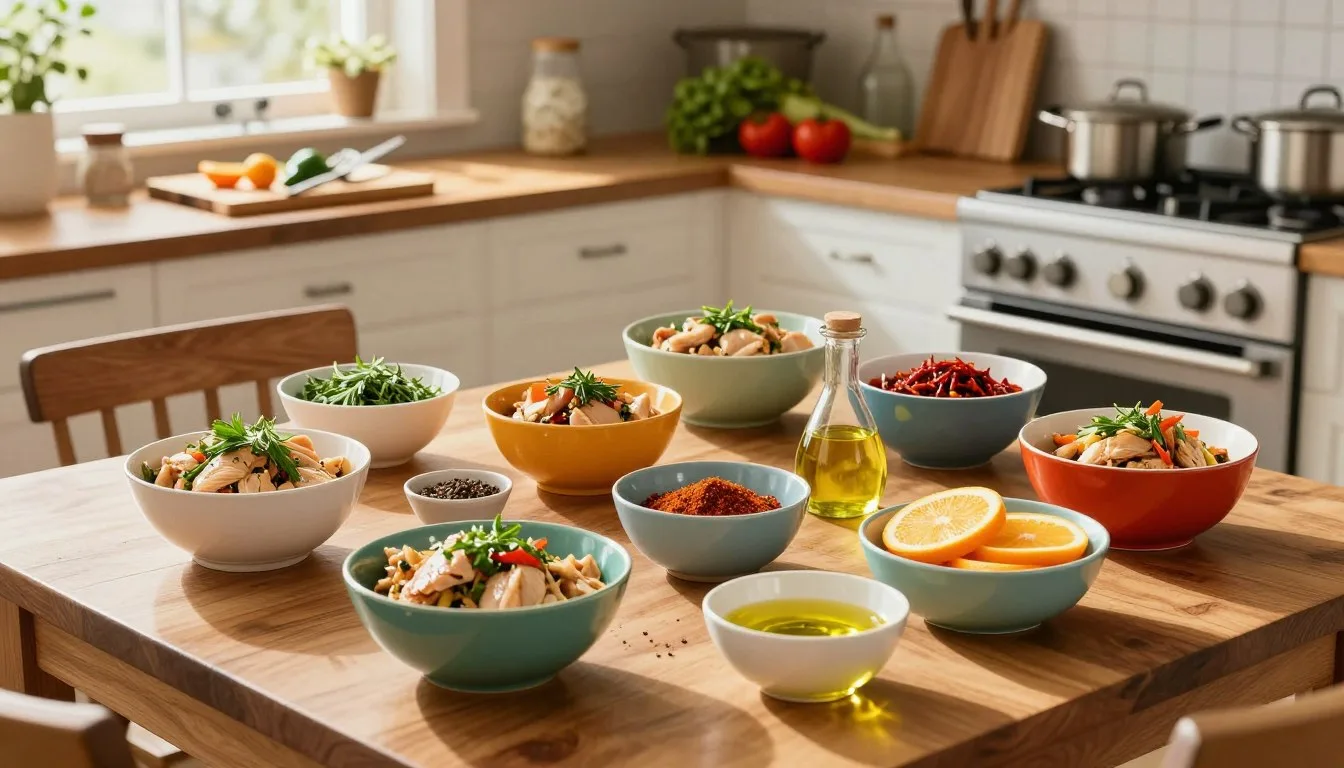
Chicken Marinade Recipes: 10 Easy Flavors for Juicy Chicken
Table of Contents
Ten easy flavor paths, from lemon-garlic to ginger-sesame and spicy mango, give you a fast way to keep weeknight dinner varied with chicken marinade recipes. When familiar chicken starts to feel repetitive, a new flavor can make the meal feel different without changing your whole routine. These choices suit home dinners and several cooking methods, including the air fryer.
You’ll find measured recipes, practical ways to choose a flavor, and guidance for marinating and cooking chicken well. Pick a flavor that fits tonight’s dinner and the cooking method you already have planned.
What Makes a Chicken Marinade Work?
A simple chicken marinade combines oil, an acidic ingredient, and seasonings so each part contributes something different. Oil adds fat, acid brings brightness, and seasonings build flavor. Acid means a sour ingredient, such as lemon juice or vinegar, that adds brightness and can affect the chicken’s surface texture.
A simple chicken marinade starts with three parts
An easy chicken marinade needs a few basic ingredients, not a long list. Olive oil or avocado oil supplies fat, while lemon juice, vinegar, or fruit juice provides acid. Garlic, herbs, spices, and citrus zest work as flavor boosters.
These ingredients coat the surface and add flavor as the chicken rests. A marinade does not promise to season the center of a thick piece, so even coating matters. You can use dried herbs when fresh ones are not on hand.
Balance salt, acid, and aromatics
Salt gives a marinade its savory base, while garlic and spices add depth. A useful mix balances the sour taste of lemon juice or vinegar with oil and aromatic ingredients. Too much acid can affect the surface, so it should not take over the mixture.
A 2023 review of meat research discusses how acids, spices, and dairy marinades can affect flavor and texture; the review of marination ingredients also covers safety. For an easy starting point, choose one oil, one acid, and two or three seasonings you already enjoy.
How to Make a Simple Chicken Marinade
For a straightforward four-ingredient chicken marinade, whisk olive oil, lemon juice, garlic, and kosher salt together. This olive oil marinade for chicken gives you a measured base that you can change with herbs or spices.
For 1 pound of chicken, use 3 tablespoons olive oil, 2 tablespoons lemon juice, 1 minced garlic clove, and 1 teaspoon kosher salt. That makes a simple olive oil chicken marinade with a bright, savory taste.
A four-ingredient olive oil formula
Whisk the ingredients in a bowl, then pour them over the chicken. Salt helps season the surface, and the lemon juice adds a tart note. A general salt suggestion is 1-2 teaspoons per pound of chicken, though the amount in this formula offers a lighter starting point.
| Component | Example ingredients | Purpose |
|---|---|---|
| Oil | Olive oil, avocado oil | Adds fat and helps coat |
| Acid | Lemon juice, vinegar | Adds a sour, bright note |
| Flavor boosters | Garlic, herbs, spices, zest | Builds the flavor profile |
| Salt | Kosher salt, table salt | Adds savory seasoning |
Adjust it with citrus, herbs, or savory ingredients
Add citrus zest for a stronger lemon scent without adding more juice. Chopped rosemary, dried oregano, or black pepper can shift the flavor, too. A savory seasoning blend offers another quick change, but check its label before adding extra salt.
Use a shallow glass or plastic container for mixing and coating the chicken. Reactive metal can affect acidic mixtures, so choose another material. Coat all sides evenly, then cover the container before putting it away.
How Long Should You Marinate Chicken?
For boneless, skinless breasts in an acid-based marinade, plan on 30 minutes to 2 hours. Lemon juice and vinegar call for a shorter soak because acid can affect the chicken’s surface texture.
Quick windows for acidic marinades
Keep chicken breasts in an acid-based mixture for 30 minutes to 2 hours. Lemon juice and vinegar taste bright, but their acidity can change the outer layer if the soak runs too long. A stronger-tasting mixture calls for less time, not more.
| Marinade condition | Useful timing | Texture consideration |
|---|---|---|
| Acid-based marinade on chicken breast | 30 minutes to 2 hours | Use the shorter end if sharply sour |
| Marinade at pH 3.5-4.0 | 2-3 hours | May begin to break down the surface |
| Salt-based marinade | Benefits begin after 30 minutes; up to 24 hours | Salt’s schedule differs from acid’s |
A marinade with a pH of 3.5-4.0 can begin changing the chicken’s surface texture after 2-3 hours. The 2-3 hour texture threshold is a reason to keep a sharply acidic soak brief.
Salt-based marinades develop flavor on a different schedule
Salt begins to restructure chicken proteins after 30 minutes, with benefits developing for up to 24 hours. That longer salt window does not extend the recommended time for an acid-based marinade. You can use salt’s longer schedule without leaving lemon juice or vinegar on the chicken for the same period.
Use the shorter end of the window when the mixture tastes sharply acidic.
10 Chicken Marinade Recipes for Easy Dinners
Choose among ten distinct flavor profiles, including citrus-cumin, ginger-sesame, pepperoncini, BBQ, Buffalo ranch, fajita-lime, lemon-garlic, pesto, mango, and honey mustard. Each recipe makes enough marinade for 1.5 pounds of chicken breasts, so you can pick a flavor that fits your dinner plans.
Measure each ingredient for 1.5 pounds of chicken breasts. You can mix the ingredients listed in the table, then coat the chicken with the choice you like.
| Flavor | Exact ingredients and amounts | Flavor profile | Practical dinner pairing |
|---|---|---|---|
| Orange-cumin | 3 tablespoons olive or avocado oil, 3 tablespoons orange juice, 1 tablespoon cumin, 1/2 teaspoon orange zest, 1 garlic clove, pinch of salt and pepper | Citrusy, earthy | Rice and roasted vegetables |
| Ginger-sesame | 1/4 cup coconut aminos, 2 tablespoons sesame oil, 1 tablespoon minced ginger, 3 sliced green onions, 1 garlic clove | Savory, fragrant | Fried rice or steamed vegetables |
| Mississippi | 2 tablespoons olive oil, 1/4 cup pepperoncini liquid, 4-5 sliced pepperoncini, 1 tablespoon ranch seasoning | Tangy, peppery | Potatoes and a green salad |
| Garlicky BBQ | 1/4 cup BBQ sauce, 3 tablespoons olive oil, 2 garlic cloves | Smoky, sweet, savory | Corn and coleslaw |
| Buffalo ranch | 1/2 cup Buffalo sauce, 2 tablespoons ranch seasoning, 3 tablespoons olive oil | Spicy, creamy-tasting | Celery and baked potatoes |
| Fajita-lime | 1 1/2 tablespoons fajita seasoning, 3 tablespoons lime juice, 3 tablespoons olive oil, 1 tablespoon minced cilantro, optional | Tart, warmly spiced | Rice, beans, or tortillas |
| Lemon-garlic | 3 garlic cloves, 3 tablespoons olive oil, 3 tablespoons lemon juice, 1/2 teaspoon lemon zest, 1/4 teaspoon dried basil, 1/4 teaspoon dried parsley | Bright, herb-scented | Green beans and potatoes |
| Pesto | 1/4 cup pesto, 3 tablespoons olive oil | Herby, savory | Pasta or a tomato salad |
| Spicy mango | 1 pureed mango, 3 tablespoons oil, 1 tablespoon minced jalapeño, 1 tablespoon lime juice, 1 tablespoon minced cilantro | Fruity, spicy | Rice and grilled vegetables |
| Honey mustard | 5-6 minced dates, 2 tablespoons whole-grain mustard, 1 tablespoon apple cider vinegar, 3 tablespoons olive or avocado oil | Sweet, sharp | Roasted carrots and greens |
The recipes offer different ways to use garlic, juice, herbs, oil, and seasoning. Coconut aminos bring a savory note to the ginger-sesame mixture, while dates sweeten the honey mustard option. Start with the measured formula for the amount of chicken you plan to cook.
An Indian-Inspired Yogurt Marinade for Chicken
Plain yogurt gives an Indian-inspired marinade a creamy base for ginger, lime zest, and warm spices. This is a bonus variation, separate from the ten oil-based recipes above.
For 1.5 pounds of chicken, mix 1 cup plain yogurt, 1 tablespoon grated ginger, zest of 1 lime, 1 teaspoon each ground cumin and turmeric, 2 minced garlic cloves, and 1 teaspoon salt.
Yogurt creates a creamy coating that clings to the chicken. Ginger adds a warm, fresh note, while lime zest brings a fragrant citrus taste. Cumin and turmeric give the mixture its Indian-inspired profile.
For another yogurt-based direction, use herbs such as dill, parsley, and scallions, with red pepper flakes for heat. A 2023 research review on meat marinades discusses yogurt and other fermented dairy products, along with their possible effects on flavor and texture.
This mixture works well when you want a creamy coating rather than an oil-forward one. Scrape off thick excess yogurt before cooking so it does not collect in heavy clumps.
Match the Marinade to Your Chicken Cut
Use the same flavor profile on several chicken cuts, then adjust the cooking approach to the cut’s size and shape. Chicken breasts are lean, while thighs and drumsticks have a richer taste that suits bold seasonings.
The ten listed marinades can flavor breasts, thighs, legs, and wings. The cut changes how the meal cooks and eats, even when you keep the same marinade.
Breasts, thighs, drumsticks, and wings
Chicken breasts have a mild flavor and a lean texture, so citrus, herbs, pesto, and garlic fit easily. Thighs have a richer taste and can handle strong spices or a tangy sauce. Drumsticks and wings have more skin and bone, which affects how you arrange them for cooking.
Try breasts in our easy chicken breast recipe, and bake drumsticks like our crispy baked chicken legs.
- Breasts: Mild flavor pairs well with lemon, herbs, or pesto.
- Thighs: Richer meat suits bold seasoning and savory mixtures.
- Drumsticks: Their shape calls for even coating around the full piece.
- Wings: Small pieces work well with punchy Buffalo or BBQ flavors.
Adapting the flavors for a whole chicken
Whole chicken marinade recipes use the same flavor ideas, but a whole bird needs an even coating across its larger surface. Turn the bird as needed while it marinates, so the mixture reaches different sides. Do not assume that a recipe meant for 1.5 pounds of breasts will coat every whole chicken.
Think about the cooking method before you choose a cut. Thin breasts and small wings behave differently from thick thighs or a whole bird. Choose a cut that fits the cooking method and the time you have.
Choose a Cooking Method: Oven, Grill, Skillet, or Air Fryer
A sheet pan, grill, skillet, or air fryer can all cook marinated chicken, but each needs a different setup. Chicken breast thickness affects cooking time, so use the listed times as starting points.
Cooking time is not a doneness test. The oven row answers how to make chicken marinade recipes for baking, while the other methods offer different textures and setups.
Oven and grill
For oven cooking, place chicken breasts on a parchment-lined sheet pan and set the oven to 400°F. The usual starting time is 20-25 minutes. For grilling, heat the grill to 400°F and oil the grates so the pieces release more easily.
Air fryer and skillet
An air fryer cooks chicken breast at 375°F. Leave space around the pieces, cook for 10 minutes, then flip and cook for another 5-7 minutes. A crowded basket can block airflow and leave some spots less browned.
| Method | Setting | Initial cooking time | Finishing step |
|---|---|---|---|
| Oven | 400°F, parchment-lined sheet pan | 20-25 minutes | Check the center for doneness |
| Grill | 400°F, oiled grates | 5-6 minutes per side | Turn once and check the center |
| Air fryer | 375°F, space between pieces | 10 minutes | Flip, then cook 5-7 minutes |
| Skillet | Medium-high heat | Cook until browned | Cover and finish cooking |
For skillet cooking, brown the chicken over medium-high heat, then cover the pan to finish cooking. Thick breasts may need more time than thin pieces, so the timing in the table is only a guide. Use a thermometer to decide when the chicken is done, not the clock alone.
What Temperature Should Marinated Chicken Reach?
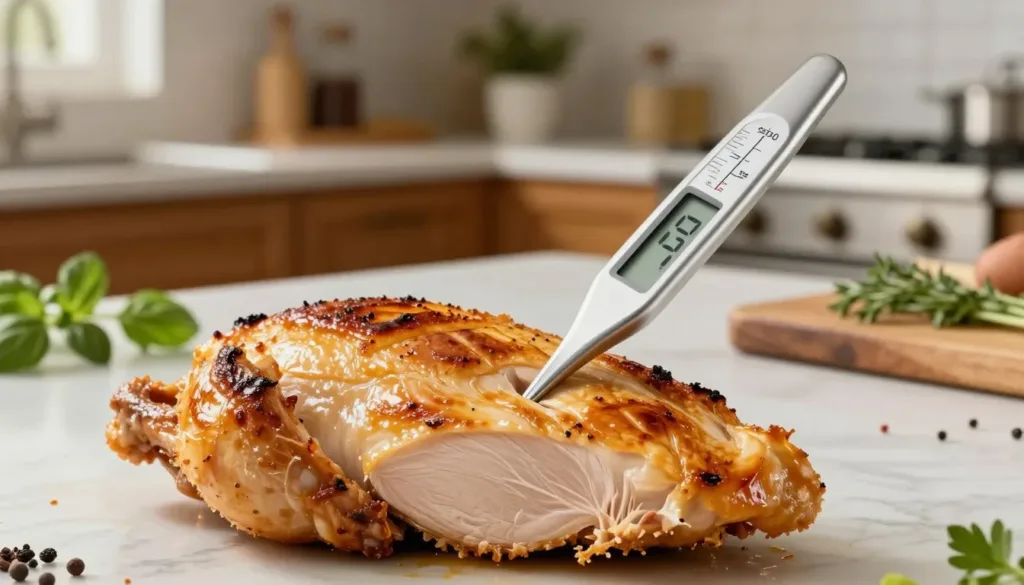
Cook chicken to at least 165°F, checking the thickest part with a food thermometer. Keep the thermometer tip away from bone and the pan. The reading in the thickest section gives you a useful check for chicken breasts and other cuts.
Chicken breasts and all other cuts have a minimum safe internal temperature of 165°F. Thighs and drumsticks are often cooked to 170-175°F for a different texture, though 165°F remains the safety minimum. A higher reading is a texture choice, not a new safety rule.
Wings can have improved texture closer to 175°F. Check each wing with a food thermometer and avoid touching the bone, since a bone contact can affect the reading. A small wing can cook differently from the piece beside it.
Use the same thermometer check for chicken from the oven, grill, skillet, or air fryer. Let cooked chicken rest for 5 minutes before slicing.
Safe Marinade Handling From Prep to Serving
Keep raw chicken and its marinade refrigerated, and handle every surface and utensil that touches them carefully. Chicken does not need rinsing after marinating; move it from the marinade to the cooking method.
Set aside any marinade for sauce before it touches raw chicken. Marinade that contacts raw poultry needs a rolling boil before you use it as a sauce.
Refrigeration and clean handling
Use this checklist to keep prep and serving orderly:
- Refrigerate raw poultry in marinade and cook it within 2 days.
- Wash your hands for 20 seconds before and after handling raw poultry.
- Do not leave raw chicken marinating on the counter for more than 2 hours.
- If you wash chicken, clean and sanitize every surface it may have touched.
- Keep cooked wings at room temperature for no more than 2 hours; hot holding requires 140°F or above.
When marinade can become a sauce
Pour any sauce portion into a clean dish before adding raw chicken to the rest of the marinade. That saved portion stays separate from raw poultry and can be served without using the marinade that coated the chicken.
If you choose to use marinade that touched raw poultry, bring it to a rolling boil first. Washing chicken can spread bacteria to nearby surfaces, so it is better to transfer the chicken without rinsing. Never use marinade that touched raw poultry as a sauce unless it has reached a rolling boil.
Freezing Chicken in Marinade
Freezing chicken in its marinade makes a flavor-ready dinner portion that can thaw in the refrigerator. A freezer bag keeps the chicken coated and makes it easy to store flat.
Raw chicken parts can stay frozen for up to 9 months, while chicken frozen in marinade is best used within 3-4 months. The shorter window is a best-results guide for flavor and quality.
Prepare each bag in order so the pieces are coated before freezing:
- Add the chicken and marinade to a freezer bag.
- Coat each piece by turning the sealed bag gently.
- Squeeze out excess air, then seal the bag.
- Freeze the sealed bag flat or in a space that fits.
Thaw the chicken in the refrigerator before cooking. Discard the marinade after thawing rather than using it as a sauce. The freezer storage guidance for raw chicken parts extends to 9 months, but chicken frozen in marinade has a 3-4-month best-results window.
Label each bag with its flavor and freeze date.
Cooked Chicken Storage and Meal Prep
Cook extra chicken once and keep the cooked portions ready for salads, sandwiches, or rice bowls. Cooked chicken keeps 3-4 days in the refrigerator or 3-4 months in the freezer.
Store cooked portions in an airtight container and reheat them in a 325°F oven until warmed through. Sliced chicken makes a quick dinner when you add a side or spoon on a sauce.
For meal prep, slice chicken breasts before storing them in portions. Add the slices to a salad, sandwich, or rice bowl when you need a simple lunch or dinner. Keep the flavor in mind when choosing a sauce or side.
Cooked leftovers have different storage guidance from raw chicken frozen in marinade. The 3-4-month freezer window here applies to cooked chicken, not raw portions waiting to thaw and cook.
Reheat only the portion you plan to serve.
Make a Lighter Marinade That Fits Your Preferences
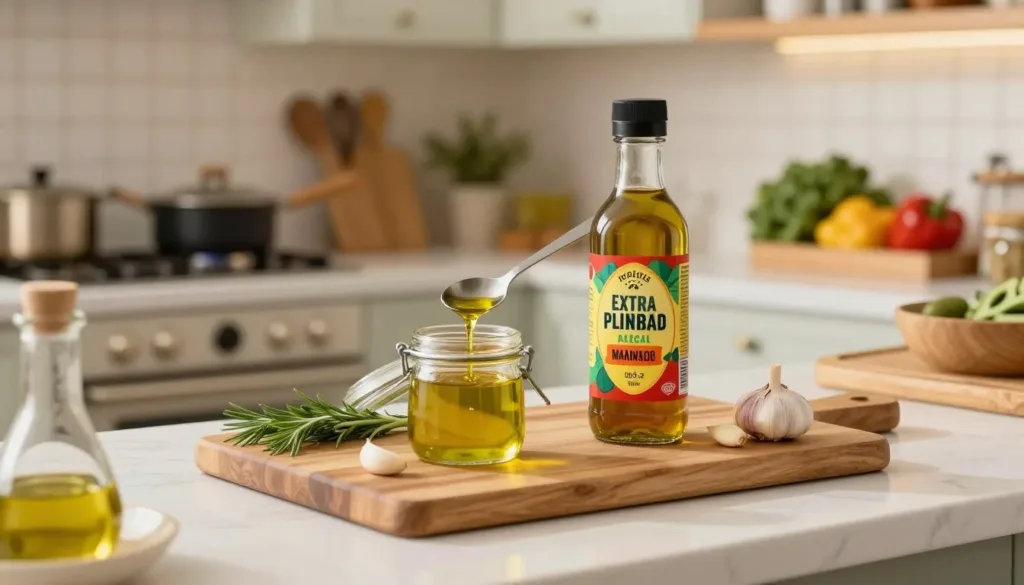
A lighter marinade starts with measuring calorie-dense ingredients rather than pouring them freely. One tablespoon of oil contributes about 120 calories, so a spoon can help you track the amount.
WeightWatchers-style points depend on the measured recipe, portion, and product labels. Enter the exact ingredients and serving size into your current tracking system rather than relying on a fixed point value.
Measure oil and sweeteners
Small changes can make a marinade fit your preferences while keeping its flavor clear. Try these adjustments:
- Measure oil with a spoon instead of pouring it freely.
- Reduce or omit added sweetener when you prefer less sugar.
- Use herbs and citrus to bring out flavor.
- Check labels on bottled sauces and seasoning blends.
Adapt for WeightWatchers-style tracking
Readers looking for Weight Watchers chicken marinade recipes can track their own measured ingredients and serving size. Bottled sauce labels matter because products can differ in sugar, salt, and serving size. A fixed points claim may not fit your exact mixture.
Reducing oil or sugar changes the final flavor and texture. Oil helps make a coating, while sweet ingredients can affect browning and taste. Track the ingredients and the portion you actually eat.
Fix Common Marinade Problems
If a batch tastes flat, adjust the clean marinade before it touches raw chicken. A little balance can sharpen the taste without piling on more seasoning.
For an even cook, cut a thick chicken breast horizontally into thinner pieces. Thinner pieces can cook more quickly and evenly than a thick breast.
Correct weak or unbalanced flavor
Taste the clean mixture before coating the chicken, then adjust its seasoning. Add a little more salt for a dull savory flavor, or a small amount of lemon juice for brightness. Dijon mustard and Worcestershire sauce can add tangy, savory depth.
Too much thick or sweet coating can cling to the pan and brown too fast. Use a light, even layer instead of leaving heavy clumps on the chicken. A thin coating still carries flavor across the surface.
Help the coating brown without scorching
Preheat a pan over medium-high heat before adding chicken. A hot pan helps the surface brown rather than sit in a cool pan and release liquid. Use a pan with enough room for the pieces to lie flat.
Thick breasts can brown on the outside before the center cooks evenly. Cutting them horizontally gives you thinner pieces that cook at a steadier pace. For even pan cooking, make thick breast pieces thinner before they hit the hot pan.
Batch-Prep Marinade Bags for Future Dinners
A short batch-prep session can give you different flavors ready for more than one dinner. Two flavor profiles add variety without making the prep hard to manage.
Mix each flavor in its own bowl, then keep the chicken portions separate. You can also double a favorite marinade, cook half the chicken tonight, and freeze the other half for a future dinner.
- Choose two flavor profiles that suit upcoming meals.
- Mix each marinade in its own bowl.
- Divide chicken into labeled portions and coat each separately.
- Cook tonight’s portion and set aside the planned future portion.
Separate bowls help keep the flavors distinct, especially when one uses a strong ingredient such as Buffalo sauce or ginger. Write the flavor on each bag before adding chicken, so the label stays easy to read. Label each portion by flavor so the right bag is easy to choose later.
Pair Marinated Chicken With Practical Sides
Pair the finished chicken with a side that complements its flavor and fits the same dinner schedule. Sweet potato fries suit spicy or citrus flavors, while grilled vegetables are an easy match for grilled chicken.
Choose a side that can cook alongside the chicken or be prepared while it rests. These pairings give you an easy way to turn chicken recipes into a complete meal.
- Sweet potato fries pair well with spicy or citrus-flavored chicken.
- Grilled vegetables fit a dinner cooked on the grill.
- Smashed potatoes complement herb or pesto flavors.
- Fried rice works well with ginger-sesame chicken.
Slice leftover chicken over a salad or tuck it into a wrap for a simple lunch. Garlic, olive oil, and fresh herbs can help a side match an herb-forward chicken flavor. Choose one side that can cook alongside the chicken or be prepared while it rests.
Conclusion
A balanced marinade gives you an easy way to change the flavor of familiar chicken dinners. A measured mix helps keep the flavor in balance, and a thermometer helps you judge when the chicken is done.
For a make-ahead meal, choose one formula and write its flavor and amount on a freezer label. That small note makes it easier to pick the right portion later. Choose one flavor, gather its ingredients, and make a batch for your next meal.
FAQ
Can I freeze marinated chicken?
What are the three main ingredients when marinating?
Should I poke holes in chicken before marinating?
How long should you leave chicken to marinate?
What not to do when marinating chicken?
What is the best way to marinate chicken?
What is a good 4-ingredient chicken marinade?
What are the ingredients in an easy chicken marinade?
What Did You Think? Rate This Recipe
Absolutely Tender and Packed with Flavor!
I followed this guide step by step and the beef shank came out amazingly tender and full of flavor. The tips on maintaining moisture made all the difference. Highly recommended for anyone trying this cut for the first time!