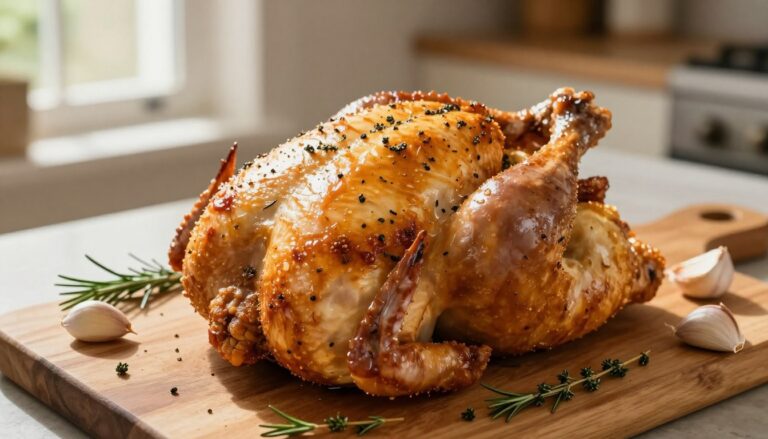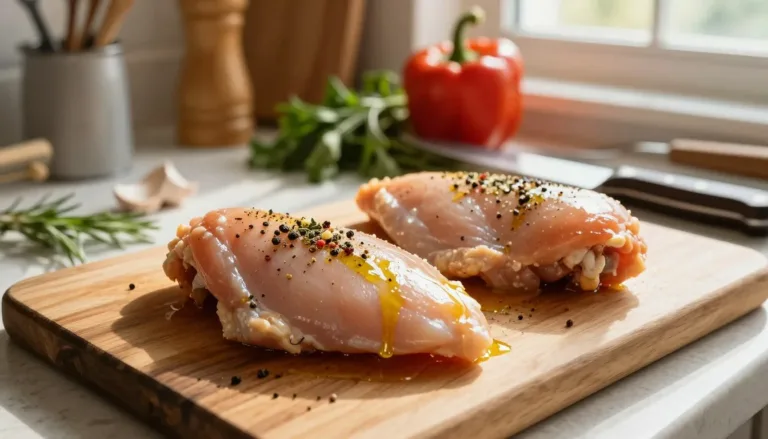
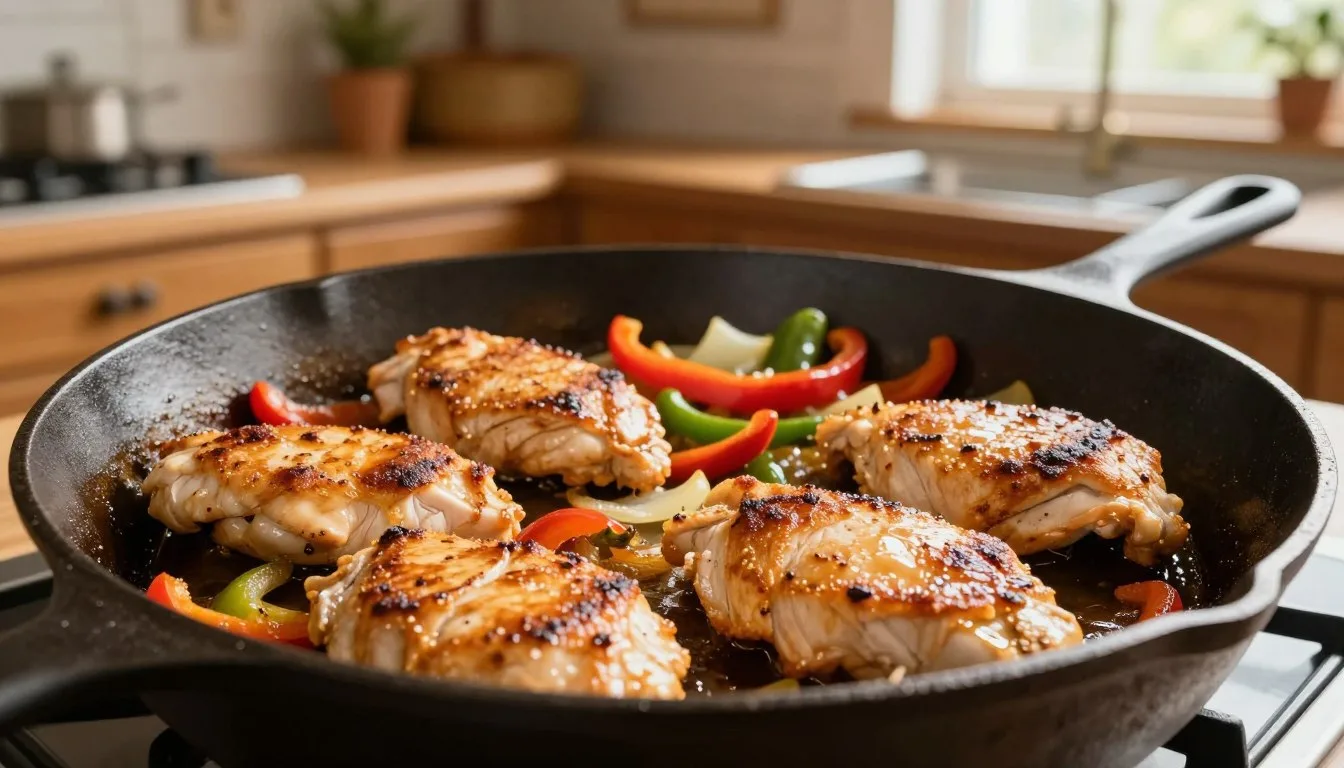
Chicken Breast Recipe: 15 Easy Dinners Ready in 30 Minutes
Table of Contents
You can turn boneless, skinless chicken breasts into 15 weeknight dinners in about 30 minutes by choosing thin cuts and a fast skillet, oven, or air-fryer method. A chicken breast recipe works best when it fits the time you have and the sides you can make alongside it. Quick cooking matters on a busy night, when a long marinade can push dinner past your target.
Thin cutlets cook faster than thick, whole breasts, and each method suits a different kind of evening. A skillet gives you browned edges, while an oven or air fryer can free up your hands. Carryover cooking is the residual heat in cooked meat that continues raising its internal temperature after it leaves the heat source. A thermometer, a simple seasoning blend, and a side you can prepare alongside the chicken make the quickest dinners easier to manage.
15 Chicken Breast Recipe Ideas for 30-Minute Dinners
A thin cutlet cooked in a skillet is the easiest starting point when you want a fast, flexible dinner. These chicken breast recipes use different flavors and cooking styles, so you can choose what works with your equipment. Paillard means a breast portion flattened for quick cooking.
Fried chicken is the most popular chicken dish among the listed ratings, not a single named recipe. Fried chicken ranked fourth among popular American dishes at 83% popularity, while chicken wings ranked 13th at 78%, in the third quarter of 2026. A quick chicken breast recipe can still borrow crisp coatings and familiar flavors without copying a whole fried-chicken meal.
Skillet and one-pan dinners keep prep and cleanup simple. Choose one when you want sauce, vegetables, or pasta cooked with the chicken.
- Country-seasoned chicken with butter sauce gets a savory coating and a quick pan finish.
- Sherry-thyme pan-sauce chicken combines browned cutlets with a fragrant sauce.
- Tomato-balsamic chicken pairs tangy tomatoes with a sweet, sharp glaze.
- Lemon chicken with orzo and spinach cooks pasta and greens into the same meal.
- Summer balsamic chicken with orzo and vegetables brings a bright sauce and produce together.
Crisp and quick-cook options work well when you want a golden crust or a handheld meal. Some coatings or marinades need a little planning, so prep those before your dinner window starts.
- Chicken paillard with burrata and tomatoes pairs a flattened breast with creamy cheese and fresh produce.
- Pecan-crusted chicken adds a nutty crunch to a crisp coating.
- Gluten-free chicken cutlets use a coating that avoids wheat-based crumbs.
- Air-fried chicken breast gives you a browned outside with little setup.
- An air-fried chicken sandwich turns a quick cutlet into a filling handheld dinner.
Wraps, skewers, and global flavors offer more ways to season chicken breasts. A longer marinade can add flavor, but it does not fit a strict 30-minute start-to-finish plan.
- A chicken shawarma wrap uses warm spices and a quick assembly with flatbread.
- Chicken souvlaki brings lemon and herbs to grilled or pan-cooked pieces.
- Chicken satay skewers pair seasoned chicken with a dipping sauce.
- Creamy Caesar chicken from a pressure cooker gives you a saucy, hands-off option.
- Chicken karahi simmers chicken in a tomato, garlic, ginger, and spice sauce.
Choose the idea that matches your equipment and sides, then use the method-specific timing rather than treating every breast as the same size.
How to Prep Chicken Breast for Even Cooking
Even thickness is the quickest way to help a breast cook evenly without drying its thinner end. You can pound a thick breast flat or slice it horizontally into cutlets. Equal thickness helps each piece finish at about the same time.
Four chicken breasts weighing about 2 pounds total can be pounded to an even 1/2-3/4 inch thickness. Place each breast between sheets of plastic wrap or parchment, then tap the thicker end with a meat mallet or heavy pan. Use steady, gentle pressure rather than striking hard.
Prep the meat before adding seasoning, and check the package for a pre-brined label. Some packaged chicken already contains added salt solution, which can affect the flavor of later seasoning.
Pound or slice thick breasts
Thaw chicken fully in the refrigerator before you cut or pound it. If one end is much thicker, flatten that area instead of pounding the whole breast thin.
- Thaw the chicken fully before prep.
- Flatten thick areas or slice the breast horizontally.
- Pat each piece dry with paper towels.
- Check the package for a pre-brined or seasoned label.
A sharp knife can split a thick breast into two thinner pieces. Hold the chicken steady and cut parallel to the board, then open the pieces like a book.
When a quick brine is worth the extra time
A quick brine uses 2 quarts of water and takes 30 minutes, with 45 minutes as the maximum. It can help the meat hold moisture, especially when you have extra time before cooking.
Brining does not fit a strict 30-minute start-to-finish dinner because the chicken needs to sit in the water. Pat the meat dry after brining so its surface can brown in the pan.
If dinner has to be on the table within 30 minutes, skip the brine and spend that time evening the cutlets.
Seasoning and Sauces for More Flavor
A small, balanced seasoning mix can make a plain breast taste distinct without a long marinade. Paprika, garlic powder, onion powder, Italian seasoning, salt, and pepper give you a flexible base. Olive oil helps the seasoning cling to the surface.
Mix the dry ingredients in a bowl, then rub them over the chicken. You can also stir the spices into olive oil to make a paste that coats each piece. Use a light hand with salt when the package says the chicken is pre-brined.
Build a savory dry seasoning
For a country-style mix, combine paprika, onion powder, garlic powder, cumin, salt, pepper, and 1 1/2 tablespoons of flour. The flour helps form a light coating as the chicken sears.
Season two large breasts weighing 250-300 grams, or 8-10 ounces, each. Slice them into four thin steaks, then coat each piece with the flour-and-spice mix.
Make a fast pan sauce
Heat butter or olive oil in a skillet, then sear the chicken for 2 1/2 minutes per side. Let the cooked pieces rest for 3 minutes after you remove them from the pan.
Pour 1/3 cup of wine or stock into the hot pan. Stir and simmer for about 1-1 1/2 minutes to loosen the browned bits, then melt in 2 tablespoons of butter.
The liquid lifts the tasty browned bits from the pan and gives the sauce a deeper flavor. Keep the sauce in the pan you used for the chicken so the browned bits become part of its flavor.
Which Cooking Method Fits Your 30-Minute Dinner?
A skillet is the quickest option when you want a browned surface, while an oven or pressure cooker needs less attention once cooking starts. Choose based on the recipe, thickness, and equipment you have. Active cooking time is not always the same as total time.
The skillet method takes 12 minutes total, including 5 minutes of prep and 7 minutes of cooking. Oven and air-fryer figures below describe cooking time, while the pressure-cooker figure covers its cooking step.
| Method | Stated timing | Temperature or key technique | Best fit |
|---|---|---|---|
| Skillet | 12 minutes total, including prep | Brown each side in a hot pan | Fast browning and direct control |
| Oven | 15-18 minutes of cooking | 450°F for pounded breasts | Several portions at once |
| Air fryer | About 13 minutes | 400°F, flip halfway | Small batches with little setup |
| Pressure cooker | 6 minutes of cooking | Caesar-style chicken | A saucy meal with less attention |
Choose a skillet or air fryer for speed
A skillet gives you a browned surface and lets you watch the chicken closely. It works well when you want a pan sauce or only need a few cutlets.
An air fryer offers a compact way to cook a small batch. Turn the pieces halfway through so they brown on both sides.
Use the oven or pressure cooker for hands-off cooking
A hot oven can cook several prepared breasts at once while you make another part of dinner. The pressure cooker suits a saucy recipe when you want the chicken to cook with its other ingredients.
Pick the method that fits the thickness of your chicken and the time you have for active cooking.
How Long to Bake Chicken Breast at Each Temperature
For a 5-6-ounce boneless, skinless breast, 400°F takes 20-25 minutes before a 5-10-minute rest. Size matters, so a larger breast needs more time than a small one. Bake chicken breasts uncovered for a browned surface.
Cook chicken to 165°F (74°C), measured with an instant-read thermometer in the thickest part. The FDA Food Code sets that internal temperature as the safety target for chicken.
Match oven time to breast size
For a 5-6-ounce breast, 400°F is faster than 350°F for a weeknight dinner. A 350°F oven can suit a recipe designed for gentler cooking, but it takes longer.
| Oven temperature | Time for a 5-6-ounce breast | Size condition | Practical note |
|---|---|---|---|
| 375°F | 25-30 minutes | 5-6 ounces | Gentler heat, longer cook |
| 400°F | 20-25 minutes | 5-6 ounces | Faster weeknight choice |
| 425°F | 18-22 minutes | 5-6 ounces | Hotter oven, check early |
At 400°F, bake a 4-5-ounce breast for 18-20 minutes, a 5-6-ounce breast for 20-25 minutes, and a 7-8-ounce breast for 23-27 minutes. Those ranges apply to breasts of different weights, not cutlets.
A recipe for four 8-10-ounce breasts uses 425°F; check 6-ounce breasts about 5 minutes after flipping. Another high-heat method uses 450°F for 15-18 minutes, but use a metal pan rather than glass bakeware rated to 425°F.
Check the thickest part before serving
Insert the thermometer into the thickest part without touching the pan. Check each piece, since one large breast can finish later than a smaller one.
Rest the chicken for 5-10 minutes after baking. During carryover cooking, residual heat keeps raising the meat’s internal temperature after it leaves the oven.
The USDA’s safe food handling guidance also calls for a food thermometer to check poultry. Check every breast at its thickest point because size and thickness can shift the timing.
What to Serve With Chicken Breast
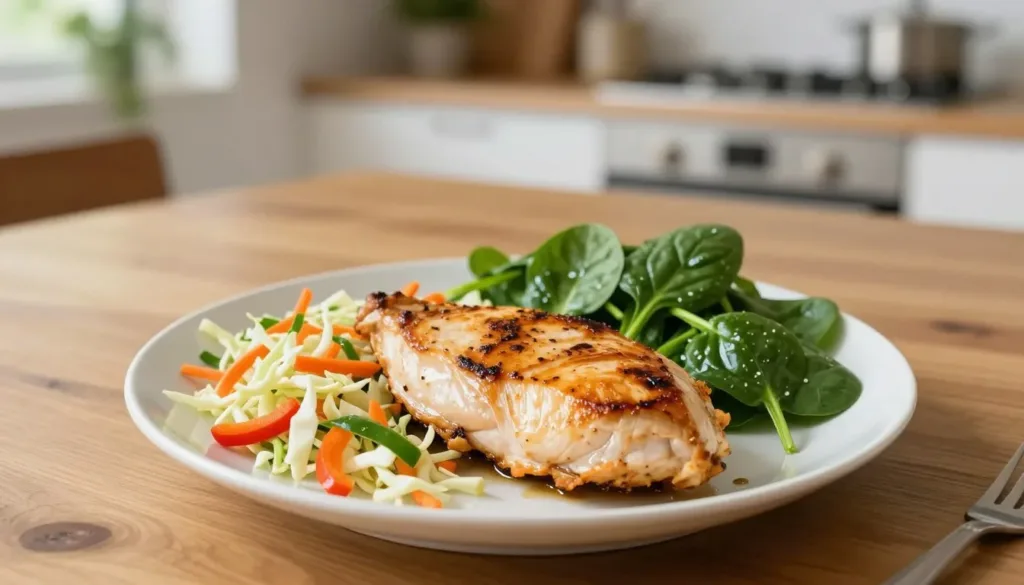
A crisp salad or slaw is an easy match for a richly seasoned breast, while rice or couscous makes the meal more filling. Match the side to the flavor and texture of the chicken. A bright side can balance a rich sauce.
Choose a side that adds a different texture, such as crunchy slaw with tender chicken. Spinach, salad, and slaw can all come together quickly while the main dish cooks.
| Chicken style | Side | Why the pairing works | Easy preparation approach |
|---|---|---|---|
| Paprika-seasoned chicken | Crunchy slaw | Cool crunch balances savory spice | Toss shredded cabbage with dressing |
| Lemon chicken | Couscous | Mild grains take on lemony juices | Prepare couscous with hot water |
| Lighter chicken breast | Cauliflower rice | A mild side keeps the plate light | Warm in a pan with olive oil and salt |
| Herb-seasoned chicken | Herb-marinated mushrooms | Earthy flavor echoes the herbs | Marinate, then cook in a skillet |
Pair the seasoning with the side
Couscous and cauliflower rice work well with sauces because they catch the juices. A spinach salad adds leafy greens without another long cooking step.
For a lighter plate, pair a small portion of chicken with salad or sautéed spinach. A crunchy slaw can bring contrast to a tender, richly seasoned piece.
Cook vegetables alongside the chicken
Roast vegetables in the oven at the same time as the chicken to reduce separate cooking steps. Cut firm vegetables into small pieces so they cook more quickly.
Vegetables do not all finish at the same time, so check their texture as they roast. Choose a side with a different texture from the chicken so the plate feels complete.
Is Chicken Breast a Healthy, Low-Calorie Dinner?
A 3-ounce serving of roasted chicken breast provides 170 calories and 25 grams of protein. That USDA figure describes the meat alone, not a full breast or a complete dinner. Portion size changes the nutrition on your plate.
The same 3-ounce serving has 7 grams of fat, 2 grams of saturated fat, and 70 milligrams of sodium. Oil, breading, cheese, and sauce can raise the total for a recipe.
A healthy chicken breast recipe can use a simple cooking method and a side that adds vegetables or grains. Roasting, air frying, or pan-cooking with a measured amount of oil can help you keep track of added ingredients.
A chicken breast recipe for a diet still depends on your portion and what you serve with it. A low-calorie chicken breast recipe may change once you add a creamy sauce, cheese, or a large serving of oil-coated vegetables.
Compare the full plate, not just the chicken. A cutlet with a large amount of sauce can have a different total than plain roasted meat, even when the serving size matches.
Chicken breast supplies protein, while the amount of fat and salt depends in part on preparation. Check the ingredient amounts when you compare recipes, especially for bottled sauces and seasoned coatings.
Compare equal serving sizes when you judge whether two chicken dinners are lighter.
How to Store and Reheat Leftover Chicken
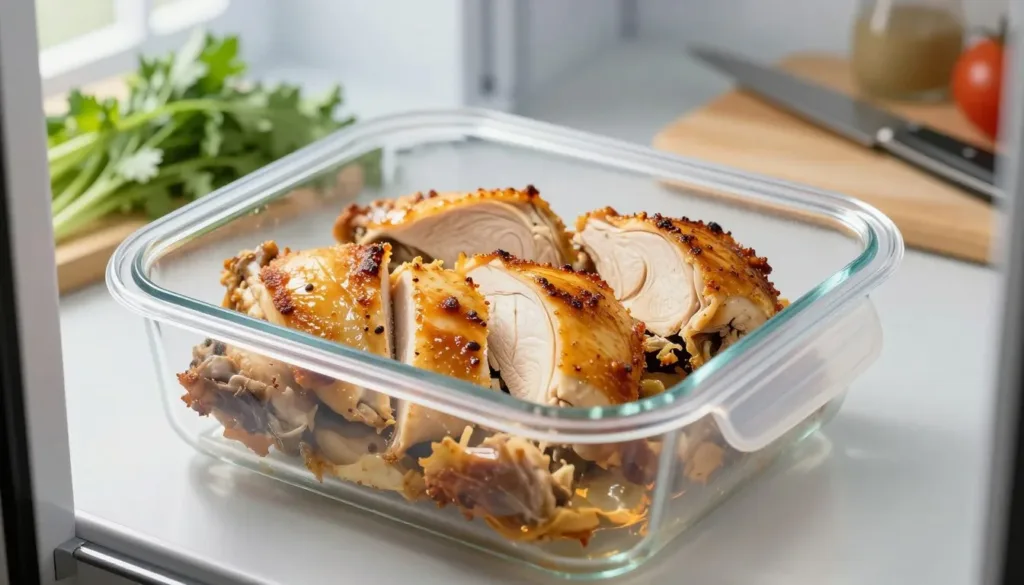
Refrigerate cooked chicken within 2 hours, then use the dish-specific storage window to plan leftovers. Baked chicken lasts 3-4 days in the refrigerator, while chicken karahi keeps up to 3 days in an airtight container. Cool it slightly before packing it away.
Freeze baked chicken for up to 3 months, or chicken karahi portions for up to 2 months. You can freeze baked chicken whole or sliced, while individual karahi portions are easy to thaw and reheat.
Put leftovers in a shallow container so they cool more quickly. Keep the refrigerator at 40°F or below, and do not leave cooked food out for hours.
To reheat baked chicken, place a portion in an oven-safe dish with a splash of broth and cover it. A microwave also works; cover the plate and heat in short bursts until the center is hot.
Reheat karahi in a covered pan or microwave, stirring the sauce so the portion warms evenly. Add a small splash of water if the sauce has thickened in the refrigerator.
Reheat only the portion you plan to eat so repeated warming does not dry out the rest.
How to Make a Quick Chicken Karahi
Chicken karahi is a tomato-and-spice dish that turns chicken breast into a saucy, high-protein dinner. Its sauce gives you a different option from a dry seasoning rub. Garlic and ginger bring a sharp, warm flavor.
The core amounts are 600 grams of chicken breast, 600 grams of chopped tomatoes, 25 grams each of garlic and ginger, and 1 tablespoon of oil. Add spices to build the flavor of the sauce.
Cut the chicken into pieces, then heat the oil in a deep pan or karahi. Add the garlic and ginger, followed by the chicken and spices.
Stir in the chopped tomatoes and let the mixture cook until the chicken is coated in sauce. Simmer the chicken in the tomato-and-spice sauce for about 10 minutes.
Keep the simmer gentle so the sauce thickens without sticking to the pan. Stir now and then, and check that the chicken is cooked through before serving.
A serving provides about 305 calories and 48 grams of protein. The amount is an approximate per-serving figure for this dish, not for plain roasted chicken.
Serve the sauce with basmati rice, naan, roti, cauliflower rice, cucumber raita, or roasted potatoes.
Conclusion
A quick chicken dinner works best when you match the cooking method to the thickness of the breast. Thin cutlets suit a skillet or air fryer, while whole breasts can fit an oven meal. Choose a practical method that leaves you enough time to finish the side.
Use a thermometer to check the thickest part instead of judging doneness by color. That simple check helps you serve the chicken safely without overcooking the thinner pieces.
Choose one recipe, check the thickest part with a thermometer, and get dinner started.
FAQ
How to best prep chicken breast?
How long does chicken last in fridge?
What sides go well with chicken?
Can you provide me with a recipe for roast chicken?
Should baked chicken be covered or uncovered in the oven?
Is it better to bake boneless skinless chicken at 350 or 400?
What are some easy recipes for baked chicken breasts?
What are some good recipes for boneless chicken breasts?
From juicy chicken to tender beef, find your next dinner idea here.
What Did You Think? Rate This Recipe
Absolutely Tender and Packed with Flavor!
I followed this guide step by step and the beef shank came out amazingly tender and full of flavor. The tips on maintaining moisture made all the difference. Highly recommended for anyone trying this cut for the first time!