Chicken Sausage Pasta: Creamy Dinner in 30 Minutes
Table of Contents
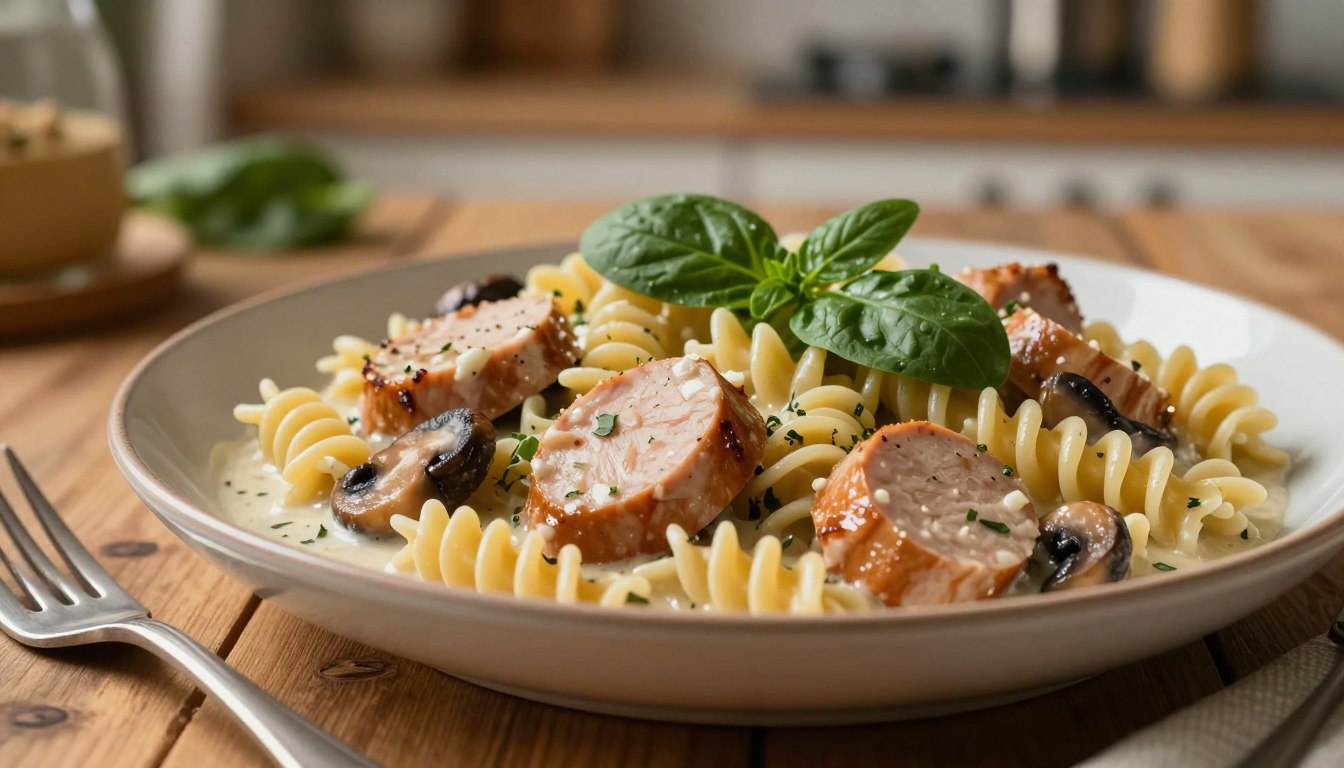
You can have a creamy, vegetable-filled pasta dinner on the table in about 25 minutes. This chicken sausage pasta brings together tender noodles, savory sausage, mushrooms, spinach, and a tomato-based sauce.
It works well when your evening needs an easy weeknight dinner without much planning. The core recipe takes 25 minutes, so it fits the promise of a 30-minute dinner and leaves room to set the table.
Al dente means pasta that is tender but still slightly firm in the center. That texture helps the noodles hold up when you toss them with sauce and vegetables.
You can also adjust the vegetables or pasta shape to match what you have on hand. The recipe serves four, making it a practical fit for a weeknight meal.
What Makes This a Quick Weeknight Dinner?
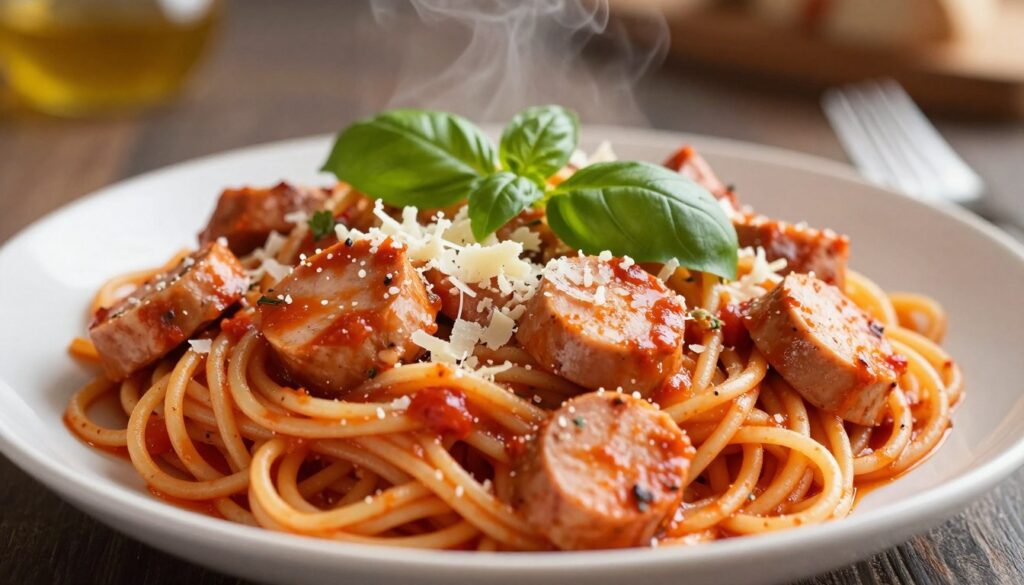
For a creamy dinner with minimal planning, the 25-minute spinach-and-marinara version is the most direct choice. Two cooking tracks help: pasta cooks in a large pot while sausage and vegetables warm in a skillet.
This spinach, marinara, and goat-cheese recipe takes 25 minutes and serves four. Its sauce comes together in the skillet, so you do not need a separate pan for a cream sauce.
An easy chicken sausage pasta can also take other forms, depending on your time and the kind of sauce you want. The options below show how cooking time, serving size, and sauce style compare.
| Approach | Total time | Servings | Sauce method |
|---|---|---|---|
| Spinach-marinara-goat-cheese | 25 minutes | 4 | Goat cheese and marinara |
| Roasted lemon-Parmesan | 20 minutes | 6 | Butter, lemon, and Parmesan |
| One-pan chicken sausage | 30 minutes | 4 | Pasta water and Parmesan |
| Chicken breast with Italian sausage | 30 minutes | 6 | Light cream cheese |
The one-pan method saves dishes by cooking pasta and building the sauce in one pan. It takes 30 minutes and serves four, with pasta water and Parmesan giving the sauce body.
A roasted lemon-Parmesan version takes 20 minutes and serves six. Roasting brings a browned edge to the sausage and vegetables, while lemon makes the finish bright rather than creamy.
The chicken-and-sausage option is a different kind of meal: it uses chicken breast and Italian sausage, not chicken sausage. Its light cream cheese sauce gives it a creamy finish, and the recipe serves six.
Think about the meal you want, not just the clock. A skillet sauce suits a creamy dinner, while a sheet pan keeps the oven method simple and lets the vegetables brown.
All four options are quick enough for a busy evening, though their textures and flavors differ. Choose the roasted lemon-Parmesan approach when a sheet pan and a brighter, less sauce-heavy finish suit your evening betterIf you are looking for more ideas to streamline your busy evenings, explore these easy meals for quick weeknight dinner .
Which Ingredients Make the Sauce Creamy?
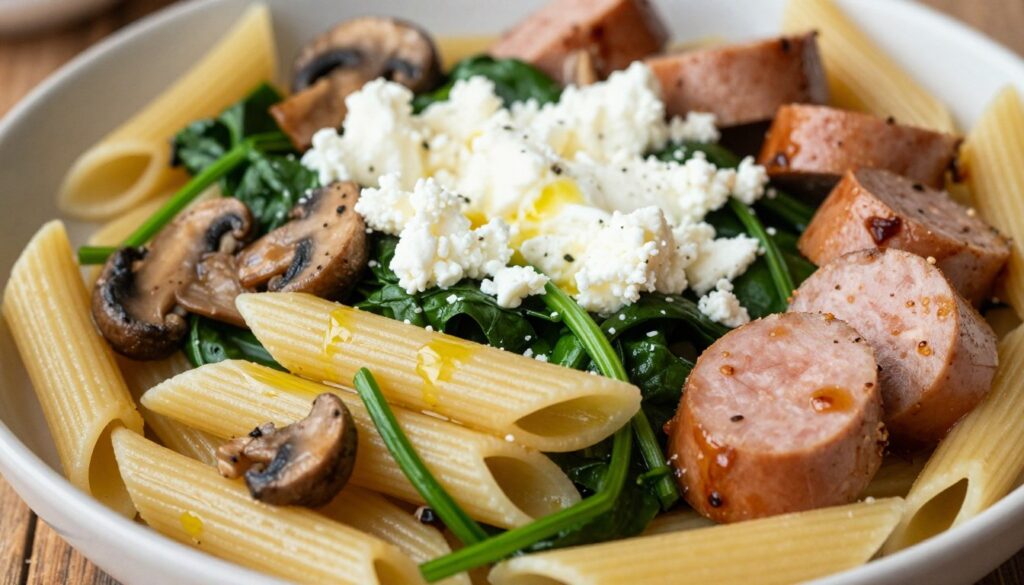
Set out the pasta, sausage and vegetables before you start so the two cooking tracks can run at the same time. Short pasta and a few everyday ingredients make this recipe easy to manage.
Rigatoni, penne, or another short pasta holds the sauce well. Goat cheese adds creaminess and a tangy note, while marinara brings tomato flavor and helps coat each piece.
Pasta and chicken sausage
Use 8 ounces of pasta and one 12-ounce package of chicken sausage for four servings. Rigatoni has ridges and a roomy center, while penne catches sauce inside its cut ends.
Any short pasta that cooks evenly will work. Check the package directions for its cooking time, since shapes and brands can differ.
Look at the sausage package to see whether you have pre-cooked chicken sausage or uncooked chicken sausage. The first needs browning and heating, while the second needs to cook through.
Vegetables, marinara and goat cheese
Two cups of sliced mushrooms add a savory flavor and a little bite. Four cups of spinach may look like a lot, but the leaves wilt down in the skillet.
Two cups of marinara give the pasta a tomato base, and a half cup of goat cheese softens it into a creamy sauce. Crumble the cheese before adding it so it can melt more easily.
Olive oil helps the sausage brown and keeps the mushrooms from sticking. You can add salt and pepper to taste, keeping in mind that sausage and marinara may already contain salt.
A little garlic can add a deeper savory note, though the tomato, greens, and cheese carry plenty of flavor on their own. Taste the sauce before adding more seasoning.
Gather the basic tools before you begin:
- Large pot
- Skillet
- Colander
- Measuring cup for pasta water
- Tongs
Set the measuring cup beside the sink before draining the pasta. Keep the reserved pasta water nearby because a small splash can loosen the sauce at the end.
How to Make Chicken Sausage Pasta
Start the pasta water first, then use the time before it boils to slice the sausage and mushrooms. Working in parallel keeps the 25-minute recipe moving without rushing the sauce.
Save about 1/4 cup of reserved pasta water before you drain the noodles. Its starch helps the sauce cling to the pasta and gives you a way to adjust the texture.
The steps below suit pre-cooked chicken sausage, which needs browning and heating. If you have uncooked chicken sausage, cook it through to 165°F before serving.
Cook the pasta al dente
Bring a large pot of salted water to a boil. Add the pasta and cook it according to the package directions until al dente.
Before draining, scoop out about 1/4 cup of pasta water and set it aside. Drain the pasta in a colander, but do not rinse it.
The cooking water can help bring the sauce together later. Keep it close to the stove so you can add a little at a time.
Brown the sausage and soften the vegetables
While the water heats, slice the chicken sausage and mushrooms. Warm olive oil in a skillet over medium heat, then lay the sausage slices in one layer.
Brown pre-cooked chicken sausage for 3-4 minutes on one side. Turn the slices and cook them for another 1-2 minutes, until they are hot and lightly browned.
Pre-cooked sausage is ready to eat, so browning builds flavor and warms it through. Uncooked chicken sausage made with ground meat needs to reach 165°F for safety.
If you are using uncooked sausage, cook it fully in the skillet before adding the vegetables. Cut into the thickest piece to check that no raw center remains, and use a food thermometer to confirm the temperature.
Add the mushrooms to the same skillet and cook them for 2-3 minutes, stirring as they soften. Their moisture will release into the pan, helping lift the browned bits from the bottom.
Add the spinach and cook for 1-2 minutes, just until the leaves wilt. Stir the vegetables around the sausage so they heat evenly without crowding one side of the skillet.
Finish the creamy marinara sauce
Lower the heat before adding the marinara. Stir it into the sausage and vegetables, then add the cooked pasta and toss until the noodles are coated.
Add the goat cheese in small pieces and pour in a splash of reserved pasta water. Stir gently until the cheese softens and the sauce looks creamy.
Let the skillet warm over low heat for a short time, stirring so the sauce does not catch on the bottom. If it looks thick, add another small splash of pasta water.
Taste a noodle before serving. Add black pepper, salt, or a little grated Parmesan if you want a sharper or more savory finish.
Use tongs to lift the pasta from the skillet onto plates, catching spinach and sausage with each portion. If the sauce tightens while you toss the pasta, add reserved pasta water a little at a time rather than pouring in a large amount at once.
uncooked chicken sausage to 165°F
How Can You Make It Creamy Without Heavy Cream?
You can make a creamy-tasting sausage pasta without heavy cream by combining starchy pasta water with finely grated Parmesan. The starch helps bind the cheese and liquid into a smooth coating.
Add pasta water gradually so the sauce stays cohesive instead of turning watery. The one-pan method uses pasta water and Parmesan for creaminess, while the core recipe gets its creamy texture from goat cheese stirred into marinara.
Use pasta water and Parmesan
When pasta cooks, some of its starch moves into the water. A small amount of that starchy liquid can help finely grated Parmesan melt into a glossy sauce.
In a one-pan chicken sausage pasta, the noodles cook with the other ingredients, and the cooking liquid becomes part of the sauce. The method uses 650 grams of chicken sausages, 250 grams of dried pasta, 250 grams of baby spinach, and a half cup of Parmesan.
That recipe serves four and takes 30 minutes. Since pasta water already contains starch, start with a little liquid and stir before adding more.
Finely grated Parmesan melts more evenly than large shreds. Keep the heat gentle as you stir, since a very hot pan can make cheese clump instead of blend into the liquid.
This approach gives you a savory, cheese-forward finish without heavy cream. Its texture comes from the starchy water and Parmesan rather than from a pourable dairy cream.
Build a creamy finish with goat cheese
The spinach-and-marinara recipe uses another route. Goat cheese softens into the tomato sauce, adding a creamy feel with a tart, tangy edge.
Stir the cheese into warm marinara instead of adding it to a rapidly boiling sauce. A little reserved pasta water can help the mixture coat the noodles if it feels too thick.
These methods create different flavors, even though neither needs heavy cream. Parmesan makes a salty, savory sauce, while goat cheese keeps the tomato flavor more forward.
Use a small splash of pasta water whenever either sauce needs loosening. Add more only after tossing the pasta, since the noodles absorb sauce as they sit.
For a sauce that is creamy but still tomato-forward, goat cheese stirred into marinara is the more direct route.
What Swaps Keep the Recipe Flexible?
The easiest way to customize this dinner is to change one ingredient at a time while keeping the same sauce method. One swap at a time makes it easier to judge how each change affects the finished pasta.
Keep the same cooking method when you change an ingredient. That way, the skillet and sauce remain familiar, even if the flavor or texture shifts.
- Use penne or rigatoni instead of another short pasta shape.
- Replace mushrooms with zucchini or bell peppers.
- Use feta instead of goat cheese for a saltier, firmer flavor.
- Choose gluten-free brown-rice or chickpea pasta.
- Add garlic powder, onion powder, or Italian seasoning for more flavor.
The pasta shape affects how the sauce sits on each bite. Rigatoni has wide ridges, while penne gives you a smaller piece that is easy to fork with vegetables.
Zucchini and bell peppers both work in place of mushrooms, but they add different textures. Cut them into small pieces so they soften in the skillet alongside the sausage.
Broccoli, spinach, and zucchini can trade places in a creamy version. Broccoli brings more bite, spinach wilts quickly, and zucchini softens while keeping its mild flavor.
A creamy variation can use broccoli instead of 3 ounces of chopped spinach or one chopped zucchini. These vegetable changes suit the same general style, though the pieces may need different cooking time to soften.
Feta can stand in for goat cheese, but its flavor is saltier and its texture may stay more crumbly. Taste the sauce before adding extra salt, especially when the sausage is seasoned.
For a gluten-free meal, brown-rice or chickpea pasta can replace wheat pasta. Gluten-free shapes may cook differently, so rely on the package directions and check the texture near the end.
Garlic powder, onion powder, or Italian seasoning can add more flavor at 1-2 teaspoons. Start at the lower end, then taste the sauce before adding more.
You can also make a roasted lemon-Parmesan pasta more tomato-forward by adding 1-2 cups of marinara. That changes the sauce style without changing the roasted sausage and vegetable approach.
Keep the swaps modest if you want the pasta to remain easy to toss. If you change the pasta shape or type, use its package directions to judge when it is al dente.
Is Chicken Sausage Pasta a Healthy Dinner?
This can be a balanced dinner, but its nutrition depends on the sausage, pasta, sauce and cheese you use. The sausage label matters, especially because sodium can differ widely between products.
The core goat-cheese recipe has 451 calories, 30 grams of protein, 53 grams of carbohydrates, 16 grams of fat, 9.5 grams of fiber, and 1,199 milligrams of sodium per serving. Vegetables and whole-grain or legume-based pasta can contribute fiber, while sausage, sauce, and cheese affect the final totals.
USDA FoodData Central lists 705 milligrams of sodium per 100 grams for turkey or chicken sausage. Its reduced-sodium version has 417 milligrams per 100 grams, so compare labels before choosing a package.
The same records list 193 calories and 19.6 grams of protein per 100 grams for turkey or chicken sausage. The reduced-sodium version lists 230 calories and 20 grams of protein per 100 grams.
Those figures describe sausage, not a full bowl of pasta. A meal’s calories, protein, fat, and fiber also depend on serving size and the rest of the ingredients.
| Recipe style | Calories | Protein | Fat |
|---|---|---|---|
| Core goat-cheese recipe | 451 | 30 g | 16 g |
| Spaghetti with zucchini and Parmesan | 748 | 27 g | 30 g |
| Creamy chicken-and-sausage | 491 | 40 g | 24 g |
| One-pan spinach and Parmesan | 717 | 41 g | 35 g |
| Baked rigatoni | 767 | 32 g | 41 g |
The chicken-and-sausage row is a separate recipe made with chicken breast and Italian sausage, not chicken sausage. Its 491 calories and 40 grams of protein per serving reflect that different mix.
A spaghetti version with zucchini and Parmesan has 748 calories, 27 grams of protein, 93 grams of carbohydrates, and 30 grams of fat per serving. A one-pan spinach-and-Parmesan version has 717 calories, 41 grams of protein, 65 grams of carbohydrates, 35 grams of fat, and 2,094 milligrams of sodium.
Baked rigatoni has 767 calories, 32 grams of protein, 69 grams of carbohydrates, 41 grams of fat, and 934 milligrams of sodium per serving. Differences in cheese, sauce, and portion size can change the whole-meal totals.
Look at more than calories when choosing a sausage or recipe. Compare sodium and serving size on the package as well as calories and protein, since the numbers describe the whole meal rather than the sausage alone.
705 milligrams of sodium per 100 grams
How Should You Store and Reheat Leftovers?
Pack leftovers in an airtight container once the pasta has cooled. Good storage helps the sauce stay with the cooked pasta instead of drying out in the fridge.
Refrigerate leftovers from this recipe for 4-5 days. The sauce may thicken as it sits, so a small splash of water can help loosen it when you reheat a portion.
Use these steps to handle the leftovers:
- Let the pasta cool before packing it.
- Seal it in an airtight container.
- Refrigerate the container.
- Microwave a portion until warm, adding a small splash of water if needed.
A microwave usually reheats a serving in a couple of minutes. Warm the pasta in a microwave-safe dish and pause to stir, so the center heats along with the edges.
The sauce can thicken as the cooked pasta absorbs moisture in the refrigerator. A little water helps the sauce move again without changing the dish’s basic flavor.
Add a splash of water before reheating if the sauce no longer coats the pasta easily.
How Do You Make Chicken Sausage Pasta Bake or Roasted Pasta?
Choose a baked casserole when you want a bubbly, cheese-topped finish, or roast the sausage and vegetables when you want a quicker oven method. Both options pair chicken sausage with short pasta, but they suit different evenings.
The casserole takes about 1 hour and serves six, while the roasted method cooks the vegetables in 12 minutes. The bake gives you a rich, layered dish; roasting keeps the meal brighter and less sauce-heavy.
Bake a cheesy rigatoni version
For a simple chicken sausage pasta bake, combine 1 pound of rigatoni or ziti with 1 pound of sweet Italian chicken sausage. Add 2 1/2 cups of crushed tomatoes and 1/2 cup of heavy cream.
Stir in mozzarella, then transfer the mixture to a baking dish. Spread it into an even layer so the sauce and cheese reach the pasta throughout.
Bake at 350°F for 30 minutes, until the top looks golden and the sauce bubbles around the edges. The full recipe takes 1 hour and serves six.
The casserole is a creamy chicken sausage pasta bake because cream and mozzarella make its sauce rich. Add vegetables if you want more color and variety in each serving.
Vegetables can make the meal more varied, but they do not remove the effect of cream and cheese on its nutrition. A healthy chicken sausage pasta bake depends on the whole recipe and portion you serve.
You can add vegetables that hold their shape during baking, such as zucchini or spinach. Cut firm vegetables into small pieces so they soften while the pasta heats through.
Sweet Italian chicken sausage brings seasoning to the tomato sauce, while mozzarella melts into the top. Use a baking dish large enough to hold the pasta without pressing it into a dense layer.
Roast sausage and vegetables for a lighter finish
For a faster oven meal, use six sausages, two zucchini, two cups of cherry tomatoes, and 12 ounces of short pasta. Slice the sausage and zucchini so they cook at a similar pace.
Roast the sausage, zucchini, and tomatoes at 450°F for 12 minutes. Broil for the final 2-3 minutes to brown the edges, keeping an eye on the tray.
Cook the pasta separately, then toss it with the roasted ingredients, butter, lemon, and Parmesan. The hot tomatoes soften into the pasta and give each bite a fresh, juicy note.
This roasted sausage pasta uses a short cook in a hot oven, so it can be ready faster than a full casserole. A sheet pan also gives the vegetables space to brown instead of steam.
Add 1-2 cups of marinara if you want the roasted lemon-Parmesan version to taste more tomato-forward. Without it, butter, lemon, and Parmesan keep the finish bright and savory.
The two oven styles answer different needs. Pick the casserole for a bubbling cheese top, or choose roasted vegetables when you want browned edges without a long bake.
Check that the casserole is bubbling before serving, and let it stand briefly so portions hold together.
Conclusion
A creamy chicken sausage pasta dinner can be quick, adaptable and easy to tailor to what is in your kitchen. The goat-cheese marinara version is a practical starting point when you want a creamy meal without a long list of steps.
Reserved pasta water gives you control over the final sauce texture, whether you want it loose or thick enough to cling to the noodles. Small changes to the vegetables or pasta can make the skillet feel new.
Choose your pasta and vegetables, set out the ingredients, and make the four-serving skillet recipe tonight.
FAQ
Can you use pre-cooked chicken sausage in pasta?
What temperature should uncooked chicken sausage reach?
How much pasta water should you save for chicken sausage pasta?
Can you make chicken sausage pasta gluten-free?
Can you use a different cheese instead of goat cheese?
How do you keep creamy pasta sauce from getting too thick?
“Looking for more dinner inspiration? Visit Meat Cooks to discover our full collection of quick weeknight meals and tasty chicken dishes
What Did You Think? Rate This Recipe
Absolutely Tender and Packed with Flavor!
I followed this guide step by step and the beef shank came out amazingly tender and full of flavor. The tips on maintaining moisture made all the difference. Highly recommended for anyone trying this cut for the first time!