Beef Stir Fry Recipe: 10 Easy Ways to Serve It (Rice, Noodles & More)
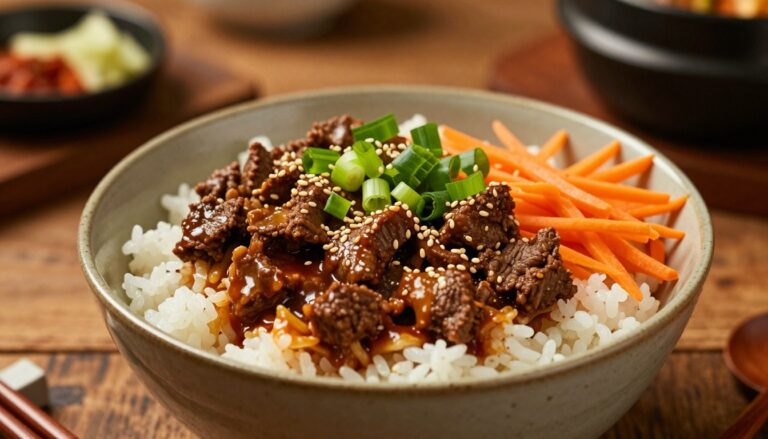
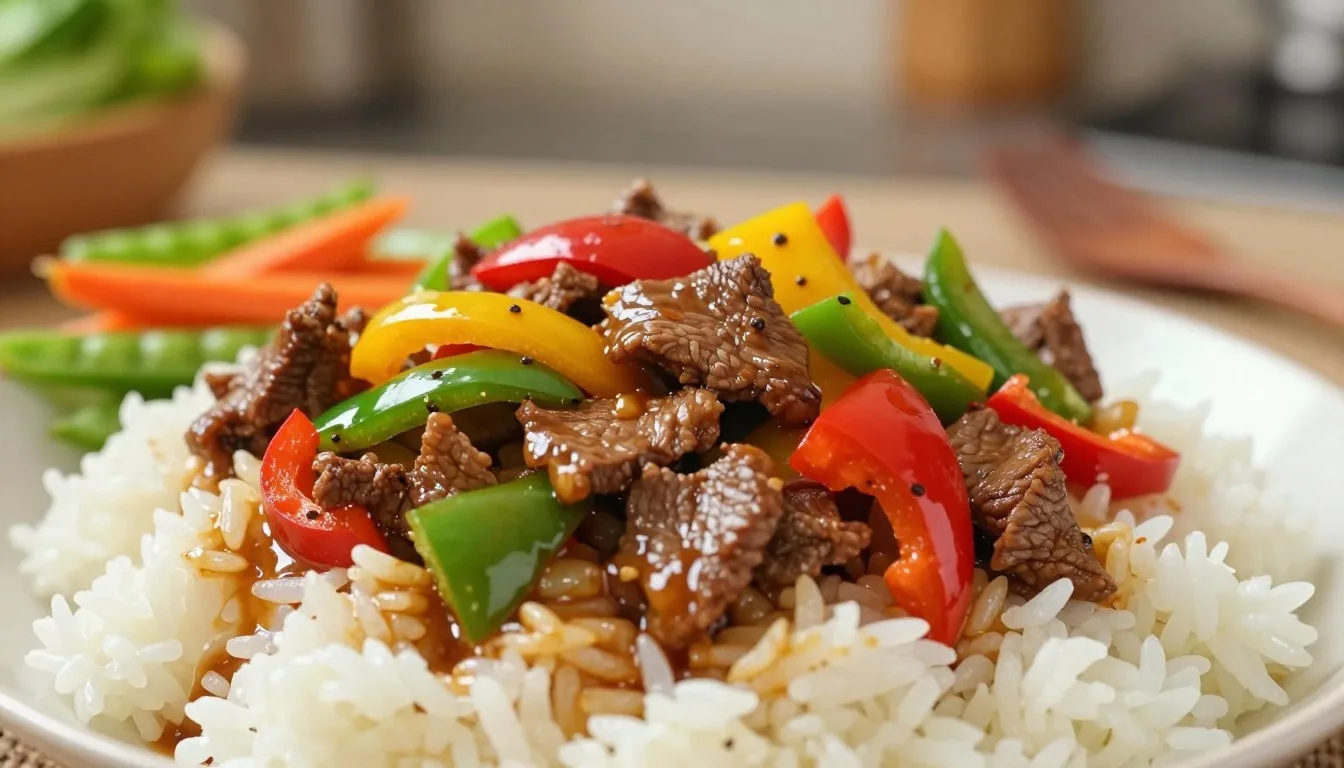
You can turn one quick batch from this beef stir fry recipe into 10 easy meals by changing its rice, noodle, grain, or vegetable base. This flexible meal choice suits cooks who want a quick weeknight meal without making dinner feel the same every time.
Table of Contents
A good base catches the sauce but does not turn soggy. You can spoon the beef over rice, toss it with noodles, serve it with grains, or pile it onto vegetables. The same pan of beef can fit a quiet dinner at home or a meal shared with friends.
One batch gives you a fast dinner and room to change the meal around it. The classic recipe takes 15 minutes to prepare and 8 minutes to cook, though chopping and other prep affect total time.
Thin slices and a hot pan help the beef cook quickly, while a balanced sauce brings the vegetables together. You can choose the base to match what is in your kitchen. Velveting is a brief tenderizing treatment that helps thin beef slices stay tender over high heat.
Beef Stir Fry Recipe: Ingredients and Method
For a dependable Chinese-style base, pair thinly sliced steak with crisp vegetables and a soy-and-oyster sauce. This small batch uses 200 g (about 7 oz) beef and serves 3-4.
Prep takes 15 minutes, and cooking takes 8 minutes. Flank, sirloin, rump, and tenderloin are quick-cooking steak options for a Chinese beef stir fry recipe.
Ingredients for the Classic Chinese-Style Version
This easy beef stir-fry recipe has a short soy sauce and oyster sauce base. Measure the ingredients before you start cooking.
- Beef and tenderizer: 200 g beef rump or flank steak; 1/2 teaspoon baking soda.
- Sauce: 2 tablespoons light or all-purpose soy sauce; 1 tablespoon oyster sauce; 2 tablespoons Shaoxing wine or mirin; 1 teaspoon sugar; 1/2 teaspoon toasted sesame oil; a pinch of white or black pepper.
- Thickener and oil: 3 teaspoons cornstarch; 1/2 cup water; 1 1/2 tablespoons peanut oil.
- Aromatics and firm vegetables: 1 minced garlic clove; 1/2 sliced onion; 1/2 sliced red bell pepper; 1 thinly sliced carrot.
- Greens: 2 bok choy, stems and leaves separated; 2 green onions, white and green parts separated.
Cook the Beef and Vegetables in Stages
Velvet the beef as described in the next section, then use this five-step method. Keep the aromatics moving in the pan.
- Mix the soy sauce, oyster sauce, wine, sugar, sesame oil, and pepper. Reserve 1 1/2 tablespoons to season the beef.
- Stir cornstarch and water into the remaining sauce until smooth. Heat the peanut oil over high heat.
- Cook the onion and garlic briefly. Stir-fry the beef, then add the bell pepper, carrot, bok choy stems, and green onion whites.
- Pour in the sauce and toss the ingredients. Add the bok choy leaves and green onion tops at the end.
- Cook until the sauce coats the food, then serve hot over your chosen base.
Another version uses 1 lb beef and 4 cups vegetables and takes about 30 minutes; total time depends on prep. Keep the aromatics moving so the garlic flavors the oil without scorching.
Prep Beef for Tender, Evenly Cooked Strips
Tender stir-fry beef starts with thin slices cut across the muscle fibers. Thin, against-the-grain slices and a suitable tenderizing method are the practical way to prep beef for stir-frying.
Cut the steak into sheets about 3 mm thick, then into strips no more than 1/2 inch thick. This shape cooks fast and gives you tender beef that is easy to chew.
Slice Across the Grain and Choose a Tenderizing Method
Look for the long lines in the meat, which show the direction of its muscle fibers. Slice across those lines, not along them, to shorten the fibers.
Flank steak, flatiron, skirt, flap, London broil, sirloin tip, and rump can all work. Cut strips about 1 1/2-2 inches long, and briefly chill the steak in the freezer if it feels too soft to slice neatly.
Velveting with baking soda is different from a water-and-cornstarch marinade. One method for about 200 g beef uses 2 tablespoons water, 1/4 teaspoon baking soda, other seasonings, and 2 teaspoons cornstarch; a separate method rests beef with 1/2 teaspoon baking soda for 20 minutes, then rinses it.
An optional flavor marinade adds taste, while velveting aims to tenderize. The Chinese-style method shallow-fries prepared beef at about 150°C for 30-45 seconds before the rest of the cooking.
A 3 mm slice thickness helps the beef cook evenly. Keep that cut consistent so the strips finish at about the same time.
Thaw Beef Safely Before You Slice
Refrigerator thawing takes at least 24 hours per 5 pounds of beef. Store refrigerator-thawed steaks and other red-meat cuts for 3-5 days before cooking.
Cold-water thawing needs a leak-proof package and water changed every 30 minutes. Beef thawed in cold water or a microwave must be cooked immediately.
You can refreeze refrigerator-thawed beef without cooking it first. Cook beef thawed in cold water or a microwave before refreezing, or cook beef from frozen, allowing about 50% more time.
USDA recommends that whole beef steaks reach 145°F (63°C) and rest for 3 minutes. That guidance applies to whole steaks, not a color-only check for thin strips. Keep thawed beef cold until you are ready to slice and cook it.
Build a Balanced Stir-Fry Sauce
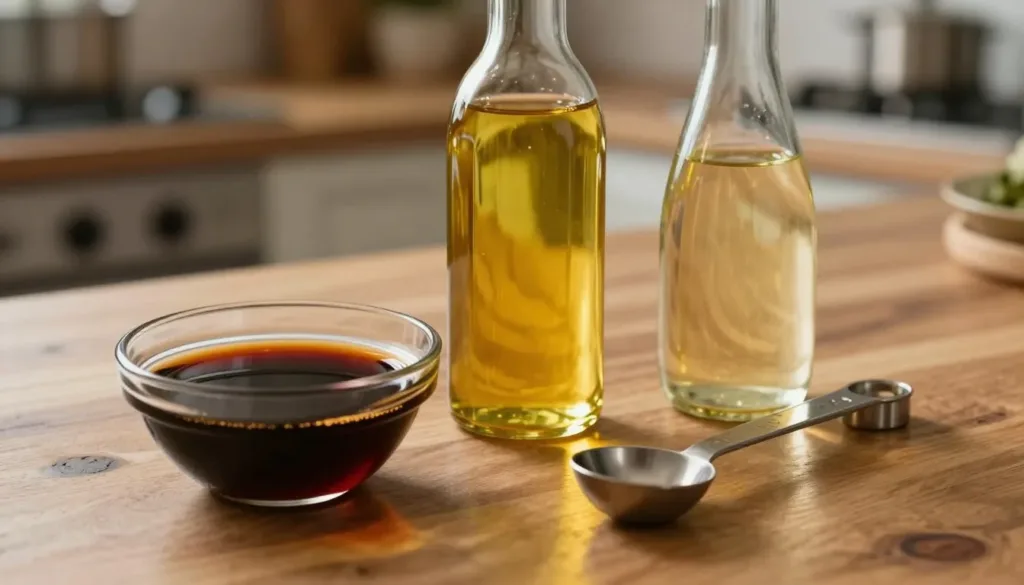
A good stir-fry sauce balances salty, sweet, savory, and tangy flavors in a quantity that coats the ingredients. The right balance adds flavor without leaving a pool at the bottom of your bowl.
About 1/2-1 cup sauce usually coats a stir-fry without making it soggy. For a general batch, plan on 1 pound protein, 4-5 cups vegetables, and 1-3 teaspoons aromatics.
Choose a Savory, Sweet, or Tangy Sauce Base
Classic Chinese-style sauce brings soy, oyster sauce, and Shaoxing wine together. Teriyaki adds brown sugar and rice vinegar, while a ramen-style mix pairs oyster sauce with honey and vinegar.
| Sauce style | Measured base | Sweet or tangy note | Thickener |
|---|---|---|---|
| Classic Chinese | 2 tbsp soy sauce, 1 tbsp oyster sauce, 2 tbsp Shaoxing wine | 1 tsp sugar, 1/2 tsp sesame oil | 3 tsp cornstarch, 1/2 cup water |
| Teriyaki | 1/3 cup low-sodium soy sauce, 1/4 cup water | 2 tbsp brown sugar, 1 tbsp rice vinegar | 1 tbsp cornstarch |
| Ramen-style | 1/4 cup oyster sauce, 1/4 cup low-sodium soy sauce | 1 tbsp honey, 2 tbsp rice vinegar | None listed |
A separate ramen-style sauce makes about 1 1/4 cups, enough for a stir-fry serving 4-6 people. The Culinary Institute of America’s stir-fry technique finishes the sauce in the pan and allows it to thicken lightly.
Thicken and Scale the Sauce
A quick three-ingredient sauce combines soy sauce, a sweetener, and a starch slurry. Add water to dissolve the starch before mixing it into the sauce.
For each cup of sauce, mix 1 1/2 teaspoons cornstarch with 3 teaspoons water. A glossy sauce should coat the food lightly rather than pool around it. Whisk the cornstarch into cool liquid until smooth before it reaches the hot pan.
Cook the Ingredients in the Right Order
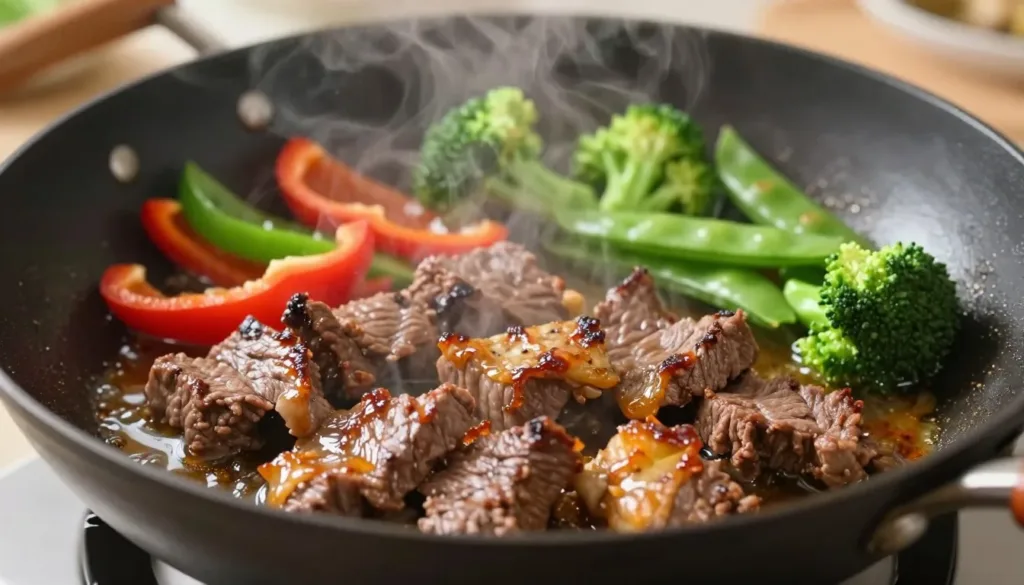
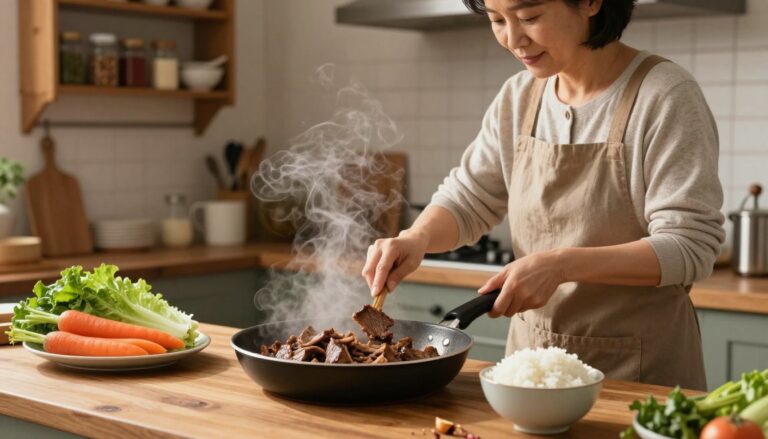
The key to a fast, crisp stir-fry is a hot pan, small batches, and a staged cooking order. To make a stir-fry, preheat the wok or wide skillet, sear the beef, cook the vegetables, then return the beef with sauce.
Too much food at once cools the pan and releases moisture, so the ingredients steam instead of searing. What not to put in a stir-fry includes wet ingredients, overcrowded batches, and garlic left to brown.
Sear the Beef and Set It Aside
Stir-frying uses high heat and a small amount of oil. Prep all ingredients before heating the pan, then cook the beef in a single layer.
Work in small batches and transfer each batch out before adding more. This keeps the pan hot, lets moisture evaporate, and gives the beef a chance to sear.
The Beef. It’s What’s For Dinner stir-fry basics also recommend adding vegetables in order of cooking time. Keep your prepared ingredients near the stove so each stage stays brief.
Add Vegetables by Cooking Time
Start with the firmest vegetables, such as carrots, bell peppers, and broccoli. Cook them for about 1-2 minutes before adding quick-cooking vegetables for about 1 minute more.
Add garlic and ginger for about 20-30 seconds, until fragrant but not browned. Dry ingredients before they reach the pan, and add them in stages to protect their texture.
Return the beef when you add the sauce, then toss until everything is coated. Once the sauce bubbles, it thickens into a glossy coating in about 1 minute.
For a black-pepper beef-and-cabbage version, cook the cabbage undisturbed for 1 minute, then stir-fry it for 4-6 minutes. Return the beef and juices for about 1 minute, until warmed through.
That cabbage version needs its own timing because the cabbage cooks longer than leafy greens. Add leafy vegetables near the end so they wilt without losing their crisp-tender texture.
Choose One of 10 Ways to Serve It
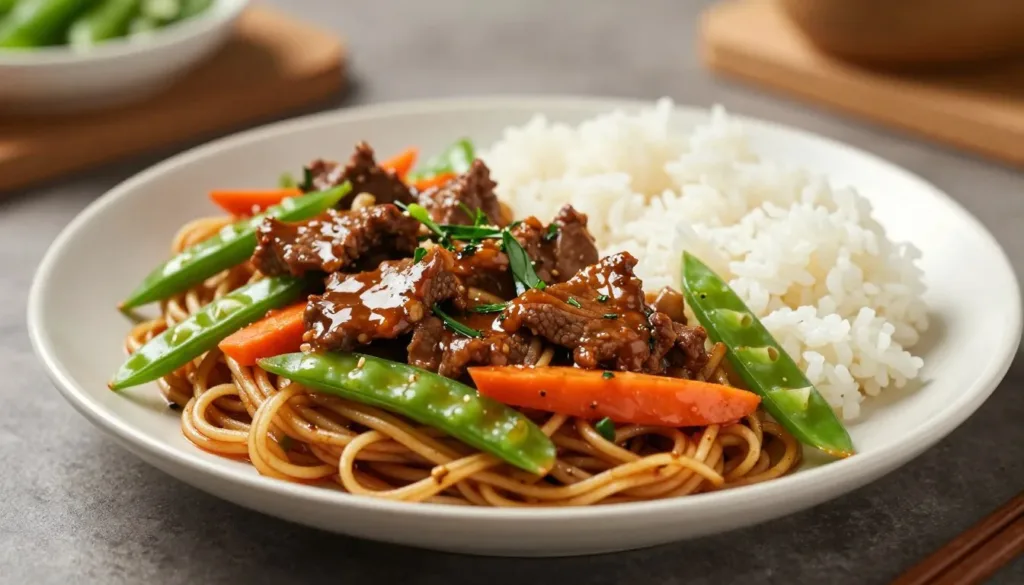
The same sauced beef can become a rice bowl, noodle dinner, or vegetable-forward plate. Your serving base changes the feel of the meal without requiring a new batch of beef.
Choose a base that catches the sauce and stays firm under the beef. Cook rice and noodles separately, then add the stir-fry just before serving.
| Serving base | Pairing | How to prepare | Useful detail |
|---|---|---|---|
| White rice | Classic vegetables | Cook separately; spoon beef over it | Catches sauce |
| Brown rice | Extra vegetables | Cook separately; serve beef on top | Heartier grain option |
| Cauliflower rice | Sauced beef and vegetables | Prepare separately; serve right away | Grain-free bowl |
| Ramen | Sliced sirloin and mushrooms | Cook noodles al dente; drain | Fresh ramen suits a noodle bowl |
| Rice noodles | Beef and quick-cooking vegetables | Soak just before cooking | Thin dried noodles need less weight |
Fresh ramen works well with shiitake mushrooms, which take about 2-3 minutes to soften. One ramen recipe uses 10 oz noodles and 1 lb sirloin for 6 servings.
Five more choices are udon, spaghetti, quinoa, cabbage stir-fry, and a vegetables-forward bowl with bok choy and spinach.
- Serve udon with beef and crisp vegetables.
- Toss spaghetti with the sauce for a familiar noodle dinner.
- Spoon the beef over cooked quinoa.
- Make cabbage the main vegetable in a stir-fry.
- Fill a bowl with bok choy, spinach, and beef.
Ground beef can replace sliced steak, but the texture changes to browned crumbles. For black-pepper beef and cabbage, use 3/4 pound sirloin and 1/2 small green cabbage, about 8 ounces, for 2-4 servings.
Cook that cabbage undisturbed for 1 minute, stir-fry it for 4-6 minutes, then return the beef and juices for about 1 minute. Refrigerated leftovers keep for 3-4 days. Soak rice noodles right before cooking to reduce drying and breakage in the pan.
Conclusion
A dependable beef stir-fry comes down to tender slices, a balanced sauce, and a serving base you enjoy. Small choices in the cut and the base can make a familiar dinner suit your mood.
Cut the beef carefully and cook it in stages; then pair it with the base that fits your meal. Prep the vegetables before heating the pan so you can keep each step moving.
You do not need a special occasion to make a fast dinner feel like your own. Pick your favorite base, prepare the ingredients, and make your first batch tonight.
FAQ
What are some recipes for skirt steak?
What is a 3-ingredient stir fry sauce?
What is the secret ingredient in stir fry?
What is the best classic stir fry recipe?
What are the three rules of stir-frying?
What Did You Think? Rate This Recipe
Absolutely Tender and Packed with Flavor!
I followed this guide step by step and the beef shank came out amazingly tender and full of flavor. The tips on maintaining moisture made all the difference. Highly recommended for anyone trying this cut for the first time!