15 Best Beef Stroganoff Recipes for Easy Weeknight Dinners
Table of Contents
For an easy weeknight dinner, choose a ground-beef version for speed or a steak version when tender seared beef is your priority. These beef stroganoff recipes bring you a filling plate of comfort food without asking you to spend the whole evening at the stove.
Maybe you have a busy night ahead and need dinner on the table fast. Or perhaps you have time to brown steak and want those tender strips in a rich sauce. Your schedule and preferred texture matter as much as the ingredient list.
The options range from quick ground beef to classic steak, with different times and serving sizes. The right easy dinner depends on the time you have and what you want to taste. Pick the version that matches the time you have and the texture you want on your plate.
Which Beef Stroganoff Recipes Fit Your Weeknight?
A ground-beef skillet is the quickest listed route, while a steak version gives you the classic seared-beef texture. Easy beef stroganoff recipes can use either steak or ground beef, with ground beef suited to a faster skillet meal.
The 30-minute ground-beef recipe is the fastest listed option, while the skirt-steak recipe takes longest at one hour. Compare the time and serving yield before deciding which dinner fits your night.
| Version | Main protein | Time | Servings | Best fit |
|---|---|---|---|---|
| 30-minute ground beef | Ground beef | 30 minutes | 6 | Fast family dinner |
| 20-minute prep plus 20-minute cook ground beef | Ground beef | 40 minutes | 4 | Planned skillet meal |
| 40-minute steak | Steak | 40 minutes | 4 | Seared beef texture |
| 45-minute ribeye | Ribeye | 45 minutes | 4 | Richer steak dinner |
| 1-hour skirt steak | Skirt steak | 1 hour | 4-6 | More time to cook |
These beef stroganoff recipes use different ingredients and methods, so their times are not interchangeable. A recipe that includes prep time may list it separately from cooking time. Read both figures when you plan dinner, especially if you need to fit cooking between other evening tasks.
One other version lists 10 minutes of preparation and 40 minutes of cooking, with six servings. That timing adds to 50 minutes, not the one-hour skirt-steak recipe’s total. The beef and sauce may also need different handling in each method, so don’t assume you can swap one cut into another recipe and keep its timing.
The 30-minute option can feed six, while the 40-minute ground-beef recipe serves four. A steak meal can also suit a four-person table, and the skirt-steak recipe serves four to six. Check the recipe’s serving yield as well as its time before choosing it for your household.
What Makes Stroganoff Traditional?
The earliest known printed beef Stroganoff recipe dates to 1871 and uses a simpler ingredient list than many modern versions. Traditional beef stroganoff recipes did not all follow one fixed form as the dish changed over time.
The first known recipe includes neither onions nor mushrooms. That makes the familiar modern plate only one version of stroganoff, not the sole traditional interpretation.
The Early Beef Stroganov Recipe
Elena Molokhovets published the first known beef Stroganoff recipe in her cookbook in 1871. Its title was “Beef à la Stroganov, with mustard.” It called for beef cubes, salt, allspice, butter, roux, prepared mustard, broth, and a small amount of sour cream.
That list has no onion, mushrooms, or alcohol. A roux, a cooked mix of fat and flour, helped thicken the broth. Prepared mustard gave the sauce a sharp note, while sour cream added a little tang. The recipe’s name and ingredients may look familiar, but the finished plate differed from many versions served today.
How Later Versions Changed the Dish
Later recipes cut the beef in different shapes. You may see diced pieces, cubes, or thin strips, each changing how the meat looks and cooks. The name alone does not tell you which shape to expect.
Mushrooms are common in many later versions, often cooked with onion and served in a creamy sauce. Some recipes pair the beef with egg noodles, while others focus on the meat and sauce. The mushroom-and-noodle plate has become familiar, but it is not the only traditional interpretation of the dish.
These changes leave room to choose a recipe that fits your kitchen and taste. A cook who wants a close match to the early ingredient list can skip the mushrooms and onion. Someone who prefers a fuller modern plate can use them. Treat the recipe’s changing ingredients as a reason to choose the version you actually want to cook.
Which Cut of Beef Gives You Tender Stroganoff?
Boneless ribeye is a strong choice for quick-cooking stroganoff, while chuck roast fits a slow-cooker method. Top sirloin and flank steak offer more affordable choices for a quick skillet meal.
Choose a quick-cooking cut for a fast skillet, or chuck for the slow cooker. The best meat to make stroganoff with depends on the method and the texture you want.
Quick-Cooking Cuts for the Skillet
Boneless ribeye works well when you want tender beef cooked quickly in a pan. Strip steak, flat-iron steak, and tenderloin are other quick-cooking options. These cuts suit a recipe that briefly browns the beef before it joins the sauce.
Top sirloin and flank steak are relatively affordable alternatives. They can work in a skillet recipe when you prepare and cook them with care. A leaner cut may not taste as rich as ribeye, so your sauce and mushrooms help round out the plate.
Chuck roast is a different choice. Its tougher texture makes it a better fit for slow-cooker stroganoff than for a quick sear. Long, slow cooking gives the cut time to soften, while a brief skillet cook may leave it chewy.
Slice Thinly Against the Grain
Cut beef into thin strips across the grain, meaning across the visible lines in the meat. Shorter muscle fibers make each piece easier to bite. Thin strips also cook quickly, which helps keep a skillet meal tender.
Use a sharp knife and steady strokes for even slices. Pieces of similar thickness cook at a similar pace, so you can brown them without leaving some raw or overcooking others. If you make the strips too thick, the outside can brown before the center cooks through.
Some cuts are easier to slice when they are firm. Chilling the meat, or putting it in the freezer briefly, can help you cut neat strips without pressing hard. Chill the beef briefly if a firm surface will make thin, even slices easier.
How Do You Build a Creamy Stroganoff Sauce?
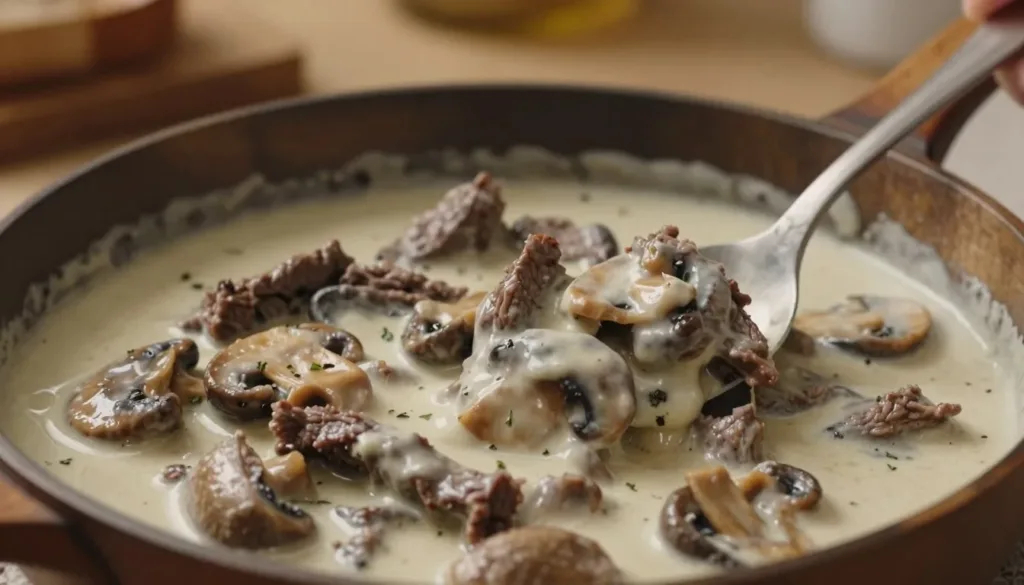
A savory sauce starts with mushrooms, onion, beef stock, and sour cream, then gets its edge from mustard and seasonings. Gentle heat helps the dairy stay smooth once it joins the pan.
Tempering sour cream means gradually warming it with a little hot sauce before adding it to the pan. This step helps keep the sour cream smooth as the sauce warms.
Layer Savory Ingredients for Depth
Mushrooms and onion bring savory flavor to the sauce, while beef stock gives it a meaty base. Sour cream adds a tangy, creamy finish. Together, those four ingredients create a familiar flavor without making the sauce taste heavy or flat.
Dijon mustard can sharpen the flavor, and thyme adds an herbal note. Worcestershire sauce gives the mix another savory layer. You can also use butter to cook the vegetables and flour to thicken the liquid, depending on the recipe.
If you want to know the four ingredients in beef stroganoff, a short list is beef, mushrooms, sour cream, and egg noodles. There is no fixed four-ingredient standard, and a fuller sauce also needs liquid and seasonings. Think of that list as a starting point, not a complete recipe.
Keep the Sour Cream Smooth
Tempering sour cream is a small step that helps it blend into hot sauce. Put a little hot sauce into the sour cream and stir until it feels warm. Then add the mixture back to the pan gradually.
After adding sour cream, warm the sauce gently without letting it boil. Strong heat can cause the dairy to curdle and turn grainy. Keep the pan at a low simmer before adding it, then lower the heat again as the sauce comes together.
Flour can help thicken the broth before you add sour cream. Stir it into the pan so it does not form lumps, then give the liquid time to thicken. Once sour cream is in the pan, keep the sauce warm rather than bringing it to a boil.
How Do You Make a Classic Steak Stroganoff?
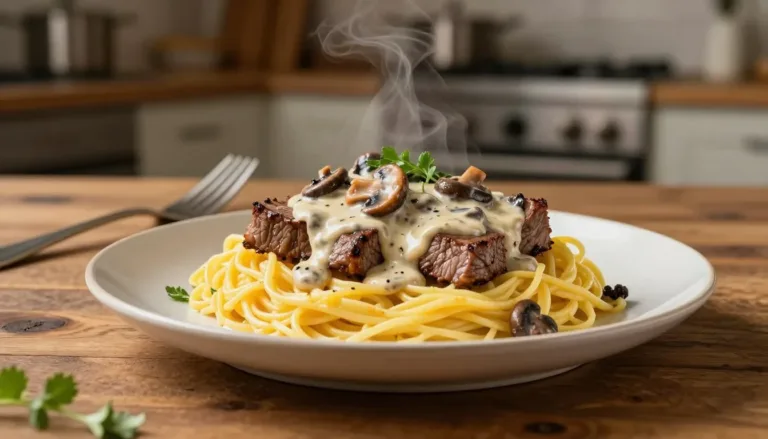
For a classic skillet dinner, brown the beef separately, build the mushroom sauce in the same pan, and bring the two together at the end. Batch cooking lets the beef brown instead of steam.
Return the beef only long enough to finish in the sauce. The exact time varies by recipe, so use its directions and a food thermometer rather than relying on color alone.
Brown the Beef in Batches
Cut the beef into strips, then season it with salt and pepper. Heat a little oil in a wide pan until hot. Add a small batch of beef and brown the pieces on both sides.
Move each batch to a plate before cooking the next. Crowding the pan traps moisture and makes the meat steam instead of brown. A hot pan and enough space give you a better sear, which adds flavor to the sauce later.
Finish the Sauce and Beef Gently
Cook the mushrooms in the same pan, then add onion or garlic if your recipe uses them. Stir in flour to help thicken the sauce. Pour in beef broth and scrape up the browned bits from the bottom of the pan.
Let the broth simmer until the sauce thickens, then lower the heat. Temper the sour cream before stirring it in. Return the beef and cook it just long enough to finish safely and warm through.
Recipe proportions differ, so use the row that matches your chosen method. These three formulas show how much the beef, mushrooms, broth, dairy, and noodles can shift.
| Formula | Beef and mushrooms | Broth and sour cream | Noodles |
|---|---|---|---|
| 30-minute ribeye formula | 1.2 lb ribeye; 10 oz mushrooms | 2 cups broth; 2/3 cup sour cream | 8-10 oz pasta or egg noodles |
| Food Network Kitchen ribeye formula | 1 lb ribeye; 8 oz white mushrooms; 7 oz shiitake | Broth amount not listed here; 3/4 cup sour cream; 1 tbsp Dijon | 10 oz egg noodles |
| Utah State sirloin formula | 1.5 lb sirloin; 8 oz mushrooms | 14.5 oz broth; 1/2 cup sour cream | Not listed here |
In the Food Network Kitchen recipe, the beef browns for about one minute per side and finishes in the sauce for about one minute. In the Utah State sirloin version, the sauce simmers for five minutes, then the beef returns for two minutes or just until heated through.
- Prepare the egg noodles in a pot of salted water, then drain them.
- Season and brown the beef in batches, then set it aside.
- Cook the mushrooms and aromatics in the same pan.
- Stir in flour and broth, then simmer until the sauce thickens.
- Return the beef and finish the sauce gently.
A 30-minute ribeye formula uses 600 grams, or about 1.2 pounds, of beef and serves four to five. Another steak recipe uses 1.5 pounds of steak, mushrooms, onion, broth, sour cream, and 12 ounces of egg noodles. Each recipe pairs its own proportions with its own cooking method. Use a food thermometer to confirm safe doneness rather than relying on color alone.
Ground Beef and Slow-Cooker Variations
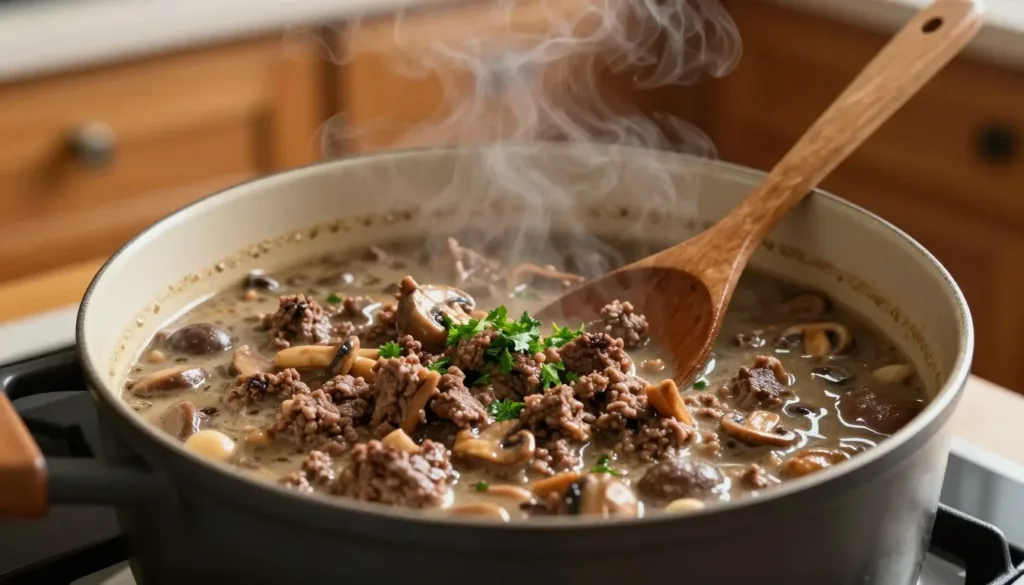
Ground beef and condensed mushroom soup make a quick, budget-minded skillet version, while chuck works better when you have time for slow cooking. Poor man’s stroganoff is a common name for the ground-beef version.
A 30-minute recipe with one pound of ground beef serves six. Ground beef also makes a practical choice when you want a filling sauce without cooking steak strips.
A Faster Ground Beef Skillet
For one version, brown 1 pound of ground beef with 1/2 cup diced yellow onion. Stir in 1 1/2 cups of beef broth and a 10.5-ounce can of cream of mushroom soup. After the sauce simmers, add 1 cup of sour cream and serve it with your chosen base.
Choose 85/15 ground beef for a balance of flavor and fat. If you want to avoid draining grease, 90/10 is an option. A different recipe uses 8 ounces of ground beef, 12 ounces of white mushrooms, 2 cups of broth, and 8 ounces of egg noodles for four servings.
That version simmers the beef in the sauce for about five minutes. The condensed soup helps make a quick, creamy skillet sauce, while broth loosens it to the texture you want. Poor man’s stroganoff is simple to adjust, but taste before adding more salt.
Slow Cooking Tougher Cuts
Chuck is better suited to a slow cooker than a quick skillet because it needs more time to soften. Add the beef and the other ingredients your recipe calls for, then let the longer cooking method do its work. This approach can give a tougher cut a tender texture.
Add sour cream near the end of the cooking time, not at the start. Dairy left in the slow cooker for the full cycle can split or lose its smooth texture. Stir it in gently when the beef is tender, then warm the sauce briefly.
A slow cooker is useful when you want tender results from a tougher cut, but it is not the fastest weeknight option. Plan for the longer cook and keep the sour cream for the finish. For safety, Utah State Extension’s beef guidance says ground beef should reach 160 °F. Cook ground beef to 160 °F, measured with a food thermometer.
What Mistakes Make Stroganoff Tough or Grainy?
Overcrowding the pan is a common reason beef steams instead of browning well. Give each piece room and cook in batches when needed.
Steak and roasts need to reach 145 °F, then rest for at least three minutes. A quick method still needs safe doneness, so check with a food thermometer.
Common mistakes can make beef tough or sauce grainy. Use these fixes to keep the skillet meal on track:
- Overcrowding the pan: Brown beef in small batches so it sears instead of steaming.
- Cooking steak too long: Brown it briefly, then return it only for the recipe’s finish.
- Boiling sour cream: Lower the heat and warm the sauce gently after adding dairy.
- Adding too much salt early: Taste the broth-based sauce before seasoning it again.
Steak can turn chewy when it stays in a hot pan too long. The beef strips continue cooking when they return to the sauce, so that final step should be brief. Keep the sauce below a boil after adding sour cream to reduce the risk of a grainy texture.
Broth and other seasonings can bring salt with them. If you add salt before tasting, the finished sauce may become too salty as it reduces. Taste after the broth simmers, then adjust in small pinches rather than seasoning heavily at the start.
A thermometer gives you a more reliable check than color alone. Raw beef steaks and roasts should reach at least 145 °F, followed by a rest of three minutes. Rest steaks and roasts for at least 3 minutes after they reach 145 °F.
How Should You Serve and Store Stroganoff?
Egg noodles are the familiar base, but mashed potatoes and rice also catch the creamy sauce well. Short pasta is another easy option when you want a shape that holds sauce.
Refrigerated leftovers keep for 3-4 days. Store the beef and sauce apart from the noodles when you can, especially if you plan to freeze them.
Choose a Base That Holds the Sauce
Choose a base that suits the meal and the sauce you have made. Egg noodles make the familiar pairing, while mashed potatoes give you a soft bed for the beef. Rice works well when you want a simple serving base.
- Egg noodles, the classic choice for stroganoff.
- Short pasta, which is easy to serve with thick sauce.
- Mashed potatoes, for a soft base beneath the beef.
- Rice, for a simple option that catches the sauce.
You can also serve the sauce over polenta, though it is not one of the four main choices above. Keep the noodles separate if you expect leftovers. They soak up liquid while they sit, which can leave them soft and the sauce thick.
Keep Leftovers and Noodles Separate
Cool leftovers and refrigerate them in a covered container. Keep the beef and sauce separate from noodles when possible. Freezing the beef and sauce apart from noodles helps protect the noodles’ texture after thawing.
| Leftover component | Storage approach | Reheating approach |
|---|---|---|
| Beef and sauce | Refrigerate 3-4 days; freeze apart from noodles | Warm over low heat with a splash of broth |
| Noodles | Refrigerate in a separate covered container | Warm with a little water or broth |
| Combined portion | Refrigerate 3-4 days in a covered container | Use low heat and stir gently |
To reheat beef stroganoff, use low heat and stir the sauce now and then. Add a splash of broth if it has thickened in the refrigerator. Heat only what you plan to eat, since repeated warming can affect the beef’s texture.
Separate storage gives you more control over the noodles and sauce. If you stored them together, warm the portion gently and stir so the heat spreads through it. Reheat only until the portion is hot, since prolonged heating can toughen the beef.
Flavor Variations for a More Personal Stroganoff
Paprika and wine can give stroganoff a different flavor direction, while careful browning improves almost any version. One small change can shift the sauce without changing the whole method.
There is no single ultimate recipe for beef stroganoff. Your best version depends on the flavor you like and how much time you want to spend cooking.
Add Paprika or Wine Thoughtfully
Paprika gives the dish color and a warm, earthy flavor, but it is not required in every traditional recipe. A paprika-forward version can be a Hungarian-inspired adaptation, not a fixed standard. One recipe uses 2 tablespoons of paprika for 1.5 pounds of beef.
Wine can deepen the sauce. Some recipes use 1/2 cup of dry white wine, while others use 1/2 cup of red wine. If you do not want to cook with alcohol, beef broth is a practical alternative that keeps the sauce savory.
Garlic can add a stronger savory note, while mustard brings a sharp edge. Add one change at a time instead of combining several new ingredients at once. That makes it easier to tell which flavor you enjoy.
What Makes a More Polished Version?
Good browning builds flavor in both the beef and mushrooms. Once you add liquid, scrape the browned bits from the pan into the sauce. Those bits bring the cooked, savory flavor back into the dish.
Balance the sauce’s richness with mustard and sour cream. Mustard adds tang and depth, while sour cream brings a creamy finish. Taste as you cook, since the broth and other seasonings may already add salt.
A Michelin-starred beef stroganoff recipe is not a defined recipe category. Michelin stars distinguish restaurants, not individual recipes or dishes. A polished home version comes from good browning, a smooth sauce, and flavors that suit your taste.
Use paprika, wine, garlic, or extra mustard as a planned change, not a handful of additions made at once. You can keep the rest of the recipe steady and taste the effect. Choose one flavor change at a time so you can tell how it affects the finished sauce.
Conclusion
The right stroganoff for tonight is the version that fits your time and the texture you enjoy. Ground beef suits a quick dinner, while a quick-cooking steak gives you tender seared strips.
You can keep the meal simple with egg noodles or serve the sauce over another base you already have. Either way, a warm skillet of stroganoff brings familiar comfort food to the table without making dinner feel like a project.
Choose the recipe that fits your evening, then check its serving size before you start. Set out your ingredients and choose your serving base before you heat the pan.
FAQ
What is an easy recipe for beef stroganoff?
What is the best meat to make stroganoff with?
How do I reheat beef stroganoff?
What are the 4 ingredients in beef stroganoff?
What is the secret ingredient in stroganoff?
What are common mistakes when making stroganoff?
What is poor man’s stroganoff?
What Did You Think? Rate This Recipe
Absolutely Tender and Packed with Flavor!
I followed this guide step by step and the beef shank came out amazingly tender and full of flavor. The tips on maintaining moisture made all the difference. Highly recommended for anyone trying this cut for the first time!