Jerk Chicken Recipe: 7 Easy Secrets to Juicy, Flavorful Jamaican Jerk
Table of Contents
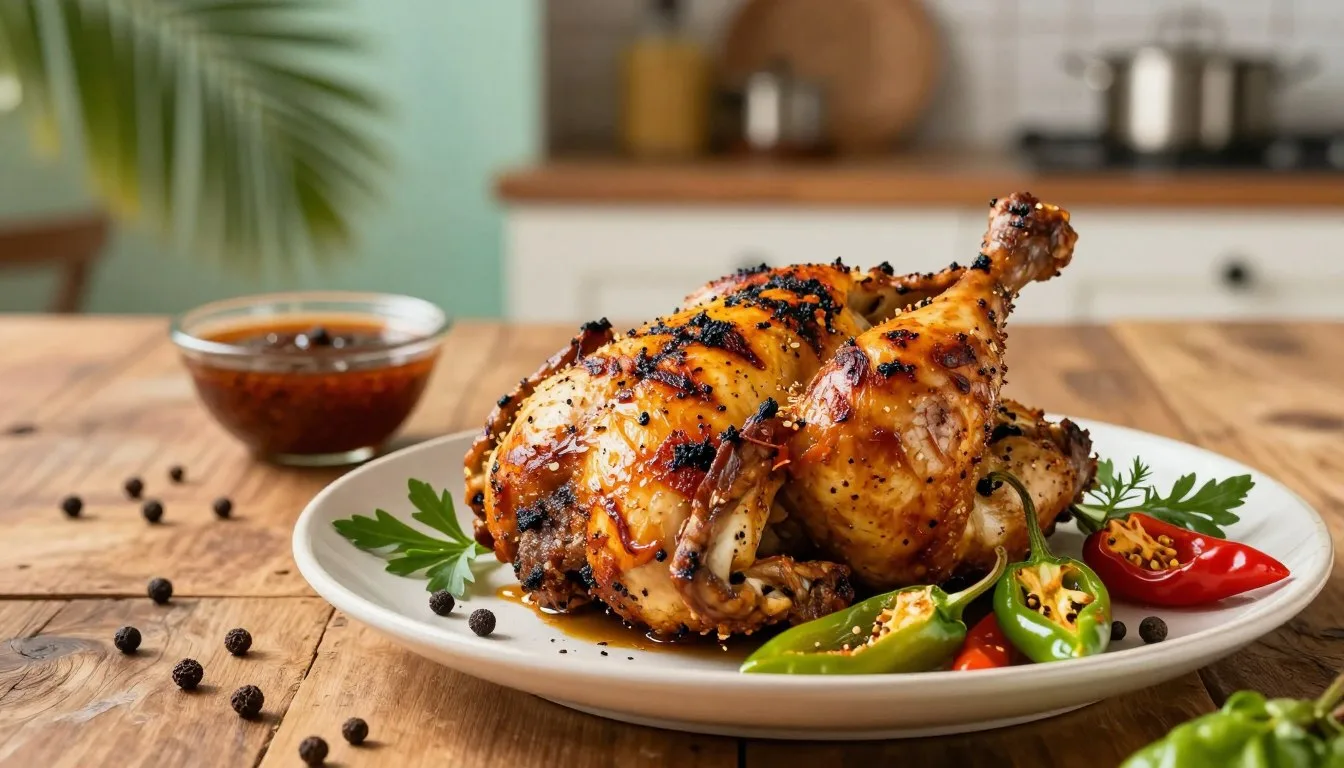
For bold Jamaican-style jerk at home, season bone-in chicken with Scotch bonnet, allspice, thyme, and aromatics, then grill it for char or bake it for convenience. This jerk chicken recipe gives you a bold wet marinade and two ways to cook juicy chicken without guesswork.
The smell of lime, garlic, and warm spice can make a regular dinner feel like a cookout. You will learn seven practical ways to build flavor, manage chile heat, and prepare the meat well. Choose Scotch bonnet for classic heat, or use less chile for a milder batch.
Grilling gives you browned skin and a smoky edge. Baking works when you want to cook indoors with less tending. The recipe also keeps the serving sauce separate from the raw chicken marinade, a small step that makes serving simpler.
You can prep the marinade ahead, then fit the cooking method to your plans. A homemade batch works for a weekend cookout or a make-ahead dinner, with the chile heat adjusted to your taste.
Jamaican Jerk Has Deep Roots and a Distinct Cooking Tradition
Jamaican jerk is a way of seasoning and cooking food, not just a name for a spicy sauce. Its distinct roots include Indigenous cooking practices and the skills of Jamaican Maroons.
Jamaica’s Indigenous peoples, including the Arawak and Taíno, shaped early cooking techniques. The descendants of 17th-century Jamaican Maroons adopted and developed those methods. Jerk draws on both a seasoning tradition and a way of cooking meat.
The Taíno term “barabicu,” also written “barbacoa,” referred to cooking structures that included raised wooden grills. People used them to roast and smoke food. Traditional jerk smoking uses pimento wood, the aromatic wood from the allspice tree used to smoke jerk.
Jerk seasoning often features allspice and Scotch bonnet, while the cooking method adds smoke and heat. A historical study in World History Connected’s study of Jamaican food traces links among jerk, Maroon practice, Taíno cooking, and African smoking methods.
Those roots help answer the search for an authentic jerk chicken recipe: look for both the seasoning and the cooking tradition. Home cooks can use a grill or oven, though neither fully recreates a traditional smoke pit. The pimento-wood smoke is the traditional marker that a home oven cannot reproduce exactly.
What Goes Into a Jerk Chicken Marinade?
Allspice and Scotch bonnet are the defining anchors, while fresh herbs, aromatics, and a little sweetness round out the marinade. Together they create warm, sharp flavor that clings to the meat.
The best Jamaican jerk seasoning starts with allspice and Scotch bonnet, then adds supporting ingredients to suit your taste. Allspice is the dried fruit of Pimenta dioica, a Caribbean tree; its flavor recalls clove, cinnamon, and nutmeg.
Allspice, Scotch Bonnet, and Fresh Aromatics
For four chicken hindquarters, use 3 to 4 Scotch bonnet or habanero chiles, 3 garlic cloves, 1 bunch scallions, and 1 small onion. Add a 2-inch knob of ginger, juice of 2 limes, and 2 tablespoons olive oil.
Round out the chicken marinade with 1 tablespoon brown sugar, 2 teaspoons dried thyme, 1 teaspoon ground allspice, 1 teaspoon kosher salt, and 1/2 teaspoon black pepper. Scotch bonnet peppers bring fruity heat; habanero is a useful substitute. Scallions, garlic, and ginger bring fresh, savory notes.
Lime juice adds tartness, while brown sugar softens the sharp edges and helps the surface brown. Thyme adds an earthy, herbal note. These ingredients form a practical base, though jerk recipes can vary in their supporting spices.
| Ingredient | Chicken marinade amount | Separate sauce amount |
|---|---|---|
| Scotch bonnet or habanero | 3 to 4 | 4 to 6 Scotch bonnet |
| Garlic | 3 cloves | 4 to 6 cloves |
| Scallions | 1 bunch | 4 stalks |
| Allspice | 1 teaspoon ground | 1 teaspoon |
| Brown sugar | 1 tablespoon | 2 tablespoons |
A Separate Jerk Sauce for Serving
A separate jerk sauce gives you extra heat at the table without reusing the chicken marinade. For it, blend 1 small red onion, 4 to 6 garlic cloves, 4 scallion stalks, 1/4 cup soy sauce, and 1/4 cup vinegar.
Add 2 tablespoons olive oil, juice of half a lime, 1 tablespoon grated ginger, 2 tablespoons brown sugar, and 1 teaspoon each of nutmeg, allspice, cinnamon, and dried thyme. This sauce has a deeper, more savory taste than the chicken marinade. Taste the separate sauce before serving and adjust its balance while it is still untouched by raw chicken.
Blend the Marinade and Season the Chicken Well
Dry chicken gives the wet seasoning a better chance to cling instead of sliding off the skin. This easy blend-and-coat method makes an even layer without a complex prep routine.
Work the seasoning under the skin as well as over it for better flavor across each piece. The easy jerk chicken recipe is mainly a matter of blending, coating, and chilling. The same simple approach suits a best Jamaican jerk chicken recipe at home.
Dry, Score, and Protect Your Hands
Use these four steps to prepare the chicken evenly:
- Pat the chicken dry with paper towels, then make small slashes or pierce the meat in a few places.
- Put the marinade ingredients in a blender and blend until smooth.
- Rub the seasoning over each piece and beneath the skin.
- Cover the chicken and refrigerate it in a dish or sealed container.
Small cuts help the wet seasoning reach beyond the surface. Keep them shallow, so the pieces stay intact while you turn them during cooking.
Wear gloves when handling Scotch bonnet peppers. Their juice can stay on your fingers and cause pain if you touch your eyes or face. Wash the gloves or discard them after prep.
Coat the Meat Under the Skin
Lift the skin gently with your fingers, then spread a thin layer of marinade over the meat. Smooth the skin back into place and rub any remaining seasoning across the outside.
A fresh serving sauce is different from marinade that has touched raw chicken. Keep the two apart during prep, and use a clean spoon for the sauce at the table.
If you want to serve marinade that touched raw chicken, bring it to a simmer for about 7 minutes first. Never serve marinade that touched raw chicken unless it has been simmered first.
Marinate for Flavor Without Overdoing It
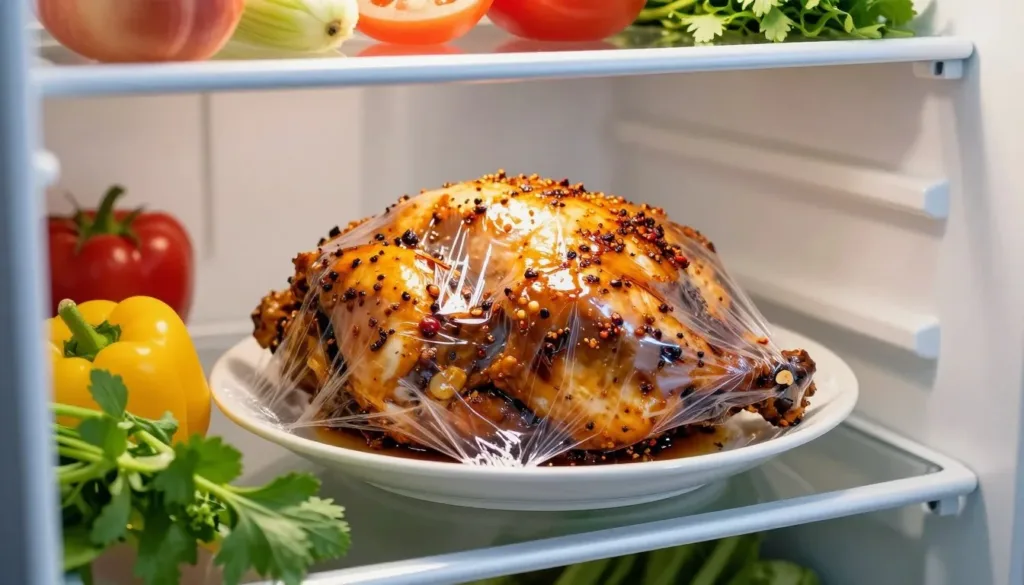
Give the chicken at least 2 hours in the refrigerator, and use an overnight rest when your schedule allows. A longer rest gives the seasoning more time to flavor the surface and cuts.
Keep the chicken in marinade for 2 hours to 1 day. For four hindquarters, that range gives you time to plan ahead without leaving raw chicken in the mixture too long.
Making the marinade early is not the same as marinating the chicken early. You can prepare the marinade 5 to 6 days ahead and keep it refrigerated, then coat the chicken closer to cooking time.
Fresh raw pineapple juice changes the timing because its enzymes can soften meat quickly. If you add it, limit the chicken’s marinating time to 2 hours. This recipe does not need pineapple juice, so you can follow the regular window without it.
For an overnight rest, place the covered dish on a low refrigerator shelf, away from ready-to-eat food. Set a refrigerator timer when you start marinating so the finishing time stays clear.
How to Cook This Jerk Chicken Recipe on the Grill or in the Oven
Choose the grill for char and a smoky edge, or the oven when hands-off indoor cooking matters more. The strongest choice for char is the grill, while baking makes dinner easier to manage indoors.
A home grill or oven approximates, but does not duplicate, a pimento-wood fire. Traditional jerk uses pimento wood from the allspice tree. Your home method still gives the chicken the seasoning and cooked texture you want.
| Method | Heat setup | What it offers |
|---|---|---|
| Indirect grill | Covered grill, heat beside chicken | Char and smoky edge |
| Oven baking | Indoor oven, foil-lined pan | Convenient cooking with less tending |
| Traditional jerk | Pimento-wood fire | Wood smoke and traditional cooking |
Grilling for Smoke and Char
A grill gives you a chance to build browned, crisp skin over indirect heat, then add direct heat for more color. That last step needs attention because the sugar and fat can darken quickly.
Keep the fire below the chicken at first, rather than placing the pieces over the hottest part. This lets the meat cook through before you focus on a darker finish.
Baking for Easier Indoor Cooking
The oven keeps the cooking indoors and reduces the need to watch a live fire. It suits a busy evening or a kitchen without a grill, though it will not add the same smoke.
Choose skin-on, bone-in pieces when you want the batch to cook more evenly across a single method. The skin also helps protect the meat as it cooks.
Both methods work with the same marinade, so your choice can come down to the kind of finish you want and the space you have. The grill is the stronger pick for char; the oven is the easier indoor option.
Grill Jerk Chicken for Juicy Meat and Charred Skin
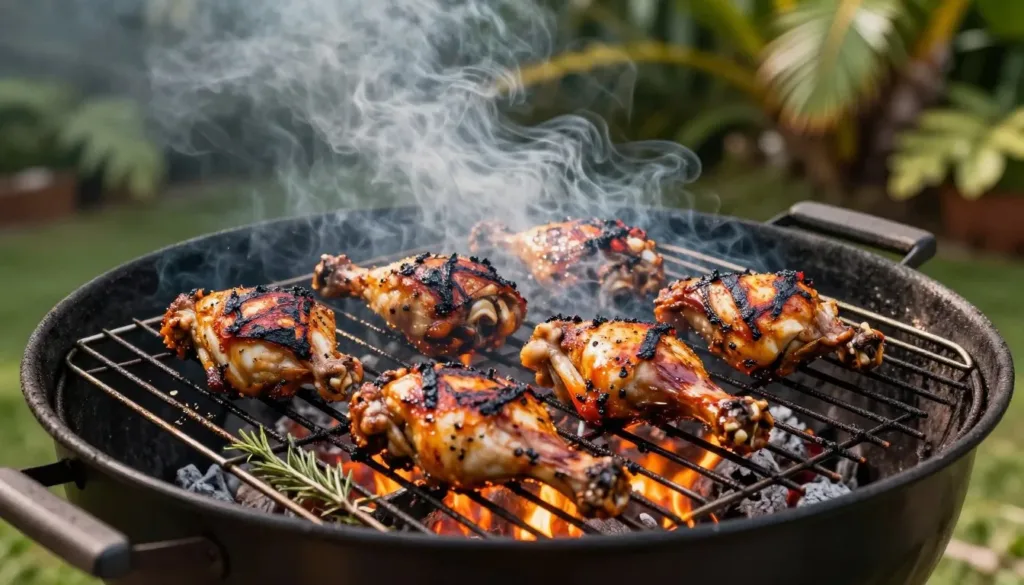
Start the chicken over indirect heat so the skin colors gradually before you chase a final char. This slower start helps the meat cook while limiting flare-ups from dripping fat.
Cook the hindquarters to 165°F in the thickest part, without letting the thermometer touch bone. Use this sequence for a covered grill set to 400°F:
- Set the grill for indirect heat at 400°F, leaving one area without direct flame.
- Place the chicken skin-side up over the cooler area and cover the grill.
- After 25 minutes, rotate the pieces so they cook more evenly.
- Continue grilling for about 20 minutes more with the lid closed.
- Check the thickest part of each piece with a thermometer, avoiding the bone.
Leave the pieces over indirect heat if their skin already looks well browned. If you want more char, move them briefly over direct heat and watch closely.
Keep the chicken away from flare-ups, which can blacken the outside before the center is ready. If fat drips onto a flame, shift the pieces to a cooler spot until the flare settles.
Check each hindquarter on its own because pieces can vary in size. Move any piece browning too quickly to a cooler part of the grill.
Bake Jerk Chicken in the Oven Without Drying It Out
For an indoor jerk chicken recipe, roast the bone-in pieces uncovered so the skin can brown. Uncovered roasting lets hot air reach the surface instead of trapping steam around it.
Bake 3 pounds of bone-in chicken at 400°F for 40 minutes. Use a rimmed baking sheet lined with foil to catch drips and make cleanup easier.
Set Up the Pan and Oven
Heat the oven before you set the chicken inside. Arrange the pieces on the lined sheet with space between them, so they roast rather than crowd together.
Set the chicken skin-side up, then place the pan on the middle rack. A rimmed sheet helps keep the cooking juices from spilling as you move it.
Roast Uncovered, Then Check for Doneness
Roast the chicken uncovered for the stated 40 minutes. Check the thickest piece with a food thermometer to confirm that the meat has cooked through.
The oven, pan, and size of the pieces can affect how quickly the skin browns. If the skin turns dark before the chicken is ready, loosely tent the pan with foil.
Keep the foil loose rather than pressing it against the skin. That gives the chicken some protection while leaving room for heat to circulate around the pieces.
A thermometer is more reliable than judging the chicken by color alone. If the exterior darkens before the chicken is ready, tent it loosely with foil and keep baking.
Serve Jerk Chicken With Jamaican Sides
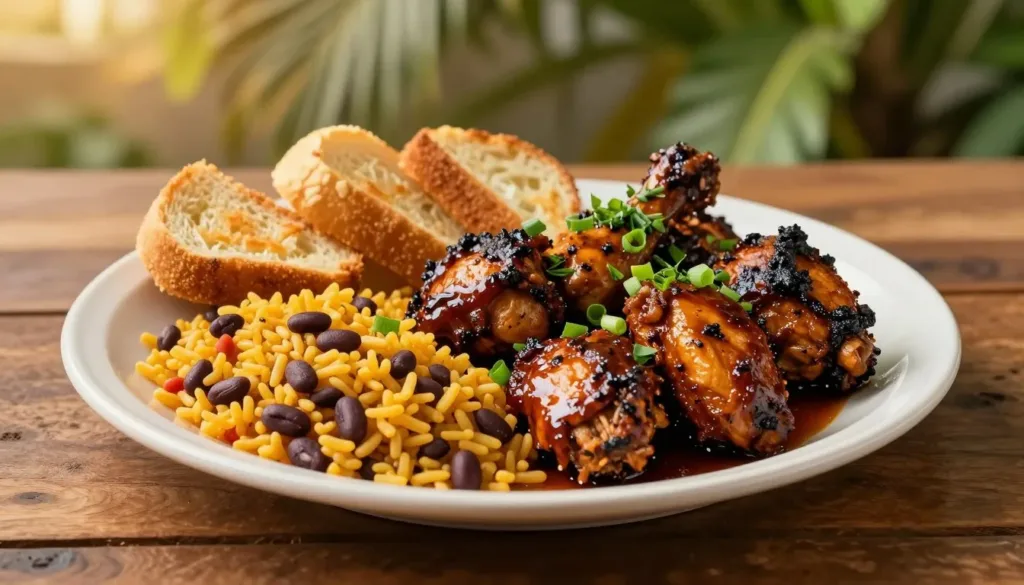
Rice and peas with festival makes a hearty plate that balances the chicken’s chile heat. The sweet, soft bread pairs well with spicy meat and gives you something to soak up the juices.
Rice and peas, served with festival, make a classic jerk chicken meal. You can add one or two of these familiar sides:
- Rice and peas
- Hard dough bread
- Festival
- Bammy
- Jamaican fried dumplings
Rice, Bread, and Festival
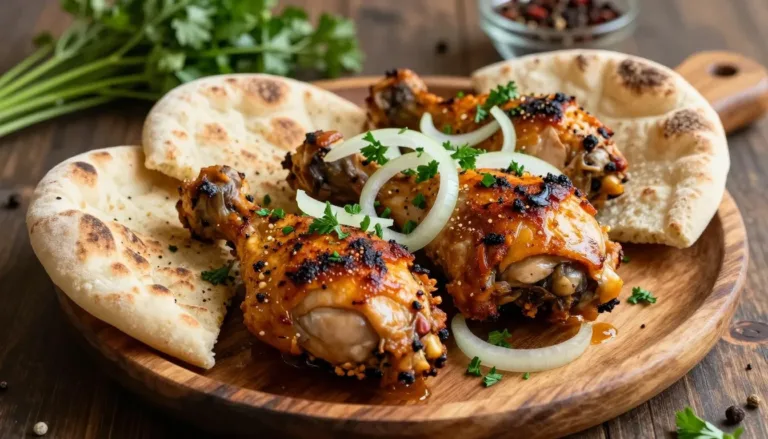
Jerk stands commonly serve chicken or pork with festival, hard dough bread, bammy, or Jamaican fried dumplings. Each option brings a different bite, from festival’s slight sweetness to the firm, mild taste of bammy.
Fresh, Sweet, and Cooling Pairings
Grilled pineapple brings a sweet note that works well beside the chile and spice. A fresh salad or slaw adds a crisp, cooling contrast, especially when the Scotch bonnet heat is strong.
Keep the sides simple if the chicken has a lot of heat. A bowl of rice and peas, a cool salad, and one bread choice give each bite a different texture.
Grill pineapple about 4 minutes per side for browned edges and a sweet, smoky contrast.
Store Leftovers and Make-Ahead Components Safely
Put cooked leftovers in an airtight container and refrigerate them promptly. Quick chilling helps you keep the chicken ready for another meal.
Refrigerated cooked jerk chicken keeps for up to 4 days in an airtight container. Store the separate sauce and uncooked components on their own, with their own time limits.
| Item | Storage | Time or next step |
|---|---|---|
| Cooked chicken | Airtight container in fridge | Up to 4 days |
| Separate jerk sauce | Airtight container in fridge | Use within 2 weeks, or freeze up to 6 months |
| Raw marinated chicken | Freezer, then refrigerator | Freeze for several weeks; thaw 2 nights before baking |
| Dry seasoning | Airtight container in pantry | Keep for several weeks |
Freezing raw marinated chicken is different from freezing cooked leftovers. Freeze the raw pieces for several weeks, then thaw them in the refrigerator 2 nights before baking.
Keep leftover jerk sauce in an airtight container in the refrigerator and use it within 2 weeks. You can freeze the sauce for up to 6 months. A dry seasoning mix can stay in a pantry container for several weeks.
Do not treat the raw chicken and cooked leftovers as the same item when planning meals. Label frozen packages with their contents and the date before storing them.
Conclusion
Start with fresh aromatics and the cooking method that fits your kitchen and schedule. Allspice and Scotch bonnet build the recognizable jerk flavor, while the grill gives the chicken char.
The oven is a convenient option when you want to cook indoors. You can control the heat by choosing how much Scotch bonnet goes into the marinade.
Before you begin, shop for fresh scallions, ginger, garlic, and limes. Decide whether you want the grill’s smoky edge or the oven’s easier setup.
Set out your ingredients, choose your heat source, and make your first batch.
FAQ
What is the secret to jerk chicken?
What are the ingredients of jerk chicken?
How to make perfect jerk chicken?
What are the three main ingredients of jerk?
Is it better to grill or bake jerk chicken?
Should jerk chicken be baked, covered or uncovered?
What’s the difference between Jamaican jerk chicken and Caribbean jerk chicken?
What sides go well with jerk chicken?
What Did You Think? Rate This Recipe
Absolutely Tender and Packed with Flavor!
I followed this guide step by step and the beef shank came out amazingly tender and full of flavor. The tips on maintaining moisture made all the difference. Highly recommended for anyone trying this cut for the first time!