Beef Broccoli Recipe: How to Make Tender Beef in 30 Minutes
Table of Contents
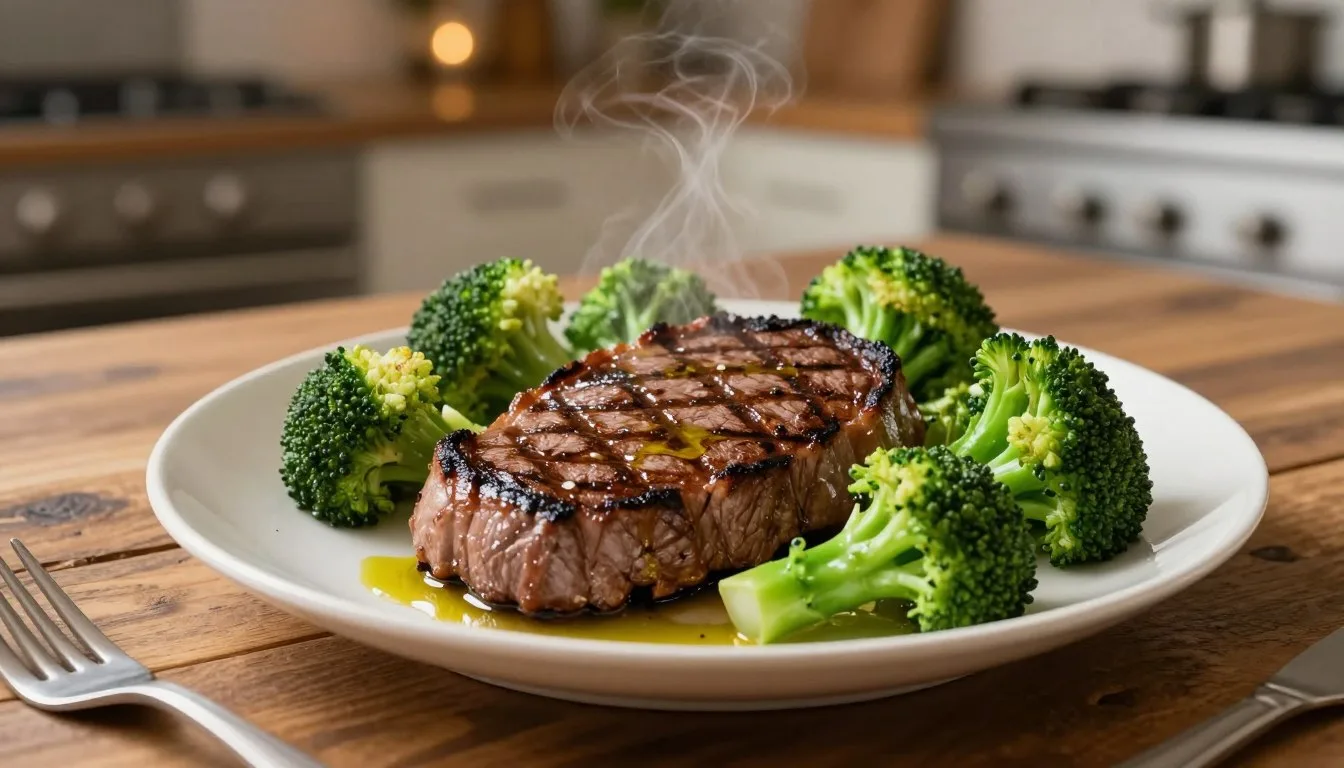
You can make this one-skillet beef broccoli recipe in 30 minutes, with top sirloin, crisp broccoli, and a savory sauce for four. It takes 15 minutes to prepare and 15 minutes to cook.
That timing helps when takeout sounds tempting, but you want a homemade weeknight dinner on the table. You get tender beef, crisp vegetables, and a savory soy-based sauce without claiming the dish tastes exactly like restaurant food.
Across the grain means cutting perpendicular to the visible muscle fibers, so each strip has shorter fibers. That small detail helps each bite feel easier to chew.
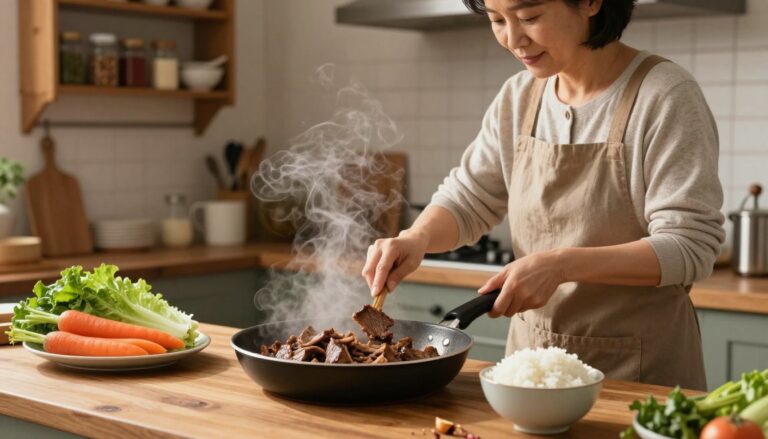
This quick dinner uses top sirloin for its beef and a large skillet for the stovetop method. The cooking plan keeps the beef and broccoli in separate stages, then brings them together in the sauce.
The stovetop method works with a large skillet, so you do not need a wok.
Beef Broccoli Recipe: Ingredients and Recipe Card
Gather the beef, broccoli, oil, cornstarch, pepper, garlic, soy sauce, and water before turning on the stove. Simple prep helps keep the recipe within its 30-minute schedule.
Use a clean knife and a separate board for raw beef to keep your work area easy to manage. The soy sauce and water form the liquid for the pan sauce.
Ingredients for the skillet
- 1 pound top sirloin
- 1 pound broccoli
- 3 tablespoons vegetable oil
- 2 tablespoons cornstarch
- 1/4 teaspoon black pepper
- 1/4 cup soy sauce
- 1/3 cup water
- 2 teaspoons minced garlic
This easy beef and broccoli recipe uses familiar ingredients and one skillet. The soy sauce brings salt and savory flavor, while the water helps form the sauce in the pan.
Prep the ingredients before heating the pan
Set out a clean cutting board and a second board for raw beef, if you have one. Keep the beef away from ready-to-eat foods during prep, and wash your hands after handling it.
Wash the broccoli and separate it into florets of similar size. Cut thick stems into smaller pieces so they cook at a pace closer to the florets.
Measure the oil, cornstarch, pepper, soy sauce, water, and garlic before you begin. A small bowl for each measured group makes it easier to add things at the right time.
Whole cuts of beef should reach 145°F and rest for 3 minutes for food safety. A thermometer gives you a more reliable check than appearance alone.
Pat the broccoli dry after washing so excess water does not dilute the pan sauce.
Choose and Slice Beef for Tender Stir-Frying
Top sirloin is a practical pick for this recipe, while flank steak and flat iron also work when sliced across the grain. Thin strips cook quickly in a hot skillet.
For stir-fry, cut beef across the grain and no more than 1/8 inch thick. That means each strip has short muscle fibers instead of long fibers that can feel chewy.
Cuts that work in a hot skillet
Top sirloin, flank steak, and flat iron are all useful choices for stir-fry. They cook well as thin strips, though their shape and grain can differ.
A brief time in the freezer can make the meat easier to cut. Freeze the steak for about 30 minutes, just until it firms, not until it freezes solid.
| Cut | Practical use | Slicing note |
|---|---|---|
| Top sirloin | Main recipe cut | Slice thinly across the grain |
| Flank steak | Lean stir-fry strips | Look for long, clear fibers |
| Flat iron | Quick skillet cooking | Cut across visible fibers |
When choosing a steak for stir-fry, top sirloin, flank steak, and flat iron are practical cuts. A cut’s grain is easier to see on a broad, uncut surface.
Slice across the grain
Look for fine lines running through the meat. Those lines show the direction of the muscle fibers, also called the grain.
Turn the knife so it cuts at a right angle to those lines. This cuts across the grain and gives each strip shorter fibers.
Keep the strips no thicker than 1/8 inch for quick cooking. If the beef feels soft and hard to control, chill it briefly before slicing.
A piece of steak can have fibers that run in more than one direction. Check the direction of the muscle fibers before slicing the next strip, since the grain can change direction along a piece of meat.
Use Baking Soda Velveting Only When You Have Extra Time
Baking-soda velveting is an optional treatment for strips when your chosen cut needs extra help, not a required step for top sirloin. It adds time beyond the 30-minute recipe.
Use 3/4 teaspoon baking soda for 8 ounces of thinly sliced beef, then leave it for 30 minutes. The method is meant for strips, not whole steaks.
The rinse-and-dry method
Spread the sliced beef in a bowl and sprinkle the baking soda over the strips. Toss until the meat has an even, light coating.
Let the beef rest for the treatment time, then rinse it well under cool running water. Drain the strips and blot them dry with paper towels.
This treatment can soften some less tender cuts before they go into a stir fry. Top sirloin in the main recipe can skip it, which keeps that dinner on its stated schedule.
Do not put baking soda on an intact steak and expect the same strip treatment. The method described here is for thin pieces that will cook quickly.
Treatment times for different cuts
Stewing cuts need more time than some economical steaks. Use the cut as your guide, and keep each strip fully coated during the rest.
- Chuck, gravy, oyster, and other traditional stewing beef: 30 minutes
- Economical steak, such as cheap rump or hanger: 20 minutes
- Blade or bolar blade: 40 minutes
Those treatment times are separate from the cooking time. If you are making dinner on a tight schedule, choose top sirloin and leave out the extra step.
A thorough rinse removes the baking soda from the meat’s surface. Rinse the treated beef thoroughly and blot it dry before it reaches the hot skillet.
Mix and Thicken a Savory Stir-Fry Sauce
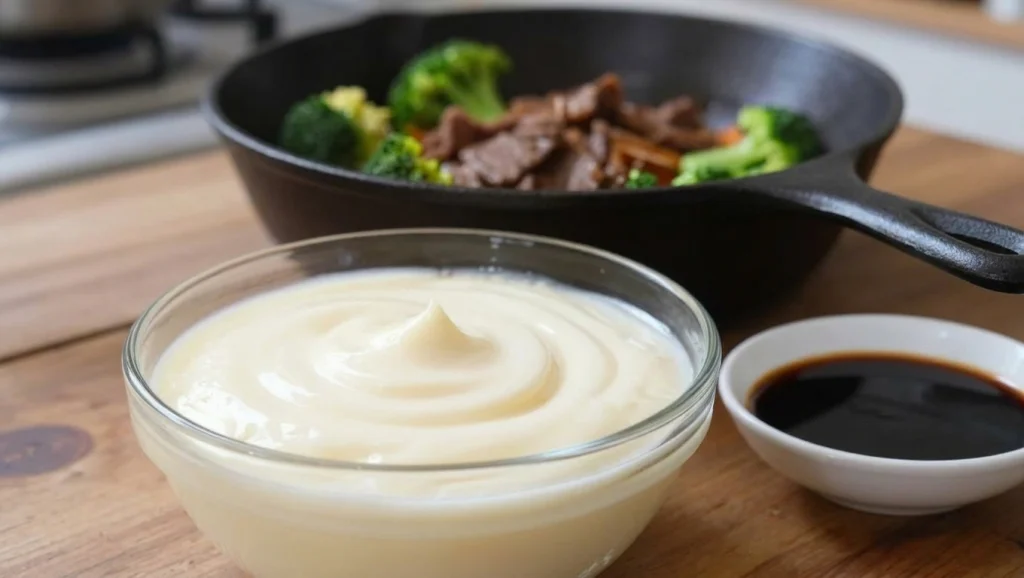
A glossy sauce comes from balancing salty soy, a little sweetness, aromatics, and enough cornstarch to coat the beef and broccoli. The main recipe keeps the sauce simple.
Mix cornstarch with cool liquid before adding it to a hot pan to help prevent lumps. A cornstarch slurry is cornstarch stirred into cold liquid until smooth.
Balance salty, sweet, and aromatic flavors
The sauce on beef with broccoli often tastes savory and lightly sweet. Soy sauce adds salt and depth, while garlic, ginger, and a little sugar bring warmth and balance.
Some versions add Chinese cooking wine, oyster sauce, dark soy, or sesame oil. These choices change the flavor, so keep each set of amounts together rather than combining every option.
| Sauce approach | Ingredients or profile | Useful detail |
|---|---|---|
| Main recipe | Soy sauce and water | Simple liquid base for the pan |
| Chinese-style measured sauce | Cornstarch, water, sugar, dark and light soy, cooking wine, five-spice, pepper, optional sesame oil | 2 tablespoons cornstarch to 1/4 cup water |
| Pantry stir-fry sauce | Soy, stock or water, sesame oil, rice vinegar, garlic, ginger, sugar or honey, cornstarch | Makes about 1 1/4 cups for 4-6 people |
A pantry sauce can stay covered in the refrigerator for up to 1 week. Stir it again before using because the cornstarch may settle.
Thicken the sauce without lumps
To thicken beef and broccoli sauce, stir the cornstarch into cool water before it meets the hot pan. Add the slurry while stirring, then simmer until the sauce coats the food.
A Chinese-style sauce can use 2 tablespoons cornstarch with 1/4 cup water. The cornstarch-to-water ratio helps create a thick, glossy finish without adding dry starch directly to the pan.
For lower sodium, use low-sodium soy sauce or dilute regular soy sauce with water. Check the flavor before adding more salt, since soy sauce already brings plenty.
Keep the sauce moving as it heats, especially around the edges of the skillet. If the sauce thickens too far, loosen it with a small splash of water and stir until smooth.
Keep the Broccoli Bright and Crisp-Tender
Bright green florets with a little bite come from short, controlled cooking rather than leaving broccoli in the pan while the sauce reduces. Quick heat keeps the texture firm.
Fresh broccoli florets need about 3-4 minutes in a skillet. A head of broccoli gives about 4 cups of florets, depending on its size.
Cook standard broccoli florets briefly
Add the florets after browning the beef, then cook them in the hot skillet with garlic. Stir now and then so the pieces cook evenly without sitting in one spot.
Brief parboiling is another method, not an extra step to combine with skillet cooking. Boil standard broccoli for 40 seconds for just-cooked florets, or 1 minute for tender florets, then drain.
Another approach boils broccoli for about 2 minutes. Separating a large stem from the florets can help the stem cook through without leaving the smaller pieces too soft.
Thaw frozen broccoli before cooking and pat it dry. Wet florets can cool the skillet and add water that the sauce does not need.
Use gai lan for a Chinese broccoli variation
Gai lan, also called Chinese broccoli, is a leafy green with thick stems. Slice the stems on a diagonal, making the thickest pieces smaller so they cook quickly.
For gai lan, blanch the greens briefly in salted boiling water with a little neutral oil. The fast dip helps keep the leaves crunchy and gives them a light sheen.
A thick-but-pourable oyster sauce can coat the greens. One version mixes oyster sauce, dark soy, sugar, cornstarch, and water for a savory finish.
Fast cooking and a crisp-tender finish help explain why restaurant-style greens taste appealing. Cut the thickest stems smaller than the florets so they finish at the same time.
Cook the Beef and Broccoli in the Right Order
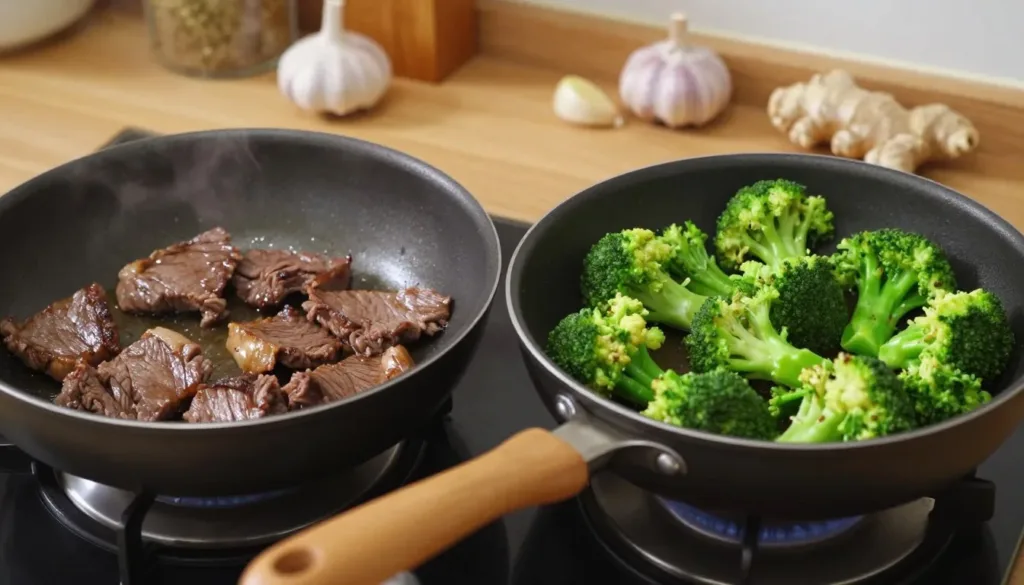
Cook the beef and broccoli separately first, then bring them together only when the pan sauce is ready to thicken. That order helps each ingredient keep its texture.
Brown the beef for about 4-5 minutes, cook the broccoli for 3-4 minutes, then thicken the sauce for 3-4 minutes.
- Coat the beef strips with cornstarch and black pepper.
- Heat oil in the skillet, brown the beef, then set it aside.
- Cook the broccoli and garlic in the skillet until crisp-tender.
- Return the beef, add soy sauce and water, and stir until the sauce thickens.
Give the beef room to brown instead of piling the strips into the pan. A crowded skillet traps moisture, so the meat can steam rather than develop browned edges.
Cook in batches if the beef does not fit in one layer. Move each browned batch to a plate, then return all the strips when the sauce goes in.
The beef should not be fully cooked before it returns to the sauce. It gets more heat during the final stir, and that short finish helps keep the strips tender.
The main method cooks the broccoli in the skillet with garlic. Stir the florets as they cook, and adjust their size before cooking if some pieces are much larger.
A separate hot-skillet method sears the beef undisturbed for 1 minute, then cooks it another 1-2 minutes. It steams broccoli under a lid with 1/4 cup water for about 2 minutes, then thickens sauce for 1-2 minutes.
That short sear and covered broccoli steam belong to the alternate method, not extra steps for the main recipe. Use one sequence from start to finish.
Check the beef’s doneness with a food thermometer rather than relying on color alone.
Adapt the Recipe for Ground Beef or a Longer Marinade
Ground beef turns the dish into a different but practical skillet dinner, while sliced beef gives you the familiar strips. Ground beef saves you the steak-slicing task.
Brown ground beef for 7-8 minutes, then cook covered broccoli for 5-6 minutes. Each version has its own timing and sauce amounts.
Ground beef and broccoli
A gluten-free ground-beef version serves four and uses 1 pound of 93/7 ground beef with a 10-12-ounce bag of broccoli. Its sauce uses 1/3 cup low-sodium tamari or coconut aminos, 2/3 cup water, and 1 tablespoon rice vinegar.
It also uses 1 teaspoon sesame oil, 2 tablespoons brown sugar, 1 1/2 tablespoons cornstarch, ginger, garlic, and cooking oil. Brown the beef, add the broccoli and sauce, then cover the skillet while the broccoli cooks.
Ground beef works well when you want a faster browning step and no steak-slicing task. For gluten-free cooking, check sauce labels and use tamari or coconut aminos instead of soy sauce.
A more seasoned, marinated version
A marinated sliced-beef version serves four with 12 ounces of beef and 1 pound of broccoli. The beef marinates for 30 minutes, and cooking takes 15 minutes.
Its marinade combines 1 teaspoon baking soda, 1 tablespoon each oyster sauce, light soy sauce, cooking wine, cooking oil, and cornstarch. It also uses 2 tablespoons water, 1/4 teaspoon white pepper, and 1 teaspoon sugar.
For its separate sauce, mix 1 tablespoon oyster sauce, 1 teaspoon each light soy, dark soy, and cornstarch. Add 1 tablespoon each water and cooking wine, plus 1 teaspoon sugar and 1/4 teaspoon white pepper.
| Version | Beef and broccoli | Timing | Serves |
|---|---|---|---|
| Main skillet recipe | 1 pound top sirloin, 1 pound broccoli | 15 minutes prep, 15 cook | 4 |
| Quick Chinese-style version | 12 ounces beef, 4-5 cups broccoli | 20 minutes total | 3-4 |
| Marinated sliced-beef version | 12 ounces beef, 1 pound broccoli | 30 minutes prep, 15 cook | 4 |
| Ground-beef version | 1 pound 93/7 beef, 10-12 ounces broccoli | 5 minutes prep, 20 cook | 4 |
The quick Chinese-style version uses 1 cup water. Keep the timing and sauce amounts paired with the version you chose instead of mixing measurements across recipes.
Serve It With Rice, Noodles, or Simple Toppings
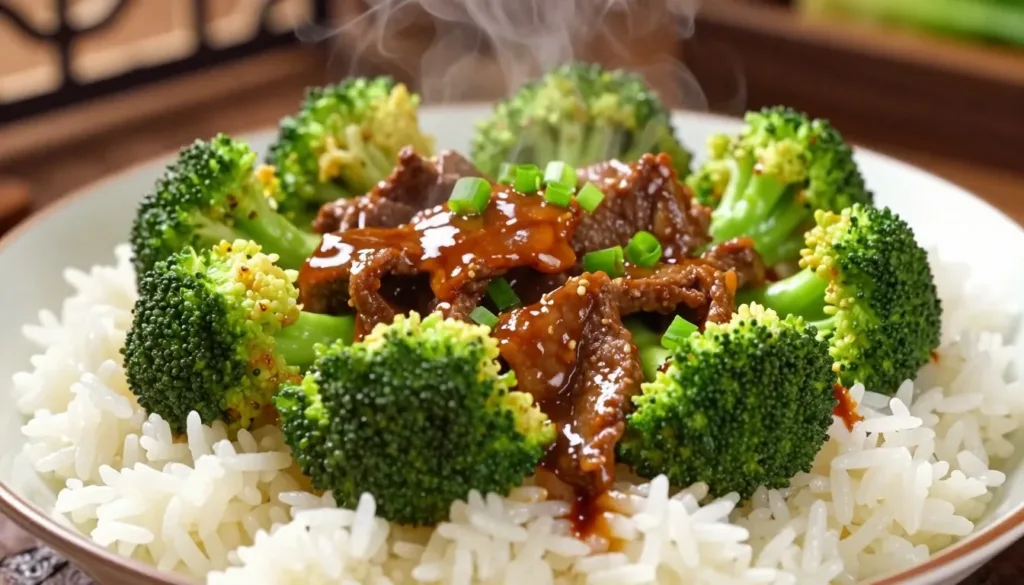
Steamed rice is the simplest base for catching the extra sauce, while noodles or cauliflower rice offer easy alternatives. Choose a base that fits the meal you want.
Three cups of cooked rice serve four people alongside one beef and broccoli recipe. Cook rice or noodles while the beef and broccoli are in the skillet.
- Steamed white or brown rice: use about 3 cups cooked rice for four servings.
- Cauliflower rice: serve it as a lower-carb base.
- Stir-fry noodles: add 7 ounces instead of serving the dish with rice.
- Sesame seeds and sliced green onions: scatter them over the finished skillet.
Rice catches the savory sauce and makes the meal feel familiar, while noodles bring a different texture. Cauliflower rice gives you a vegetable base without adding another pan of regular rice.
Sesame seeds add a nutty finish, and green onions bring a fresh, mild bite. They top the dish without changing the flavor of the sauce.
Prepare the rice or noodles during the cooking window so everything reaches the table together. Serve the dish as soon as the sauce is glossy so the broccoli keeps its bite.
Store and Reheat Leftovers Safely
Move leftovers into airtight containers and refrigerate them promptly instead of leaving the skillet at room temperature. Prompt chilling helps keep cooked beef, broccoli, and rice safe.
Refrigerate perishable food within 2 hours and keep leftovers for up to 4 days. You can freeze them for up to 3 months.
Separate leftover rice from the stir-fry when convenient, then chill both in airtight containers. This makes it easier to reheat only the amount you plan to eat.
Warm a portion on the stovetop over medium heat, stirring until hot throughout. Add a small splash of water if the sauce has thickened during storage.
For the microwave, heat leftovers for 2-4 minutes at half power, stirring partway through. Microwave time can shift with the amount and the container.
Reheat leftovers to 165°F, checking the center with a food thermometer. Reheat only the portion you plan to eat and return the rest to the refrigerator.
Conclusion
A hot skillet, well-sliced beef, and broccoli cooked to a little bite are the keys to a satisfying homemade dinner. Small prep choices make the meal easier to handle.
Cutting across the grain and avoiding an overcrowded skillet support tender beef. A little room in the pan also gives the meat a chance to brown.
Gather your ingredients before you start, and choose the rice or noodle base that suits your table. Set out the ingredients, choose your preferred rice or noodle base, and start cooking.
FAQ
How much protein is in Chinese beef and broccoli?
How to thicken up beef and broccoli sauce?
What cut of beef is best for stir-fry?
What to do with ground beef and broccoli?
What kind of sauce is on beef with broccoli?
How do Chinese restaurants make their beef and broccoli?
What is the best Chinese beef and broccoli recipe?
What Did You Think? Rate This Recipe
Absolutely Tender and Packed with Flavor!
I followed this guide step by step and the beef shank came out amazingly tender and full of flavor. The tips on maintaining moisture made all the difference. Highly recommended for anyone trying this cut for the first time!