Steak Stir Fry Recipe: 8 Veggie & Sauce Combos You’ll Want to Try
Table of Contents
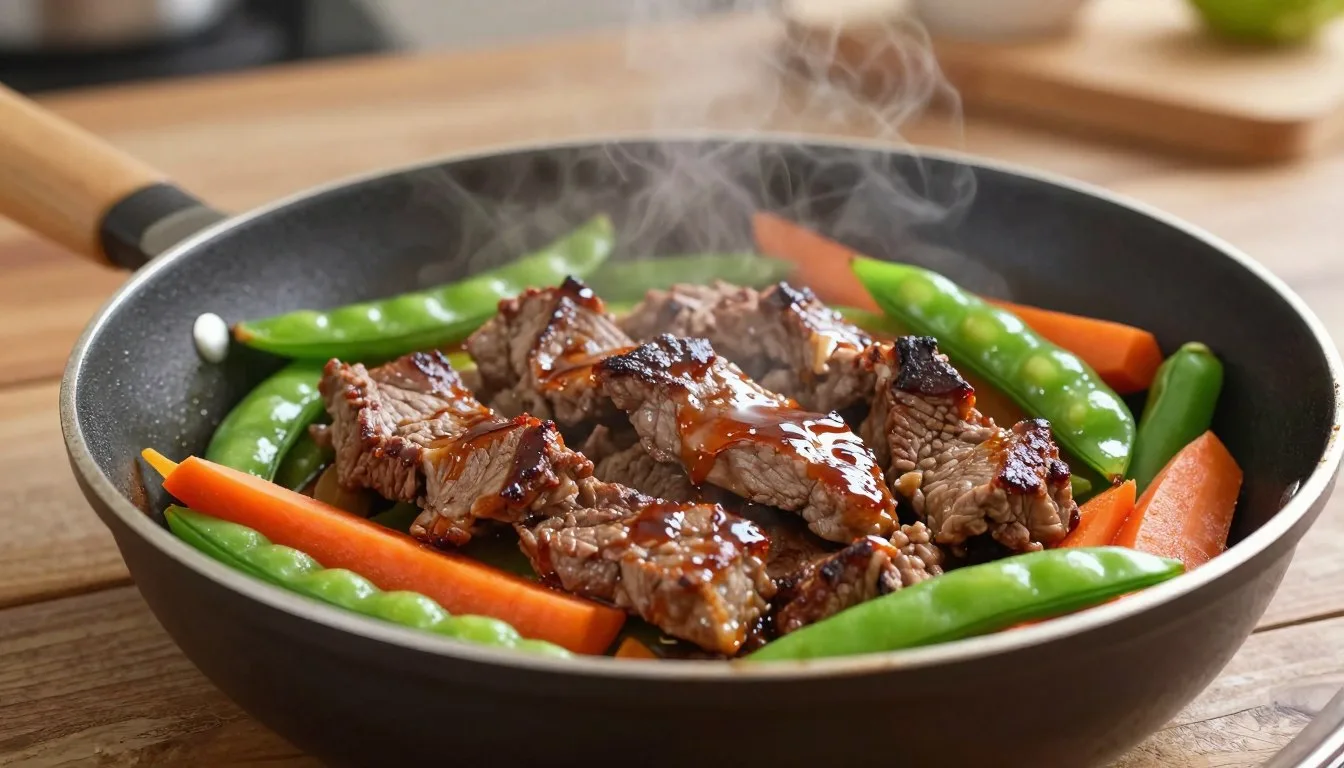
Pair quick-seared beef and crisp vegetables with one of eight sauce combinations for a customizable weeknight steak stir fry recipe. The meal comes together in a skillet in less than 30 minutes, making it a handy dinner when the evening gets busy.
You can swap the vegetables and sauce to match what is in your fridge. That freedom means a half-used pepper or handful of snow peas can still have a place at dinner.
Stir-frying means cooking ingredients quickly in a small amount of very hot oil while stirring or tossing them. You’ll cook the beef first, then add vegetables in order and finish with sauce.
Serve the meal over rice or noodles, or keep it simple in a bowl. You can also prep key ingredients ahead, which makes the fast cooking feel easier once the pan is hot.
Set out and cut all ingredients before heating the pan, because stir-frying moves quickly.
How Do You Stir-Fry Beef Without Overcooking It?
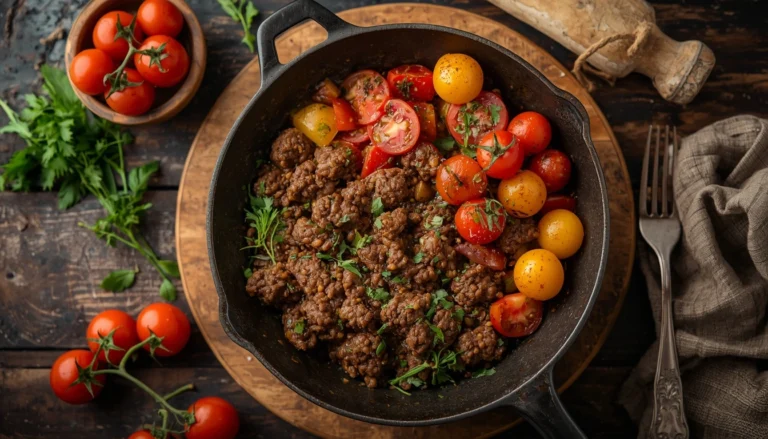
A successful stir-fry depends on a hot pan, prepared ingredients, and cooking the beef in batches rather than crowding it. Room to sear helps the meat brown instead of releasing liquid and steaming.
Keep beef pieces in a single layer with space between them. A wok or large skillet works, as long as you can stir without spilling food over the sides.
Prep the ingredients before heating the pan
Stir-fry cooking moves fast, so finish your prep before you fry. Cut the beef and vegetables, mince garlic, measure the sauce, and set each ingredient near the stove.
This setup is called mise en place, a French term for having ingredients ready before cooking. It keeps you from searching for a spoon while garlic burns in the pan.
Mix the sauce in a bowl and keep it nearby. If you need a plate for cooked beef, make sure it is clean before you start.
- Prep and arrange the beef, vegetables, garlic, and sauce.
- Sear beef in batches, then move it to a clean plate.
- Cook vegetables from firmest to quickest to soften.
- Return the beef and add sauce near the end.
Sear the beef in uncrowded batches
Heat the wok or large skillet before adding a small amount of oil. Add only enough beef to leave visible space between pieces, then let the meat sear before turning it.
When you add too much at once, the pan cools and beef releases moisture. Work in batches if needed, and avoid stirring every few seconds; contact with the hot pan helps browning.
Move each batch to a clean plate while you cook the rest. Add a little more oil if the pan looks dry, but do not let it smoke heavily.
Add ingredients in cooking order
Start with ingredients that need the most time, such as meat or firm vegetables. Add quick-cooking vegetables later, then pour in sauce near the finish so it coats the food.
Garlic can burn if it sits alone in a very hot pan for long. Add it with other ingredients or stir it briefly before adding vegetables or liquid.
For safety, whole cuts of beef should reach 145°F and rest for three minutes before carving or eating. Measure with a food thermometer; this guidance does not replace safe handling or cooking for already-sliced meat.
The USDA also advises cooking whole beef cuts to 145°F and resting them for three minutes, as explained in its recommended meat temperatures.
Stir-frying’s Chinese roots
Stir-frying originated in China, where cooks used a hot wok to cook food quickly. The English term “stir-fry” appeared in Buwei Yang Chao’s cookbook How to Cook and Eat in Chinese, first published in 1945.
The method suits weeknight cooking because ingredients cook in short stages. Keep the beef on a clean plate while the vegetables cook so it can be returned to the pan at the end.
Steak Cuts That Stay Tender in a Hot Pan
Flank steak is a practical choice for thin strips, while sirloin is an easy all-purpose option and ribeye brings more marbling. Even slices cook at a similar pace, helping you avoid dry edges beside underdone pieces.
Choose flank or skirt steak when you can slice across the grain. Sirloin and flat iron are flexible options, while ribeye gives the beef a richer taste.
| Cut | Recommended cut | Useful characteristic |
|---|---|---|
| Flank | Thin slices across the grain | Lean and easy to portion |
| Sirloin | Thin strips | Flexible all-purpose choice |
| Skirt | Thin slices across the grain | Strong beef flavor |
| Flat iron | Thin strips | Even pieces are easy to cut |
| Ribeye | Thin strips | Richer, more marbled beef |
The grain is the direction of the visible muscle fibers in the meat. Cutting across those fibers shortens them, which makes each bite easier to chew.
A slightly firm steak is easier to slice thinly than a soft one. Chill it briefly if it feels hard to handle, then cut strips of even width.
Each cut works best when the pieces are similar in size. Choose a steak you can cut evenly, then slice across its visible muscle fibers for shorter, more tender bites.
Tenderize Steak Without Making It Mushy
A brief baking-soda treatment can help a tougher steak cut, while cornstarch mainly coats the meat and helps sauce cling. Velveting is a short treatment that helps sliced meat stay tender during high-heat cooking.
For each pound of beef, use about 1 teaspoon of baking soda and chill it for 30-40 minutes. Rinse and dry the meat well before cooking.
Use baking soda for a tougher cut
Spread the baking soda over the beef so each piece gets a light coating. Refrigerate the meat for 30-40 minutes, then rinse it under cool water and pat it dry.
This baking-soda method is a tenderizing step, not a marinade. Leaving baking soda on the meat or using too much can change its texture and flavor.
A steak stir-fry marinade can use soy sauce and cornstarch for coating, while baking soda is a separate tenderizing option that must be rinsed off. The two methods serve different purposes.
About 1 teaspoon per pound is enough for this brief treatment. Do not extend the chill time to make the beef “more tender.”
Use cornstarch for coating and sauce
Cornstarch can coat beef and help sauce cling to the surface. It can also thicken liquid in the pan when mixed into a sauce.
That coating is not a one-to-one substitute for baking soda. It does not perform the same tenderizing step, so choose it for a light coating or a thicker finish.
Use a small amount and coat the meat evenly. Thick, pasty clumps can stick to the pan and leave some slices bare.
- Use baking soda briefly to help tenderize tougher beef.
- Rinse baking-soda-treated meat before cooking.
- Use cornstarch to coat beef or thicken sauce.
- Do not leave excess baking soda on the meat.
Keep the two treatments separate in your mind: one helps tenderize, and the other coats or thickens. Rinse and pat baking-soda-treated beef dry before it goes into the hot pan.
Vegetables That Keep Their Bite
Broccoli, bell pepper, carrots, snow peas, and bok choy all work, but they need different cuts and cooking order. Even pieces cook more evenly, so cut each vegetable into a similar size.
Most stir-fried vegetables cook for 4-7 minutes total at 425-450°F. The mix of vegetables and the size of each piece affect the exact time.
| Vegetable | Prep | When to add it |
|---|---|---|
| Broccoli florets | Small, even florets | Early, with other firm vegetables |
| Bell pepper | Thin strips | After broccoli starts to soften |
| Carrots | Thin slices or matchsticks | Early, since they stay firm longer |
| Snow peas | Trimmed whole pods | Near the end |
| Bok choy | Separate stems and leaves | Stems first, leaves last |
Carrots and broccoli need more time than snow peas or leafy bok choy tops. Thin carrot slices help them cook at a pace closer to the other ingredients.
For bok choy, add the firm stems before the leaves. The leaves soften quickly, while the stems benefit from a little more time in the pan.
Cook the vegetables in a layer that lets them make contact with the hot pan. Add the quickest-cooking vegetables last so they stay crisp-tender.
Build a Savory-Sweet Steak Stir-Fry Sauce
A balanced stir-fry sauce combines a salty base with sweetness, acidity, and aromatics, then goes into the pan near the finish. Balance lets the beef and vegetables come through instead of tasting only sweet or salty.
Add stir-fry sauce during the final 30-60 seconds of cooking. That timing helps it coat the food without leaving the vegetables to steam in liquid.
Balance salty, sweet, acidic, and aromatic ingredients
Soy sauce brings salt and savory flavor. Honey or brown sugar adds sweetness, while rice vinegar gives the sauce a bright, tart edge.
Garlic and ginger add a warm aroma, and chile adds heat if you want it. Stir the ingredients together before they go into the hot pan.
A Japanese-style steak stir fry recipe can use soy, mirin, and ginger as a flavor variation. This is an inspired combination, not a claim about one traditional recipe.
Pick one of eight vegetable-and-sauce combinations
Pick a pairing that fits the vegetables you have. These ideas use different sauce styles, so you can change the meal without changing the basic cooking method.
- Broccoli with garlic-ginger soy.
- Snap peas with sesame-soy.
- Bell pepper and carrots with sweet soy and rice vinegar.
- Bok choy and snow peas with oyster sauce.
- Mushrooms and onions with black-pepper soy.
- Zucchini and bell pepper with lemon-garlic butter.
- Cabbage and broccoli with chili-garlic sauce.
- Green beans and carrots with Japanese-inspired soy, mirin, and ginger.
For a garlic steak stir fry recipe, choose garlic-ginger soy or chili-garlic sauce. A little sesame oil can add a toasted note, but it is not needed in every pairing.
Adjust sodium and heat to taste
Soy sauce and bottled stir-fry sauce can add a lot of sodium. Kikkoman Stir-Fry Sauce lists 490 mg of sodium per 1 tablespoon, or 21% of the Daily Value.
Bottled sauce sodium varies by product, so check the label before adding more soy sauce. Start with less chile if you are unsure, then add more after tasting.
Use rice vinegar to brighten a sauce that tastes too rich, or a small amount of honey to soften sharpness. Taste the sauce before adding it, since soy sauce and bottled stir-fry sauce can already contribute substantial sodium.
A Reliable Steak Stir Fry Recipe for Weeknights
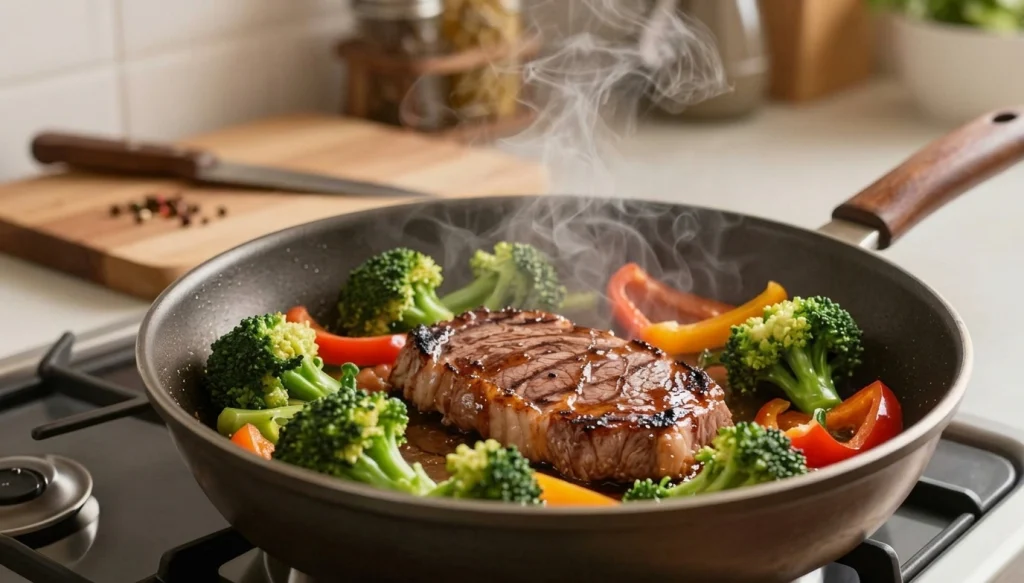
A reliable weeknight version uses thin sirloin, crisp vegetables, and a quick soy, honey, garlic, and ginger sauce. This classic steak stir-fry recipe serves 4-5, makes about 5 cups, and takes less than 30 minutes.
Cook the beef in batches, then add the sauce for about two minutes. This classic weeknight version is dependable, not the single definitive recipe.
Ingredients for beef, vegetables, and sauce
For an easy steak stir-fry recipe, gather everything before you heat the pan. This beef steak stir-fry recipe makes a full dinner with broccoli, pepper, carrot, and green onion.
- 1.5 lb thinly sliced sirloin
- Salt and black pepper
- 1.5 tbsp cornstarch and 1 tbsp rice vinegar for the beef
- Cooking spray and 1 tbsp avocado or olive oil, divided
- 4-5 cups broccoli florets
- 1 thinly sliced red bell pepper and 1 thinly sliced carrot
- 3 green onions, whites and greens separated
- 1-2 tbsp water, if needed
- 1/3 cup reduced-sodium soy sauce
- 1/2 cup water or broth
- 2 tbsp honey and 1 tbsp rice vinegar
- 3 minced garlic cloves and 1 tsp grated ginger
- 1/2-1 tsp chile-garlic sauce or Sriracha
- 1 tbsp cornstarch for the sauce
Use reduced-sodium soy sauce for the listed amount, and choose water or broth for the liquid. Set out two bowls, one for the beef coating and one for the sauce.
Sear the beef, then cook the vegetables
- Toss beef with salt, pepper, 1.5 tbsp cornstarch, and 1 tbsp rice vinegar. Set aside while you whisk the sauce ingredients together.
- Whisk soy sauce, water or broth, honey, rice vinegar, garlic, ginger, chile-garlic sauce or Sriracha, and 1 tbsp cornstarch.
- Coat a wok or large skillet with cooking spray. Heat half the oil, then sear beef in batches for 1-2 minutes per side. Remove each batch.
- Add the remaining oil and cook broccoli, bell pepper, carrot, and green onion whites for 5-6 minutes. Add 1-2 tbsp water if needed.
- Return beef to the pan. Add sauce and stir for about 2 minutes, until thickened. Finish with green onion greens.
Finish the sauce and serve
The best steak stir-fry recipe for your table is one with beef cut evenly, vegetables cooked to your liking, and sauce added near the end. Taste a piece before serving and adjust the seasoning at the table.
Keep the cooked beef on its clean plate until the vegetables are ready. Serve the stir-fry hot, and keep any rice or other serving base separate until plating.
Best Oils and Pans for High-Heat Stir-Frying
Refined avocado oil has the highest smoke-point range among these options, while a large skillet can stand in for a wok. High heat works best with a stable pan and a small amount of oil.
Refined avocado oil reaches 480-520°F, the highest listed range here. Refined peanut oil and rice bran oil each have a 450°F smoke point.
| Oil | Smoke point | Practical note |
|---|---|---|
| Refined avocado oil | 480-520°F (249-271°C) | Highest listed range |
| Refined peanut oil | 450°F (232°C) | High-heat alternative |
| Rice bran oil | 450°F (232°C) | High-heat alternative |
| Grapeseed oil | 390-420°F (199-216°C) | Lower listed range |
A wok is optional for home cooking. A large skillet gives you room to work, and a steady base matters more than owning a wok.
Refined avocado oil is the best pick among these oils for the highest listed heat range. Peanut oil or rice bran oil are practical alternatives at 450°F.
Toasted sesame oil has a strong nutty flavor, so use it as a finishing touch rather than the main searing fat. Use only enough searing oil to coat the pan, and add toasted sesame oil for flavor rather than treating it as the main high-heat fat.
Rice, Noodles, and Other Ways to Serve It
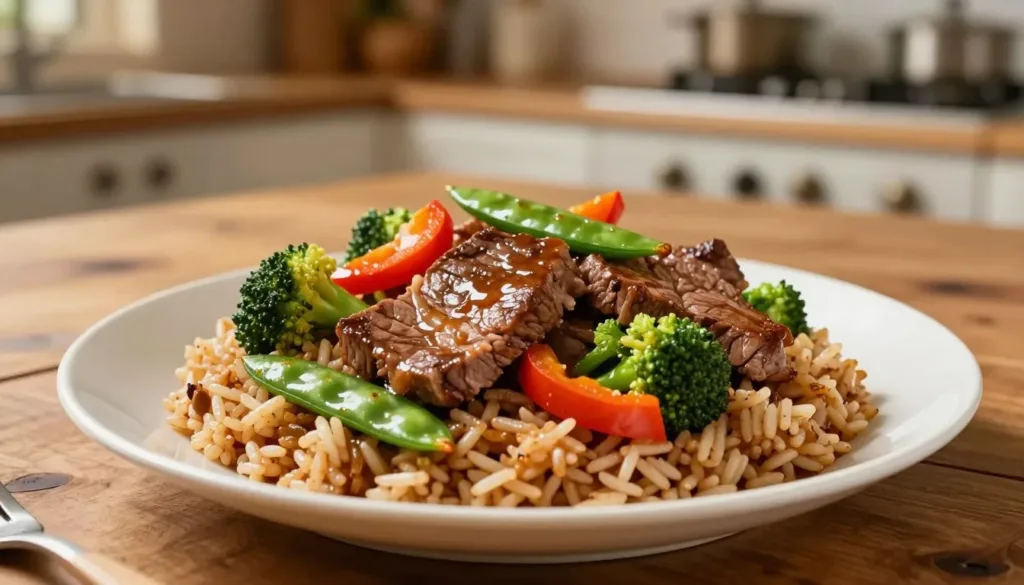
Hot cooked white or brown rice is the simplest base for catching the stir-fry sauce, while noodles and cauliflower rice offer easy alternatives. White rice has a mild taste, and brown rice offers a whole-grain choice.
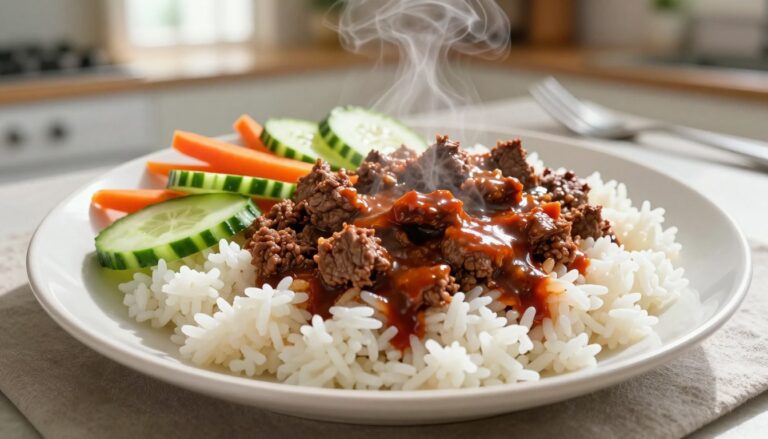
Spoon the beef and vegetables over hot cooked rice to catch the sauce. That is the easiest way to make a steak stir-fry recipe with rice feel like a complete dinner.
Cauliflower rice is a vegetable-based alternative with a different texture from grain rice. Chow mein noodles give the meal a chewy base and can be served beneath the beef and vegetables.
Pick a base that suits the meal and the people at your table. Rice can go in a bowl beneath the stir-fry, while noodles work well with the sauce spooned over them.
Additional vegetables or a simple salad can round out the plate. You can also serve the stir-fry on its own when you want a lighter meal.
Keep the serving base separate until you are ready to plate. Spoon the beef and vegetables over the base just before serving so the rice or noodles do not sit in the sauce too long.
Store and Reheat Leftovers Safely
Refrigerate leftover stir-fry in an airtight container and plan to eat it within 3-4 days. Prompt chilling helps keep cooked beef and vegetables safe for another meal.
Frozen leftovers keep for up to 3 months. Cool the food and refrigerate it promptly instead of leaving it at room temperature for an extended period.
Divide a large batch into smaller containers so it cools more quickly. Use airtight containers for both refrigerated and frozen portions.
Reheat one serving in the microwave, stirring partway through so the food warms evenly. For a larger portion, use a skillet over moderate heat.
If the sauce has thickened in storage, add a splash of water or broth while reheating. Stir until the sauce loosens and the beef and vegetables are hot throughout.
The USDA advises limiting perishable food at room temperature, with a two-hour limit in regular conditions and one hour above 90°F. Thaw frozen portions in the refrigerator overnight before reheating until hot throughout.
The USDA’s food safety tips also explain the room-temperature time limits for perishable foods. Keep thawing portions chilled rather than leaving them on the counter.
Is Steak Stir-Fry a Balanced Meal?
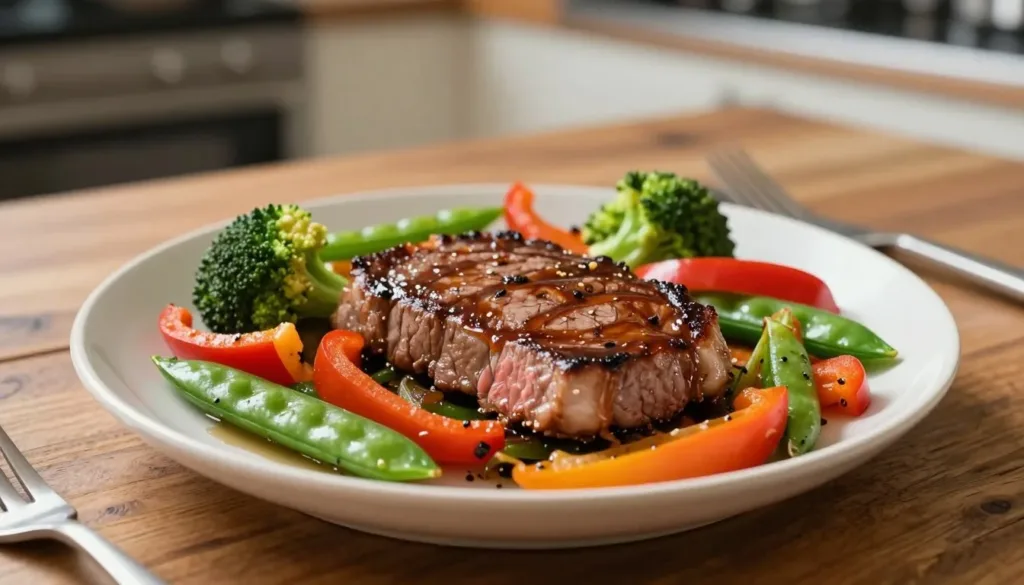
This recipe pairs protein and vegetables, but its nutrition estimate is best read alongside the serving size and sodium figure. One-quarter of the recipe is estimated to provide 370 calories and 41 g protein.
One-quarter of the recipe has an estimated 1,051 mg of sodium. The same serving estimate includes 27 g carbohydrate, 5 g fiber, 12 g fat, 4 g saturated fat, and 12 g sugar.
These numbers describe an estimated portion, not every plate you might serve. Changes to the ingredients or serving size can change the nutrition of your meal.
In 2019, 10.0% of U.S. adults met vegetable-intake recommendations of 2-3 cup-equivalents daily. Adding vegetables to dinner can add variety, but one meal does not measure your full day’s intake.
Sodium can add up in soy sauce and bottled sauce. Choose reduced-sodium ingredients or adjust the amount to taste, especially if the sauce already tastes salty.
Protein, fat, carbohydrates, and fiber all contribute to the meal’s estimated nutrition. Add vegetables you enjoy and adjust salty ingredients to fit your own dietary needs.
Conclusion
Tender beef and crisp vegetables come from simple choices: even cuts, a hot pan, and room to sear. Small choices also let you shape the flavor around what is already in your kitchen.
Cook the beef in batches, then choose vegetables and sauce that fit your taste and supplies. You do not need to follow one fixed combination to make a satisfying weeknight meal.
Choose one vegetable-and-sauce pairing, set out the ingredients, and make it for your next weeknight dinner.
FAQ
How to tenderize steak for stir-fry?
How long does skirt steak take to cook?
What is the origin of stir-fry?
What is the best classic stir-fry recipe?
How unhealthy is stir-fry?
What type of oil is best for stir fry?
What Did You Think? Rate This Recipe
Absolutely Tender and Packed with Flavor!
I followed this guide step by step and the beef shank came out amazingly tender and full of flavor. The tips on maintaining moisture made all the difference. Highly recommended for anyone trying this cut for the first time!