Tuscan Chicken Recipe: 6 Easy Variations (Pasta, Oven-Baked & Low-Carb)
Table of Contents
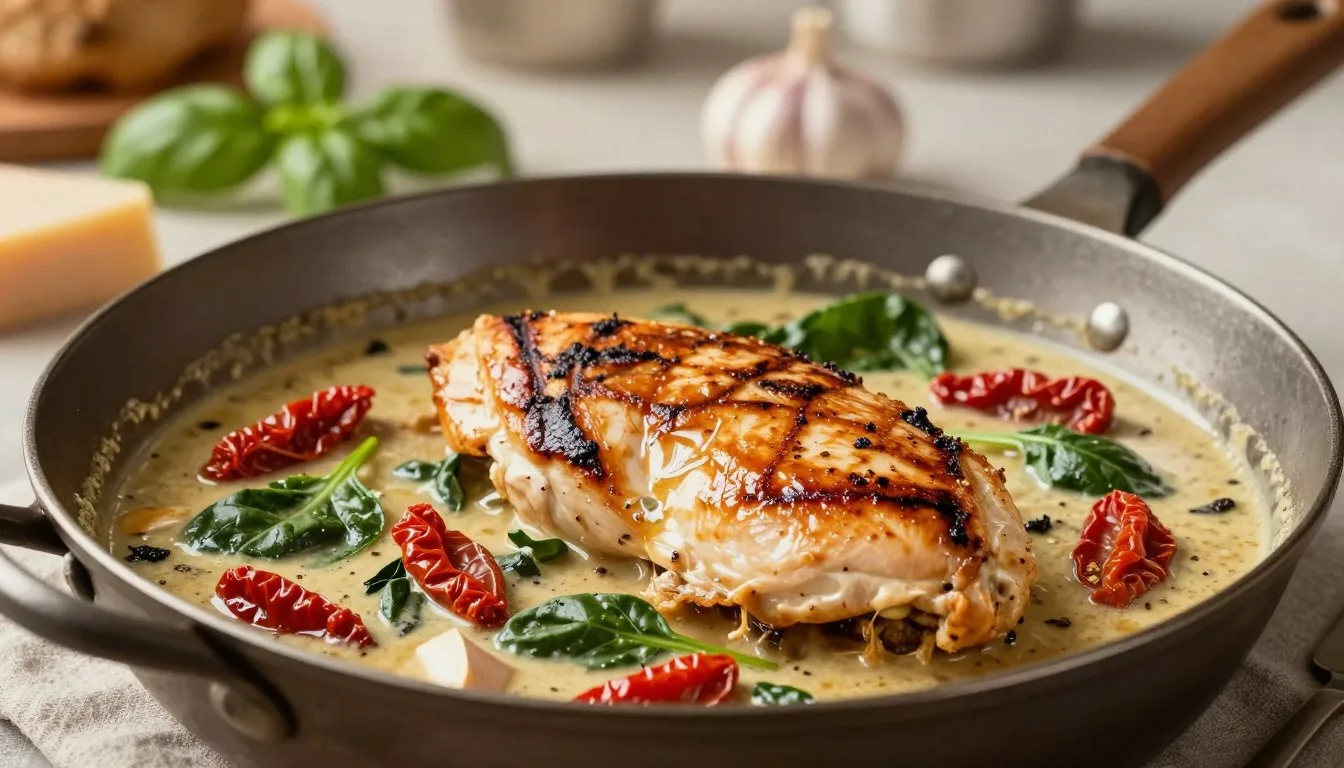
A Tuscan chicken recipe pairs seared chicken with a creamy garlic, tomato, spinach, and Parmesan sauce, and this version gives you six ways to adapt it for dinner. The skillet method suits a weeknight when you want a warm meal without a long list of steps.
That first bite brings tender chicken and a spoonful of sauce together, so you can make a satisfying dinner without fuss. The core ingredients are easy to find, and the rich, tangy flavor works with familiar sides. You can switch the meal to pasta, finish the chicken in the oven, or build a lower-carb plate. Each change keeps the central taste while giving you a useful choice for your table. The methods below cover those options, plus a version inspired by Mary Berry.
Choose the skillet version when you want the most direct path from stovetop to table.
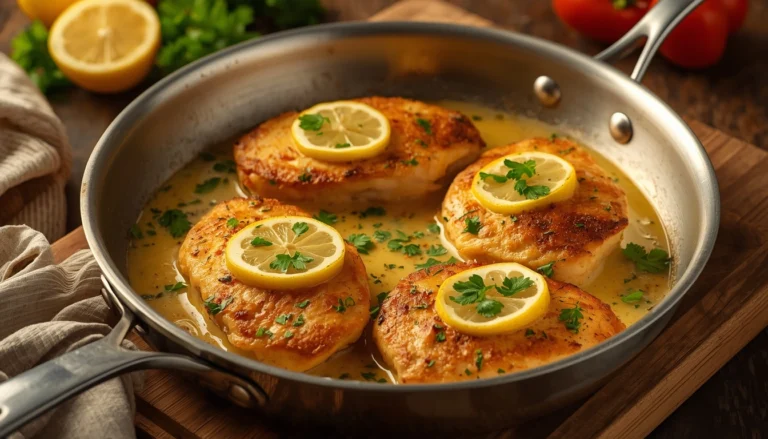
Simple Tuscan Chicken Recipe for the Skillet
For four servings, start with two large chicken breasts sliced into four even cutlets. A chicken cutlet is a chicken breast sliced horizontally into thinner pieces so it cooks more evenly. Even thickness helps each piece finish at about the same time.
The most useful check is doneness, not color: cook the cutlets through without letting the cream sauce boil hard. A simple Tuscan chicken recipe needs only one skillet, basic seasoning, and a few minutes of prep.
Ingredients for four servings
Use two large boneless, skinless chicken breasts, 1 1/2 to 2 pounds total. You will slice them into four cutlets. Set out 1 1/2 teaspoons kosher salt, divided, and 1/2 teaspoon black pepper.
You also need 2 to 3 tablespoons olive oil, one small yellow onion, three garlic cloves, and 1/2 cup oil-packed sun-dried tomatoes. Add 2 teaspoons dried Italian seasoning, 5 ounces baby spinach, 1 ounce Parmesan cheese, and 1 1/4 cups heavy cream.
Drain the tomatoes before chopping them, but keep a little oil nearby for cooking. Freshly grated Parmesan melts smoothly into the sauce. If your cheese is finely grated, stir it in slowly so it does not clump.
Brown the chicken and build the sauce
Set the cutlets on a board and slice each breast horizontally. If a piece is noticeably thicker at one end, gently flatten it to even the cutlet. Season both sides with the salt and pepper.
- Warm the olive oil in a large skillet over medium-high heat. Sear the cutlets in batches, with room around each piece, for 3-5 minutes per side. Move browned chicken to a plate.
- Lower the heat to medium. Add the chopped onion and cook until soft, stirring to loosen browned bits from the pan.
- Stir in the garlic, sun-dried tomatoes, and Italian seasoning. Cook briefly, until the garlic smells fragrant.
- Add the baby spinach in handfuls. Stir until the leaves wilt, then pour in the heavy cream.
- Bring the sauce to a gentle simmer. Stir in the Parmesan and let it melt without letting the cream boil hard.
Finish the chicken and plate it
Return the cutlets to the skillet with any juices from the plate. Spoon sauce over the chicken and simmer gently for 4-7 minutes, until the pieces are cooked through.
The finished sauce should cling to the chicken but still move easily when you tilt the pan. Taste it before serving; Parmesan and seasoned tomatoes add salt, so extra seasoning may not be needed. Serve the cutlets with plenty of sauce from the skillet.
Let the finished skillet stand briefly so the sauce settles around the chicken.
What Gives Tuscan Chicken Its Creamy, Tangy Flavor?
The sauce gets its contrast from savory garlic and Parmesan, tangy tomatoes, fresh spinach, and rich cream. Each part has a job: garlic and cheese deepen the flavor, while tomatoes add sharp, sweet notes.
The best sauce balances richness with tomato tang and a fresh finish from spinach. Heavy cream smooths the stronger flavors and gives the sauce enough body to coat the chicken.
Sun-dried tomatoes bring a chewy texture and concentrated taste. Oil-packed ones also add a little of their seasoned oil to the pan. Baby spinach softens quickly, so it adds color and a mild, leafy note without making the sauce taste heavy.
For extra depth, pour a small splash of white wine into the hot pan after cooking the onion. Scrape up the browned bits, then let the wine reduce before adding cream. This optional step adds a bright edge, but the sauce works without it.
Many creamy Tuscan chicken recipes share ingredients and flavor cues with Marry Me Chicken, but the dishes are not identical. Marry Me Chicken often uses sun-dried tomatoes, while Mary Berry’s version calls for sun-blushed tomatoes. The names describe related styles, not one fixed recipe.
Delish published its Marry Me Chicken recipe in 2016. The name came from a video producer who tasted it and said, “I’d marry you for that chicken!” The Marry Me Chicken name also echoes “Engagement Chicken,” a Glamour recipe name dating to 1982.
These creamy chicken dishes grew popular through modern recipes and home cooking. Their shared ingredients can make them taste related, but each cook can change the tomatoes, herbs, or sauce. The flavor is the useful guide, not a claim about regional history.
Treat “Tuscan-inspired” as a flavor description rather than proof that this creamy skillet dish is a traditional regional recipe.
Oven-Baked Tuscan Chicken Without Drying It Out
For an oven finish, sear the chicken first, then bake it at 350°F for 10-15 minutes. Use an oven-safe skillet so you can brown the chicken, make the sauce, and finish the meal in one pan.
An instant-read thermometer gives a better doneness check than a fixed baking time. The thickest part of each piece should reach 165°F before you serve it.
Season the chicken with salt and pepper, then heat olive oil in the skillet over medium-high heat. Sear each side for 3 minutes to brown the surface. Transfer the chicken to a plate while you soften the onion and prepare the tomato, garlic, spinach, and cream sauce.
Once the sauce is ready, return the chicken to the skillet and spoon some sauce over each piece. Place the pan in a 350°F oven. Bake for 10-15 minutes, then check the thickest part of a breast with an instant-read thermometer.
This order keeps the sauce with the chicken as it finishes cooking. It also lets you use the browned bits left in the skillet, which add flavor to the cream. If your skillet does not have an oven-safe handle, move the sauce and chicken to a baking dish before baking.
Chicken breasts vary in thickness, so thicker pieces may need more time. Check the temperature, then return the pan to the oven if the center has not reached 165°F. Avoid judging doneness by surface color alone, since browned edges do not show whether the center is ready.
If the chicken reaches temperature before the sauce thickens, take it out and keep the pan warm. Stir the sauce on the stovetop until it reaches the texture you like. This small adjustment helps keep the chicken from drying while you finish the sauce.
Check the thickest piece before serving rather than relying on surface color alone.
Which Tuscan Chicken Variation Fits Your Dinner?
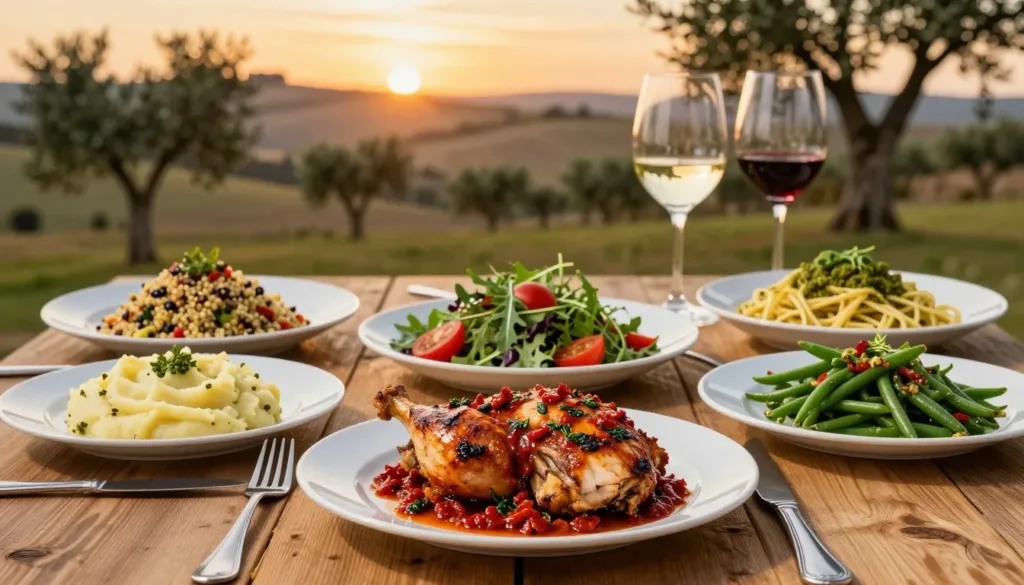
You can keep the familiar tomato, garlic, spinach, and Parmesan profile while changing the cooking method, serving format, or chicken cut. Choose the change that fits the meal you want, then keep the other parts close to the skillet recipe.
One main change at a time makes it easier to see how each choice affects the sauce. This comparison covers five ways to shift the dish, from a baked finish to a dairy-free pan sauce.
| Variation | Main change | What stays recognizable | When it fits |
|---|---|---|---|
| Oven finish | Complete cooking in the oven | Seared chicken and tomato cream sauce | When you want less stovetop attention |
| Pasta dinner | Toss sauce with cooked pasta | Chicken, spinach, tomatoes, and Parmesan | When you want a one-pan serving format |
| Lower-carb plate | Skip pasta, bread, rice, and potatoes | Chicken and creamy vegetable sauce | When you want fewer starchy sides |
| Dairy-free sauce | Use coconut or cashew cream | Garlic, tomatoes, and spinach | When dairy does not suit your meal |
| Mary Berry-style chicken | Use bone-in thighs and sun-blushed tomatoes | Chicken in tomato and cream sauce | When you want a slow-simmered version |
Boneless, skinless chicken thighs can replace chicken breasts in the skillet version. They suit a smaller batch, and one Tuscan chicken thighs variation serves two to four with cherry tomatoes and sun-dried tomatoes. Thighs bring a slightly different texture, while the sauce keeps the same main flavor.
You can also freeze a batch of creamy skillet sauce for up to three months. Freeze the sauce on its own, then thaw it before warming it gently and cooking fresh chicken. This can help on a busy night, when you have time to cook the chicken but want less prep.
Each variation changes the meal in a different way. Pasta makes the sauce part of a larger dish, while a dairy-free swap changes its base. A chicken cut swap is a smaller adjustment, but it can change how long the pieces need to cook.
Pick one major change at a time so you can tell how it affects the finished sauce.
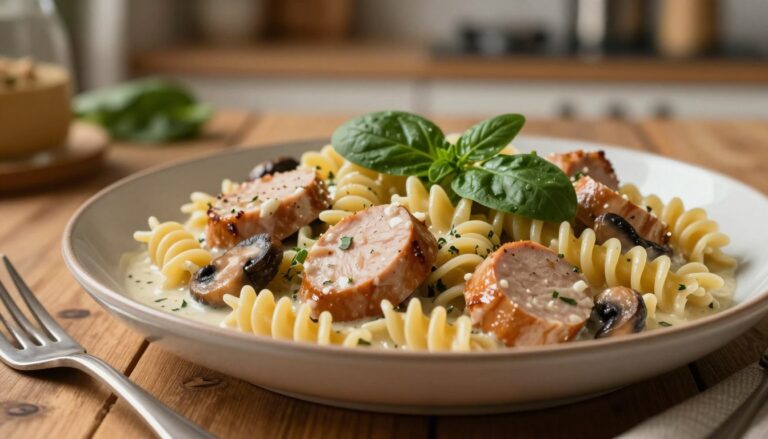
Tuscan Chicken Pasta With Rigatoni or Spaghetti
Rigatoni is a strong match for thick cream sauce because its tubes hold onto the sauce. Long pasta works too, especially when you want the chicken and sauce served over noodles.
Cook the pasta separately, then toss it with sauce before adding the chicken. This keeps the noodles from soaking up all the liquid while they cook in the skillet.
Choose pasta that holds the sauce
Rigatoni is tube-shaped, with a wide center that catches creamy Tuscan chicken sauce. Spaghetti and angel hair both work for a long-pasta version. Choose rigatoni for a hearty bite, or use long strands when you want the chicken arranged over the noodles.
The best pasta for Tuscan chicken depends on the texture you like, but rigatoni is a practical first choice for thick sauce. Cook it until al dente, which means tender with a slight bite in the center. Rigatoni often takes about 14 minutes, but follow the package directions for your brand.
| Pasta shape | Shape description | Sauce fit | Practical cooking note |
|---|---|---|---|
| Rigatoni | Short, wide tubes | Holds sauce inside and outside | Cook 8 ounces al dente |
| Spaghetti | Long, round strands | Coats well when tossed | Use 12 ounces for four servings |
| Angel hair | Very thin long strands | Works with a lighter coating | Cook briefly and watch closely |
Finish the pasta in the skillet
Cook the pasta in a separate pot while you warm the sauce. Before draining, reserve 1 cup of pasta water. Drain the noodles, then toss them with the sauce in the skillet.
Cut the cooked chicken into strips or leave the cutlets whole. Add chicken after the pasta has picked up some sauce, then fold in the spinach if you have not added it yet. This order helps keep the chicken pieces easy to serve and the noodles evenly coated.
Spaghetti works well with the sauce when you toss it in a wide pan. Angel hair is thinner, so it can go from tender to soft quickly. For either long shape, move the noodles gently with tongs instead of stirring hard.
Add reserved pasta water a little at a time until the sauce coats the noodles without pooling.
Mary Berry’s Tuscan Chicken Ingredients and Method
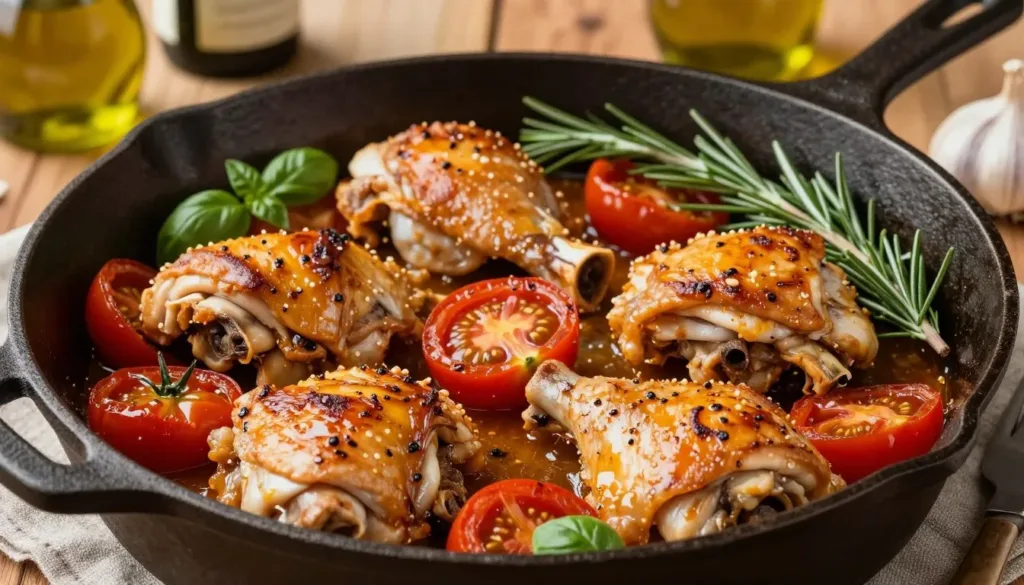
Mary Berry’s version serves 4-6 and uses bone-in, skinless chicken thighs in a white-wine tomato and cream sauce. Its method differs from the skillet breast recipe, with a paprika-flour coating and a covered simmer.
The thighs simmer in the sauce for about 30 minutes before cream and spinach go in. That longer, covered cook gives the bone-in pieces time to become tender.
Gather six large bone-in, skinless chicken thighs, plain flour, paprika, olive oil, one onion, one red pepper, and garlic. The sauce also uses tomato purée, sun-blushed tomatoes, white wine, chicken stock, pouring double cream, baby spinach, and Parmesan.
Coat the thighs in flour and paprika. Brown them in olive oil for 3-4 minutes per side, then move them to a plate. Soften the onion and pepper in the pan, then add garlic and tomato purée.
Stir in the sun-blushed tomatoes, white wine, and chicken stock. Return the thighs to the pan, cover it, and simmer them in the sauce for about 30 minutes. Add the cream and spinach near the end, then finish with Parmesan.
Sun-blushed tomatoes may also be sold as semi-dried, slow-roasted, or sun-soaked tomatoes. Sun-dried tomatoes can stand in if those are not available. The Mary Berry recipe serving range is four to six, so it can suit a family meal or a small gathering.
You can make this dish up to a day ahead, and it freezes well. It provides 346 calories per serving. Let the chicken cool before storing it, then warm it gently so the sauce stays smooth.
For a gluten-free version, use gluten-free flour and chicken stock that is suitable for your needs. Plain rice or potatoes make easy sides. For a gluten-free plate, follow the recipe’s flour and stock substitutions and serve it with rice or potatoes.
Sides That Work With Tuscan Chicken
For a fresh contrast to the rich sauce, choose steamed asparagus or another green vegetable. Green sides add a lighter bite beside cream and Parmesan, while bread or potatoes help catch the sauce.
Asparagus steams in about 5 minutes, so it is a quick side when dinner is nearly ready. Mashed potatoes, polenta, and garlic bread offer more filling options.
| Side | Category | How it pairs | Useful detail |
|---|---|---|---|
| Asparagus | Green vegetable | Fresh taste balances creamy sauce | Steam for about 5 minutes |
| Garlic bread | Bread | Soaks up sauce from the plate | Serve warm and slice for sharing |
| Mashed potatoes or polenta | Starchy side | Soft texture suits the rich sauce | Serve under or beside chicken |
| Roasted ratatouille | Vegetable dish | Brings tomatoes and roasted vegetables | Allow about 1 hour to roast |
Vegetables and lighter sides
Brussels sprouts, cauliflower, and green beans are other useful vegetables. Roast them for browned edges, or steam them when you want a lighter texture. A simple salad also gives the meal a crisp contrast without adding another rich dish.
Roasted ratatouille takes more planning, since eggplant, zucchini, tomatoes, and potatoes roast together for about an hour. Its vegetables make a hearty side, especially when dinner has time to cook slowly. For a faster plate, asparagus needs only a few minutes to steam.
Bread, potatoes, and Tuscan-style pairings
Garlic bread and warm crusty bread both work well for scooping up extra sauce. Mashed potatoes give you a soft base, while polenta offers a smooth, spoonable side. Choose one starchy option if the sauce is already the main event.
Pollo alla cacciatora, or chicken cacciatore, is a separate rustic Tuscan dish made with ingredients such as chicken, tomatoes, bell peppers, mushrooms, and herbs. Cacciatore means “hunter” in Italian. Roasted potatoes and polenta are common suggestions with that dish, but creamy Tuscan chicken is not the same traditional recipe.
- Try Parmesan-roasted green beans for a savory vegetable side.
- Serve focaccia when you want a soft bread to share.
- Add sheet-pan panzanella for bread, vegetables, and a fresh bite.
- Choose roasted Brussels sprouts or cauliflower for a simple side.
Choose bread or a starchy side when you want something to catch the extra sauce.
Low-Carb and Dairy-Free Serving Swaps
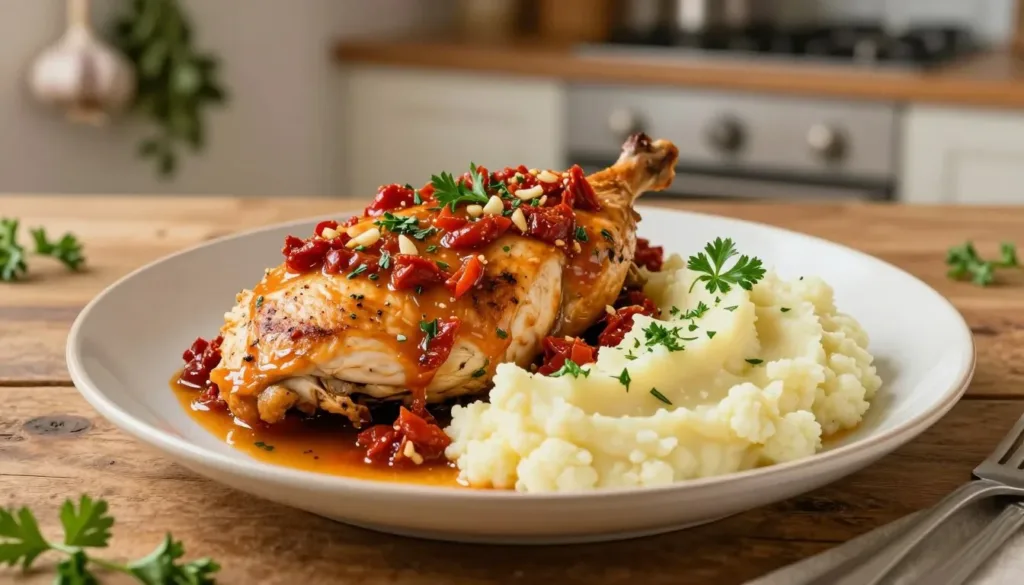
For a lower-carb plate, serve the chicken with vegetables or eat it on its own rather than adding a starchy side. Skip pasta, rice, bread, and potatoes to keep the meal focused on chicken and vegetables.
Low-carb swaps and dairy-free swaps solve different needs. Spaghetti squash and mashed cauliflower can replace starchy sides, while dairy-free cream changes the sauce itself.
Spaghetti squash gives you long strands to serve under the chicken. Mashed cauliflower offers a softer side, and cauliflower rice works when you want small, rice-like pieces. You can also serve the chicken and spinach sauce by itself.
For a dairy-free sauce, replace heavy cream with coconut cream or homemade cashew cream. Coconut cream has its own flavor, while cashew cream can taste more neutral. Both change the sauce, so add a little at a time and adjust the texture as you stir.
Nutritional yeast can add a savory, cheese-like note without Parmesan. Start with 1-2 tablespoons and taste before adding more. It will not melt or taste exactly like Parmesan, but it brings a savory note to the cream substitute.
Check the labels on packaged substitutes if you need to avoid a specific ingredient.
How to Store Leftovers and Check Chicken Doneness
Check the thickest part of each chicken piece with an instant-read thermometer, and serve it once it reaches 165°F (74°C). That temperature is the safe internal target for cooked chicken.
Keep creamy chicken leftovers in an airtight container in the refrigerator for up to 3 days. Pasta leftovers have a 3-4 day refrigerated window when stored in an airtight container.
The National Chicken Council’s food safety resources also advise cooking poultry to 165°F and checking with a food thermometer. Check a few pieces if their sizes differ, since the thickest part takes longest to heat.
- Store creamy chicken and sauce in an airtight container for up to 3 days.
- Store Tuscan chicken pasta in an airtight container for 3-4 days.
- Refrigerate cooked portions promptly and keep them covered.
- Reheat only the amount you plan to serve.
Warm leftovers over low heat and stir gently. High heat can cause the cream sauce to break, leaving a greasy layer or grainy texture. If the sauce thickens in the refrigerator, stir in a small splash of water as it warms.
Reheat only the portion you plan to eat, using low heat and gentle stirring.
Conclusion
The skillet version is a flexible starting point for a rich, comforting dinner. It keeps the chicken and creamy tomato sauce at the center, while leaving room for a side that suits your evening.
Start with the basic recipe, then choose one change that fits the meal, such as tossing the sauce with pasta or adding a green vegetable. You can keep the flavors familiar without making dinner feel fixed or fussy.
Set out your ingredients, choose a side, and start cooking.
FAQ
Is there a difference between Tuscan chicken and Marry Me Chicken?
What is traditionally served with Tuscan chicken?
What are the ingredients in Mary Berry’s Tuscan chicken recipe?
What vegetable is good with Tuscan chicken?
What kind of pasta is best for Tuscan chicken?
Why is it called “marry me chicken”?
What are some creamy side dishes I can serve with Tuscan chicken?
What Did You Think? Rate This Recipe
Absolutely Tender and Packed with Flavor!
I followed this guide step by step and the beef shank came out amazingly tender and full of flavor. The tips on maintaining moisture made all the difference. Highly recommended for anyone trying this cut for the first time!