Beef Jerky Recipe: Easy Oven Method with Just 6 Ingredients
Table of Contents
You can make savory, chewy beef jerky in your oven with six ingredients and no dehydrator using this easy beef jerky recipe. The smell of pepper and smoke can make a home kitchen feel welcoming, especially when you want a snack you can season your way. This oven recipe keeps the flavor savory and easy to customize.
The key is giving the meat enough time to dry without sealing moisture inside. Case hardening means a dry outer layer that can trap moisture inside the meat. A piece may look ready outside while remaining too moist within.
Use the bend test to check the finished texture, and follow the safe heating step before drying. You can adjust the flavor later with simple seasoning changes, without changing the basic method. Set aside enough time for marinating and slow drying before you start.
Best Beef Cuts and Slicing for Jerky
Eye of round is a practical lean choice, while top round, bottom round, flank steak, and sirloin tip also work. Lean beef gives you a good starting point because excess fat can spoil sooner than dried meat.
Choose a cut that trims cleanly, then decide how chewy you want each strip. The right grain direction changes the bite, while even thickness helps the pieces dry at a similar pace.
Lean cuts that trim cleanly
What meat is the best for beef jerky? Eye of round is a useful pick because it is lean and easy to trim. Top round, bottom round, flank steak, and sirloin tip are other suitable beef cuts.
Look for a piece with little visible fat and a shape you can slice into even strips. A broad, fairly flat cut can be easier to handle than a small, uneven piece. Choose meat that feels firm and fresh.
Trim away visible fat before you slice. Fat does not dry like the lean meat around it, and it can turn rancid sooner. A clean trim helps the finished snack keep its quality.
Slice thickness and grain
Partially freeze the beef for 1 to 2 hours to make it firmer and easier to cut. Use a sharp knife and steady strokes, keeping the thickness even across the batch.
Slice strips no thicker than ¼ inch. Thicker pieces take longer to dry and may not finish at the same time as thinner pieces. If the beef feels soft, return it to the freezer briefly.
Cut against the grain for jerky that is easier to chew. Cut with the grain when you prefer a chewier texture. Look for the long muscle lines, then slice across them for a more tender bite.
Trim visible fat before slicing because it can turn rancid sooner than the dried meat.
Six-Ingredient Beef Jerky Recipe Marinade
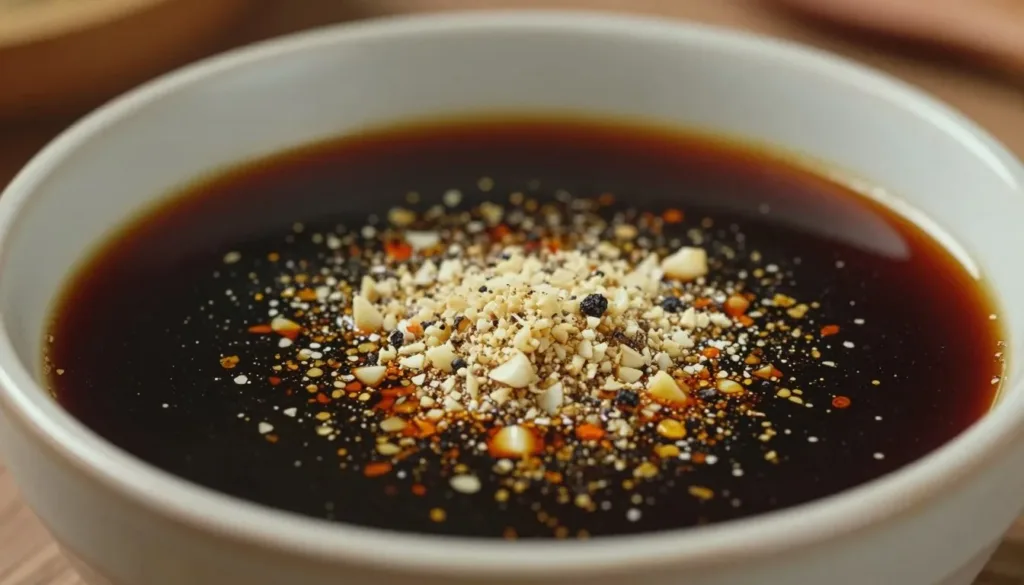
A savory, pepper-forward marinade needs only soy sauce, Worcestershire sauce, black pepper, liquid smoke, and garlic powder alongside the beef. Coarse pepper gives the finished strips a clear bite without making the base taste sweet.
Refrigerate the coated strips for 1 to 2 hours or overnight. Longer marinating can make the meat saltier, so choose a shorter soak when you want a milder result.
Six ingredients for the savory base
Measure these six ingredients before you start. The flank steak counts as one of the six, so you do not need a long list of spices to build the recipe.
- 2 lb flank steak, trimmed and sliced
- ½ cup low-sodium soy sauce
- 2 tbsp Worcestershire sauce
- 2 tsp coarsely ground black pepper
- 1 tsp liquid smoke
- ½ tsp garlic powder
Whisk together the soy sauce, Worcestershire sauce, pepper, liquid smoke, and garlic powder in a bowl. Add the beef strips and turn them until each piece has an even coating.
Cover the bowl or seal the strips in a bag, then refrigerate them for 1 to 2 hours or overnight. A traditional beef jerky recipe can keep to this savory soy-and-pepper profile without added sugar.
Two marinades for different flavor profiles
The Kansas State University formula below gives you another savory option. The alternate eye-of-round version adds brown sugar and red pepper flakes for a sweeter, hotter finish.
| Meat amount and cut | Soy sauce and Worcestershire amounts | Other seasonings | Marinating time |
|---|---|---|---|
| 2 lb flank steak | ½ cup soy; 2 tbsp Worcestershire | 2 tsp black pepper; 1 tsp liquid smoke; ½ tsp garlic powder | 1 to 2 hours or overnight |
| 1½ to 2 lb lean meat | ¼ cup soy; 1 tbsp Worcestershire | ¼ tsp each black pepper and garlic powder; ½ tsp onion powder; 1 tsp hickory smoke-flavored salt | Not specified |
| 1 lb eye of round | ¼ cup each soy and Worcestershire | 1 tsp each black pepper and salt; 2 tsp brown sugar; 2 tsp liquid smoke; 1 tsp red pepper flakes | 6 to 24 hours |
Keep the alternate formula separate from the six-ingredient recipe, since its salt, sugar, and chili amounts change the flavor. Start with less red pepper flakes if you prefer a gentle heat.
Discard the used marinade rather than saving it for another batch.
Dry Beef Jerky in the Oven
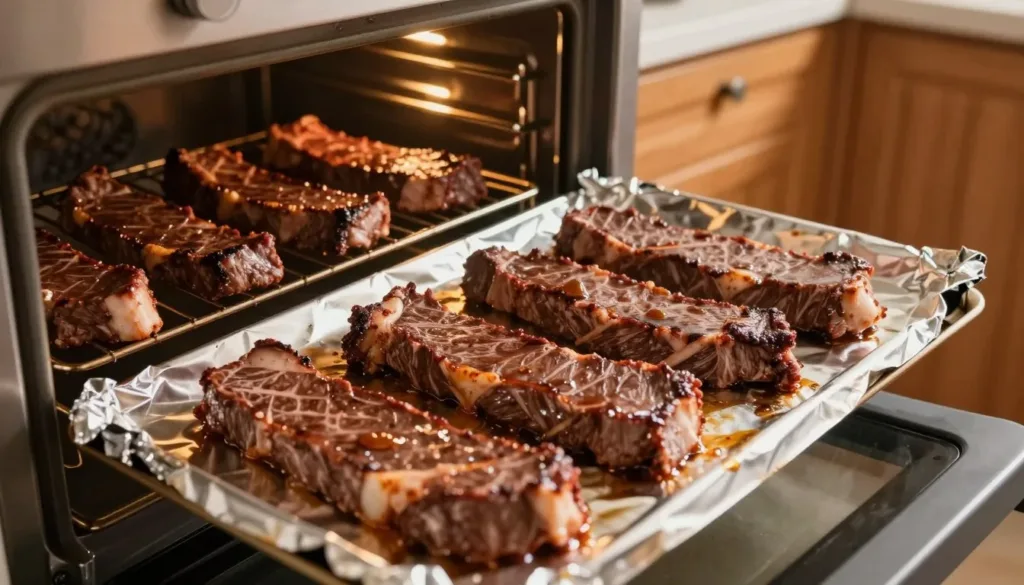
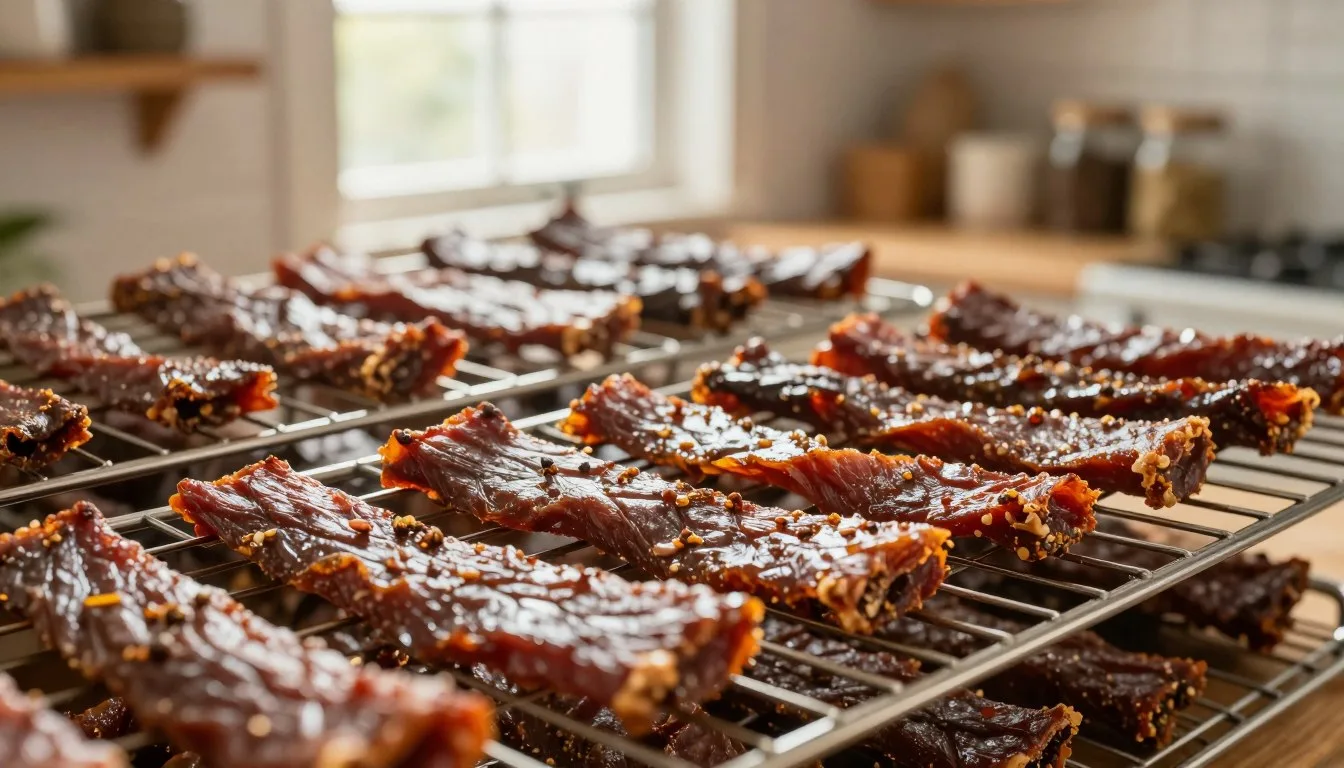
A low oven and wire racks let air move around the beef strips while moisture escapes. Room to breathe between pieces helps the batch dry more evenly than strips pressed together on a pan.
Dry the oven batch at 175°F for about 4 hours, flipping the strips once halfway through. The exact time depends on slice thickness, so use the bend test instead of judging by color alone.
Set up the oven and racks
Line baking sheets with aluminum foil to catch drips, then set wire racks on top. Arrange the beef in one layer, with space between strips and no overlap.
Air needs a path around each piece as moisture leaves the meat. If your oven has several racks, leave enough space between trays for airflow. Keep the strips flat rather than folded over a rack.
A beef jerky recipe for a dehydrator uses a constant 130°F to 140°F setting during drying, not the oven temperature. A shorter drying time at higher heat can risk case hardening, when the outside dries before the inside.
Dry until the strips bend and crack
Flip the strips once halfway through the oven drying period. Thinner pieces may finish earlier, so start checking them before the full time has passed.
The bend test gives you a better cue than appearance. Let a test piece cool slightly, then bend it; finished jerky should crack but not break apart. If it bends without cracking, keep drying and check again.
Unheated samples in a dehydrator can take 10 to 24 hours to dry. Keep that range separate from the oven schedule: appliance settings and strip thickness affect the total time.
| Stage | Target or timing | Check |
|---|---|---|
| Slicing | No more than ¼ inch thick | Keep strips even |
| Marinating | 1 to 2 hours or overnight | Keep beef refrigerated |
| Oven drying | 175°F for about 4 hours | Use the bend test |
Check thin strips first, since their lower thickness can make them dry sooner than the rest. Remove individual strips as they pass the bend test so thinner pieces do not over-dry.
Make Homemade Beef Jerky Safe to Eat and Store
Safe jerky starts with cold raw beef and a deliberate heat step, not drying alone. Drying by itself does not replace the recommended heat treatment for beef strips.
Heat beef to 160°F before drying, or heat dried strips for 10 minutes in an oven preheated to 275°F. Use one of these routes to lower the risk of foodborne illness.
Heat the meat safely
Keep raw beef at 40°F or slightly below, and use or freeze whole red meat within 3 to 5 days. Thaw frozen meat in the refrigerator, not on the counter.
One option is to bring the strips and marinade to a boil, then boil them for 5 minutes. Check that the meat reaches 160°F internally before moving on to drying.
You can also heat the finished dried strips in an oven preheated to 275°F for 10 minutes. Kansas State University’s Drying Meat guidance describes both heating routes and safe home drying practices.
Use this short checklist when you prepare a batch:
- Refrigerate raw beef.
- Thaw frozen beef in the refrigerator.
- Heat the meat using one of the stated routes.
- Cool the finished jerky before storing.
Cool and store the finished jerky
Let the strips cool completely before packing them. Warm jerky can create moisture inside a sealed container, which works against a dry finish.
Store the cooled pieces in an airtight container. Homemade jerky is best used within 1 to 2 months, while refrigeration or freezing extends storage.
Keep a small batch in a container that fits it closely, rather than leaving extra air around the strips. Refrigerate or freeze the batch if you need to keep it longer than the best-use window.
Customize the Flavor and Choose Another Drying Method
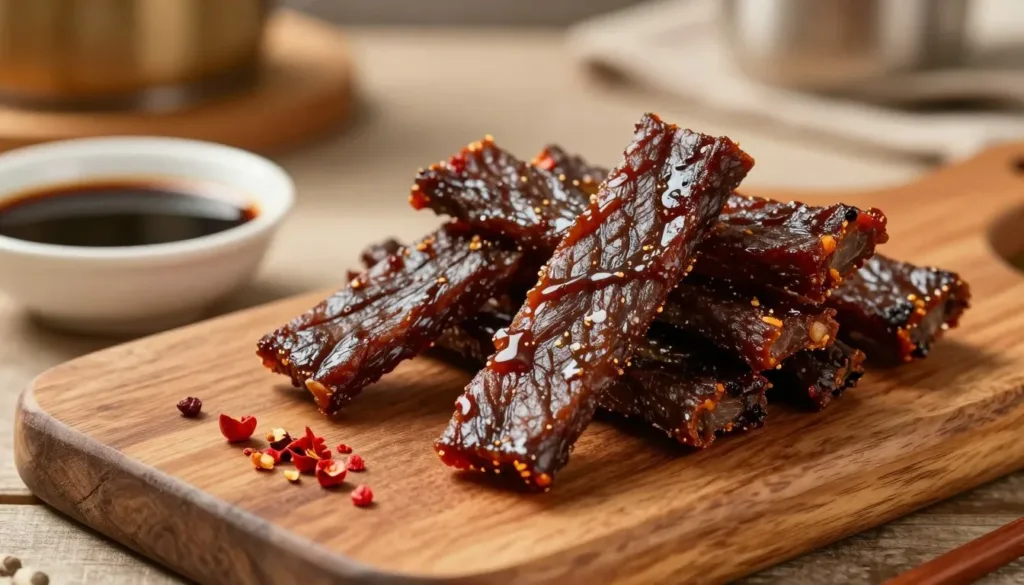
A small flavor adjustment can take the same lean beef from peppery and smoky toward sweet and soy-forward. Small changes let you try a new taste without losing the ease of the base recipe.
About 1 lb of raw beef yields roughly 4 oz of dried jerky. That shrinkage matters when you plan a batch or compare its cost with a ready-made snack.
Change the flavor without changing the base
A smoked beef jerky recipe can add liquid smoke to the marinade, using 1 to 2 tsp per pound of meat. Add it to the wet seasonings so it coats the strips instead of clinging to one spot.
For a teriyaki-style version, shift toward a sweeter soy profile with brown sugar, garlic, and ginger. Keep those changes distinct from the six-ingredient base, since more sugar changes the flavor and may affect the finish.
Red pepper flakes add heat, while extra garlic gives the savory taste more depth. Change one seasoning at a time, and note the amount so you can repeat a version you like.
When another appliance makes sense
A dehydrator can suit larger batches because its trays provide space for separated strips. Keep its setting constant at 130°F to 140°F during drying, rather than using the oven setting.
A beef jerky recipe in an air fryer can work for a small batch only if the appliance has a low-temperature setting and enough airflow. Place separated strips so air can move around them, and do not treat the air fryer as a replacement for the safe-heating step.
Homemade jerky can cost less than store-bought jerky in some cases, but the comparison depends on lean beef prices, dried yield, and energy use. A pound of raw beef becomes only about 4 oz of finished jerky, so raw weight can mislead.
Compare the cost per finished ounce, since raw-beef weight shrinks substantially as it dries.
Conclusion
A lean cut, even slices, and patient drying are the essentials for a dependable homemade batch. Trim visible fat before you season the meat, then use the bend test to judge dryness instead of relying on color.
Set out your wire racks and foil-lined sheets before marinating. That small step gives you a clear place for each strip when the meat is ready. Choose your cut and set out the racks before you begin marinating.
FAQ
What meat is the best for beef jerky?
What is the secret to good jerky?
How long does beef jerky need to be dehydrated?
How much jerky will 1 lb of beef make?
Is it cheaper to make jerky or buy it?
What Did You Think? Rate This Recipe
Absolutely Tender and Packed with Flavor!
I followed this guide step by step and the beef shank came out amazingly tender and full of flavor. The tips on maintaining moisture made all the difference. Highly recommended for anyone trying this cut for the first time!