Boneless Beef Short Ribs Recipe: How to Make Them
Table of Contents
“If you want a rich dinner that requires little hands-on work, this boneless beef short ribs recipe is the perfect choice. You make boneless beef short ribs by searing the meat until browned, then braising it covered in beef stock and red wine at 300 degrees Fahrenheit for 2.5 to 3 hours, until the meat is fork-tender and easily shreds apart.”
Braising means cooking meat slowly in a covered pot with a small amount of liquid until it turns fork-tender. Boneless short ribs are trimmed chuck meat with even marbling, so they cook faster than bone-in ribs. Once the oven does the work, you can spend your time on the side dishes or on something else.
Plan on about 3 hours of total cooking time, so start the ribs before you prepare the sides.
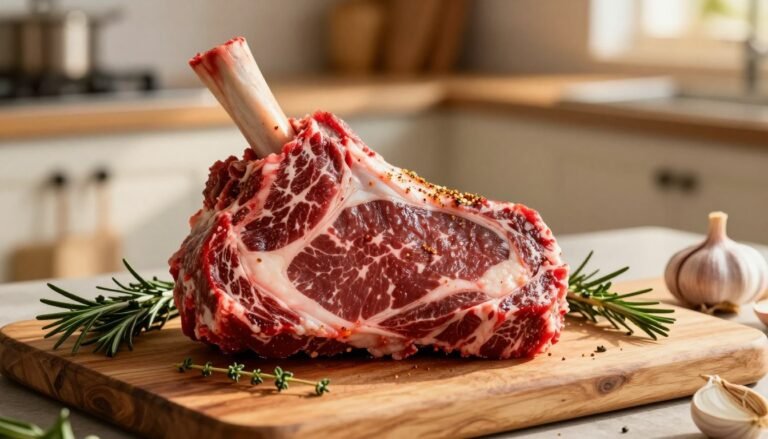
What Boneless Short Ribs Are and What to Buy
Boneless short ribs are trimmed from the chuck, so they are the same muscle as bone-in short ribs but cut from the shoulder. The cut is usually about 2 to 2.5 inches wide and 5 to 6 inches long. Because there is no bone, you get more meat in each bite, and the pieces are easy to portion.
For most home cooks, the best recipe is a braise with red wine and stock. This method turns the tough connective tissue soft, which a quick sear alone cannot do. Look for meat with fine white marbling, the thin streaks of fat that melt into the meat as it cooks. Fine streaks cook evenly, while big, thick chunks of fat can stay greasy.
Buy about 2 to 2.5 pounds for four servings, and cut a chuck roast into strips if the store has none. A chuck roast cut into 2-inch strips is the common substitute.
Ingredients for a Braise for Four
You need 2 to 2.5 pounds of boneless short ribs, 2 cups of beef stock and 1/2 cup of dry red wine for a braise that serves four. The rest of the list is simple pantry food and a few fresh vegetables. Every item matters, so measure before you start cooking.
Use beef stock rather than beef broth. Broth is lighter and lacks the deep flavor this braise needs. For the wine, pick a dry red such as Cabernet Sauvignon. If you avoid alcohol, use a dark lager or extra beef stock instead.
- 2 to 2.5 pounds boneless short ribs
- 2 teaspoons salt and 1/4 teaspoon black pepper
- 1 tablespoon olive oil and 1 tablespoon salted butter
- 1 carrot, 1 celery stalk and 1/2 large yellow onion (about 1 cup)
- 3 garlic cloves and 1 tablespoon tomato paste
- 1/2 cup dry red wine and 2 cups beef stock
- 4 sprigs fresh thyme
How to Braise Boneless Short Ribs in the Oven
Searing the Ribs and Building the Base
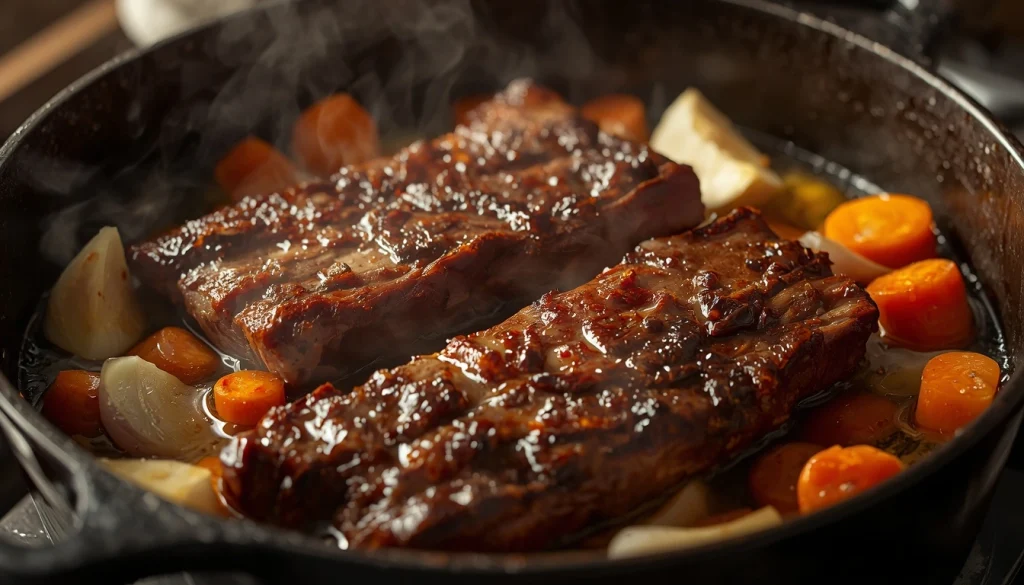
Heat the oil in a Dutch oven over medium heat until it shimmers, then sear the ribs in one layer. Preheat the oven to 300 degrees Fahrenheit first, so it is ready when the pot goes in. Batches keep the pan hot, so sear the ribs in two rounds if they do not fit.
Sear each side for about 3 to 4 minutes until it turns deep brown. Remove the ribs to a plate before you add the vegetables. Cook the carrot, celery and onion in the drippings, then stir in the tomato paste and garlic.
Braising Covered at 300 Degrees
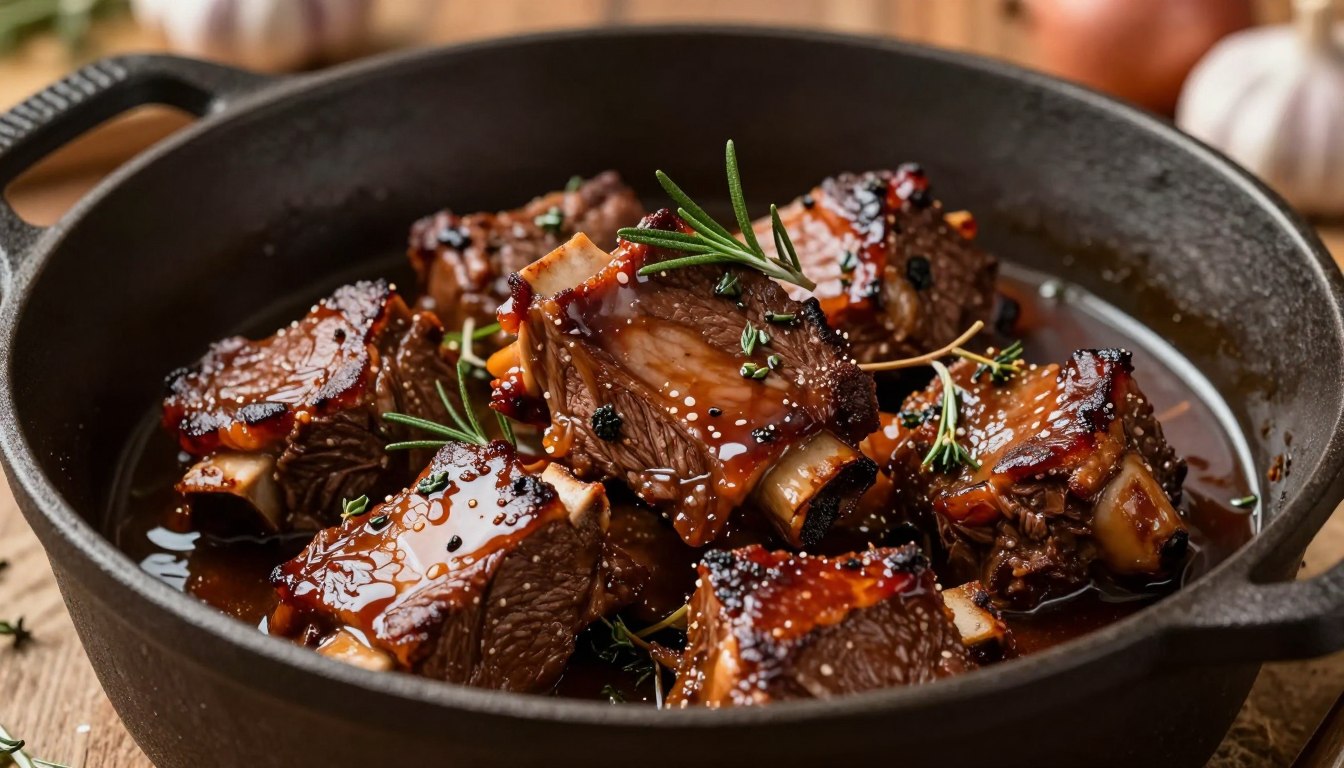
Pour in the wine and let it bubble while you scrape up the browned bits from the pot. Add the beef stock, thyme and ribs, then cover the pot tightly. Braise covered for 2.5 to 3 hours in total, and do not shorten that time.
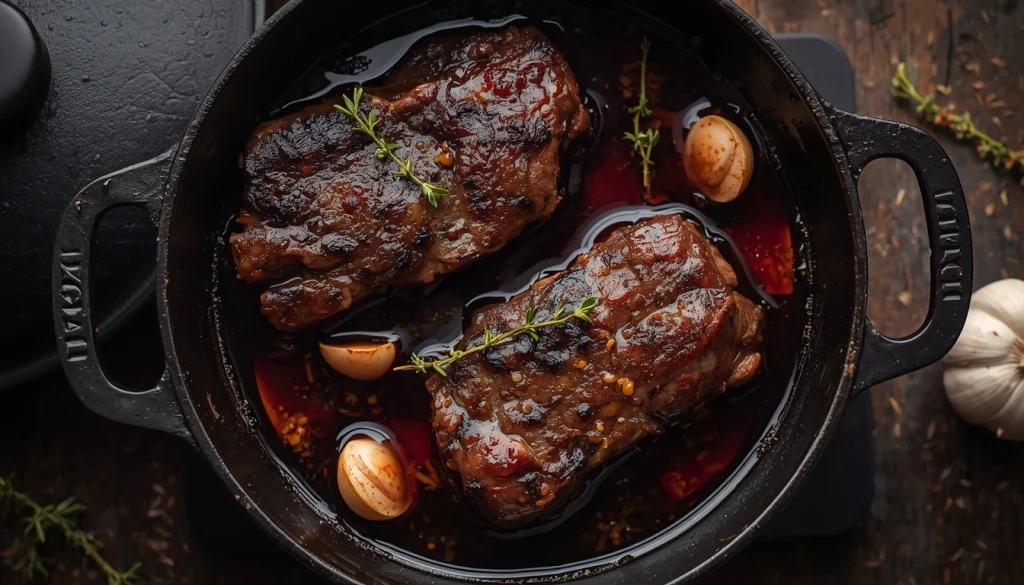
Cook the ribs covered for 1 1/2 hours, then flip them. Continue braising for 1 to 1.5 hours more. Shorter braises leave the meat chewy.
Checking for Doneness
The ribs are ready when they reach about 210 degrees Fahrenheit inside and pull apart with a fork. Check them near the end of the cooking time, not before. If the meat resists, cover the pot and give it more time.
| Stage | Time | Visual cue |
|---|---|---|
| Sear | 3 to 4 minutes per side | Deep brown crust |
| Covered braise, first part | 1 1/2 hours | Liquid at a gentle simmer |
| Flip and finish | 1 to 1.5 hours | Meat shreds with a fork |
Why Time and Temperature Decide Tenderness
Yes, short ribs keep getting more tender through about 3 hours, because connective tissue slowly turns into gelatin. That gelatin is what makes the meat feel silky instead of stringy. Low heat gives the tissue time to melt without squeezing the juices out of the muscle fibers.
Hold the braise at a low simmer, not a boil. A hard boil toughens the outside of the meat and can dry it. The sauce also reduces as the braise continues, so the flavor gets stronger the longer it cooks.
Use these signs to judge where your ribs stand.
- Underdone: the meat grips the fork and will not pull apart.
- Ready: the meat shreds easily and holds its shape in the pot.
- Overdone: the edges look dry and the strands feel thin and stringy.
Make a Gravy From the Drippings
Straining and Blending the Drippings
Blend 3/4 cup of the drippings with the cooked vegetables until smooth. The drippings are the fat and juices left in the pot after braising, and they carry most of the flavor. Strain the liquid first if you want a silky gravy without bits of onion.
Skim the fat from the top before you blend. You can spoon it off or let the liquid cool for a few minutes so the fat rises. Keep the blended mixture warm over low heat while you make the roux.
Thickening With a Roux
Melt 1 tablespoon of butter in a small pan, then whisk in 1 tablespoon of all-purpose flour. Cook the roux for a minute or two, stirring often, until it smells nutty. Whisk the warm drippings into the roux a little at a time.
- Melt the butter and whisk in the flour.
- Cook the roux until it turns light brown.
- Add the drippings slowly while whisking.
- Simmer for a few minutes until the gravy coats a spoon.
If the gravy thickens too much, thin it with a few tablespoons of beef stock. If it is too thin, mix 1 teaspoon cornstarch with 2 tablespoons water, then stir it in. Stir the roux only until it turns light brown, since a dark roux will taste bitter.
Food Safety for Short Ribs and Leftovers
Whole cuts of beef should reach 145 degrees Fahrenheit and rest for 3 minutes before carving or eating. Braised ribs cooked until they shred are already well above that mark, so the temperature is met. A meat thermometer gives you a quick, sure check.
Cooked meat past 4 days in the refrigerator should be thrown out. Store the ribs in a shallow container so they cool fast. Keep them with some of the braising liquid to help them stay moist.
| Cooked meat | Refrigerator | Action |
|---|---|---|
| Braised short ribs | 3 to 4 days | Eat or freeze |
| Gravy | 3 to 4 days | Reheat until steaming |
| Ribs past 4 days | Over 4 days | Discard |
Refrigerate leftovers within two hours of cooking and eat them within 3 to 4 days.
Slow Cooker Method for Boneless Short Ribs
Searing Before the Slow Cooker
Cook the ribs on low for 6 to 8 hours, or on high for 4 to 5 hours, in a slow cooker. The slow cooker holds in heat, so the meat turns fork-tender after 6 to 8 hours on low. You still get a tender result, but the pot does the timing for you.
Sear the ribs in a skillet before they go into the slow cooker. The sear adds color, and skipping it leaves the sauce pale. Brown the meat for 3 to 4 minutes per side, then move it to the crock with the vegetables and liquid.
Low and High Settings
Low gives the most tender meat and the least risk of drying. High works when you are short on time, but the meat can turn stringy if it cooks too long. Use the table to pick a setting.
| Setting | Time | Notes |
|---|---|---|
| Low | 6 to 8 hours | Most tender result |
| High | 4 to 5 hours | Check at 4 hours |
| Keep warm | Up to 2 hours | Hold until serving |
Thickening the Juices
Thin juices can taste watery at the end of a slow cook. Pour them into a saucepan and simmer on the stovetop until they reduce by about half. Then thicken them with the roux method from the gravy section, or with a little cornstarch mixed in water.
Asian-Style and Korean Variations
Korean Galbi Marinade
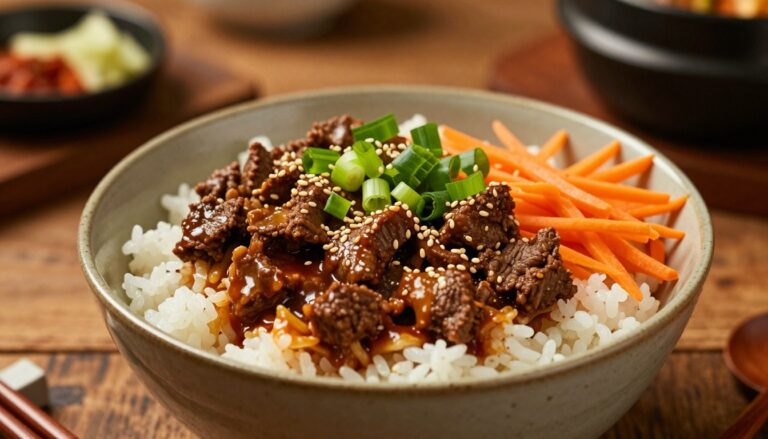
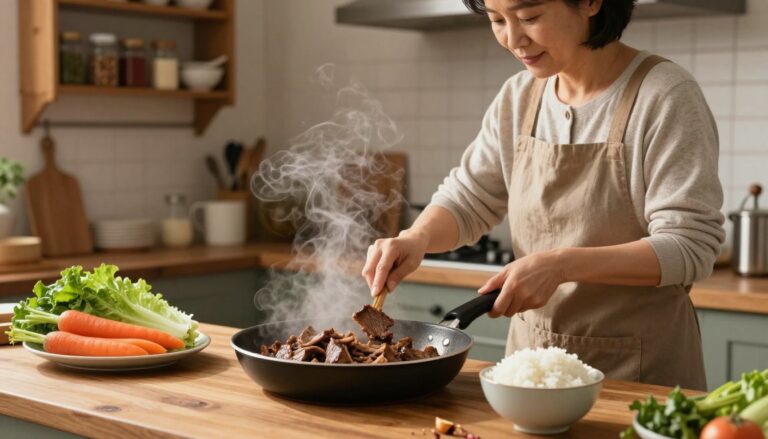
Marinate the ribs in soy sauce, pear, garlic and honey for at least 6 to 8 hours before cooking. A Korean-style galbi marinade gives the meat a sweet, savory flavor. Honey and sugar also make the ribs sticky as they cook.
Marinate for at least 6 to 8 hours, and overnight to 24 hours gives the best results. The longer soak lets the salty, sweet mix soak deep into the meat.
| Ingredient | Amount for 3 to 4 pounds |
|---|---|
| Soy sauce | 1/2 cup |
| Water | 1/2 cup |
| Korean pear or apple | 1/2 pear or 1 apple |
| Garlic, minced | 2 tablespoons |
| Onion, medium | 1/2 |
| Ginger, minced | 1 teaspoon |
| Sugar | 3 to 4 tablespoons |
| Honey | 2 tablespoons |
| Cooking rice wine | 1/4 cup |
| Sesame oil | 2 tablespoons |
Sweet Soy Braise
For a braise with Asian flavors, swap the red wine for rice wine and add soy sauce to the stock. Keep the same oven time of 2.5 to 3 hours at 300 degrees Fahrenheit. Ginger and garlic add warmth to the sauce.
Marinating Time
Grill the marinated Korean-style short ribs instead of braising them when you want a smoky crust. The marinade is too sweet to simmer for hours without burning. Pat the marinated ribs dry before searing, or the sugar will burn.
Grilling and Pan-Searing Boneless Ribs
Grill marinated ribs over medium-high heat for 2 to 3 minutes per side. A hot grill chars the sugar in the marinade and gives the meat a smoky edge. Pan-searing works the same way in a hot cast iron skillet.
Grilling works only on marinated, thin-cut ribs. Braised cuts stay tough when grilled, because they need long, slow heat to break down. Use thin cuts for the grill and save the braise for thicker pieces.
- Heat the grill to medium-high and oil the grate.
- Lay the marinated ribs on the grate in one layer.
- Cook 2 to 3 minutes per side until charred.
- Rest the ribs for a few minutes before slicing against the grain.
Rest grilled ribs for a few minutes before slicing against the grain. Cutting across the muscle fibers keeps each bite tender.
Serving, Storing and Reheating Leftovers
Pairing Sides and Sauces
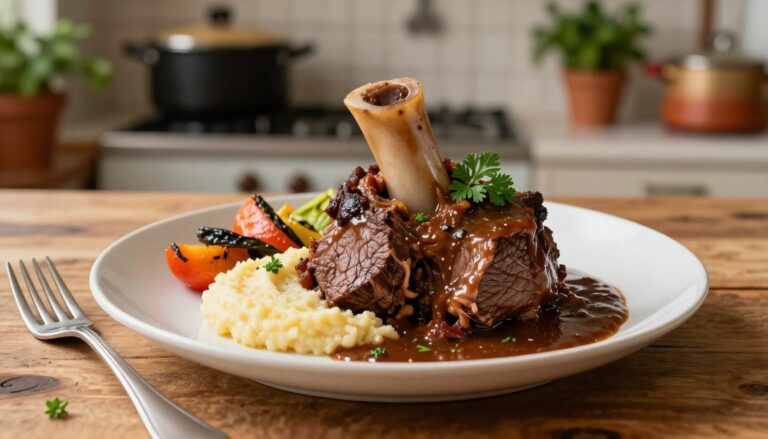
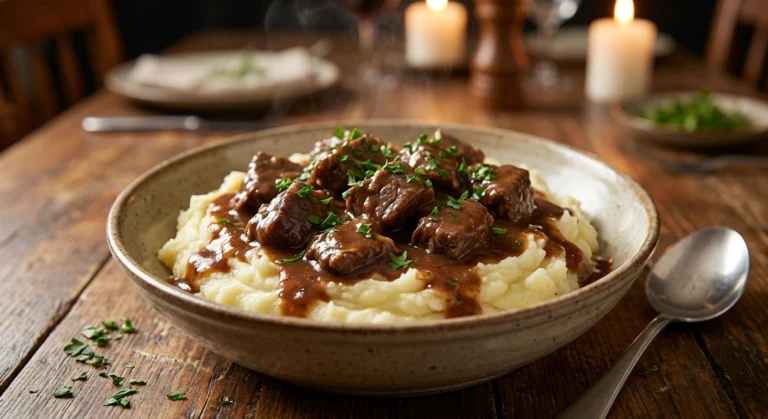
Serve the ribs over mashed potatoes, spooning the sauce on top. The sauce soaks into the potatoes and makes a simple, filling plate. Polenta or crusty bread also works well for soaking up the extra liquid.
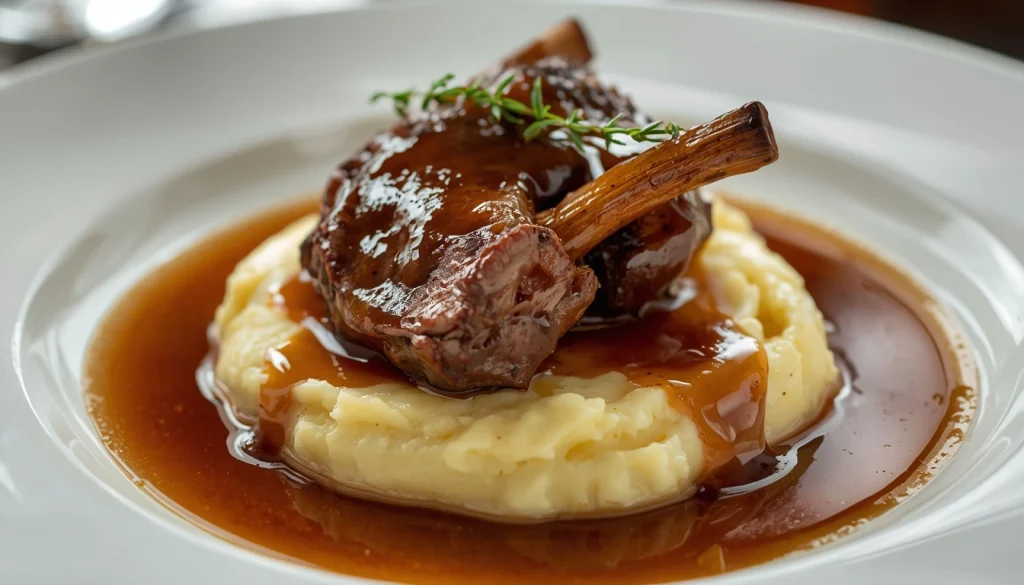
Shred leftover ribs for tacos with a squeeze of lime and some pickled onions. The shredded meat also makes a good filling for sandwiches the next day.
Refrigerating and Reheating
Store leftover ribs with some cooking liquid so they do not dry out. The liquid keeps the meat moist through the refrigerator stay. Pack the meat and sauce into separate containers if you want to keep the sauce thick.
Reheat covered with a splash of beef stock so the meat stays moist. Warm it over low heat and stir now and then.
Common Mistakes With Boneless Short Ribs
Ribs that stay chewy usually came out of the oven too early. The braise needs its full 2.5 to 3 hours at 300 degrees Fahrenheit to turn the connective tissue soft. A quick check with a fork tells you whether the meat is ready.
Most problems come from a few common errors. Each one has a simple fix.
- Cutting the ribs too small, which dries them out during the braise.
- Using broth instead of stock, which leaves the sauce thin and flat.
- Overcrowding the pan, so the ribs steam instead of browning.
- Letting the roux darken, which makes the gravy taste bitter.
Keep the lid on for the first 1.5 hours to trap the steam that tenderizes the meat.
Conclusion
Braised boneless short ribs reward patience with rich, shreddable meat. Braise at 300 degrees Fahrenheit for 2.5 to 3 hours, then use a meat thermometer to confirm 145 degrees Fahrenheit for safety.
Start with the oven method this week, then try the Korean marinade next.
FAQ
How much boneless short rib do you need for two people?
Can you overcook beef short ribs?
Can I eat 5 day old cooked ribs?
Can I make boneless short ribs ahead of time?
Do I have to sear boneless short ribs?
What Did You Think? Rate This Recipe
Absolutely Tender and Packed with Flavor!
I followed this guide step by step and the beef shank came out amazingly tender and full of flavor. The tips on maintaining moisture made all the difference. Highly recommended for anyone trying this cut for the first time!