How to Make Beef Stir Fry: 7 Easy Steps for Tender Beef
Table of Contents
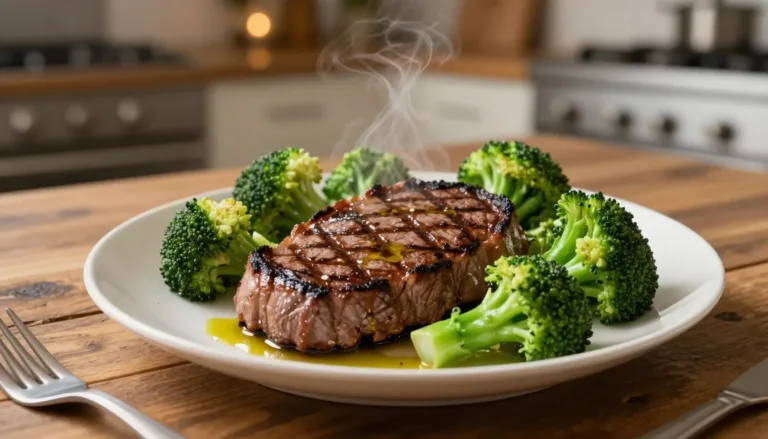
Learning how to make beef stir fry at home starts with slicing flank steak thin against the grain. You tenderize the beef with baking soda, sear it hot in a wok and thicken the sauce with cornstarch. This method serves four.
A weeknight dinner often ends up as takeout because home cooking feels like too much work. A wok can get dinner tonight on the table fast. Many home stir fries come out chewy when the beef is cut the wrong way or cooked too long.
Velveting is a short marinade of baking soda that breaks down the meat fibers so beef stays tender during fast high-heat cooking. You get seven steps in order, from picking the cut to serving tender beef.
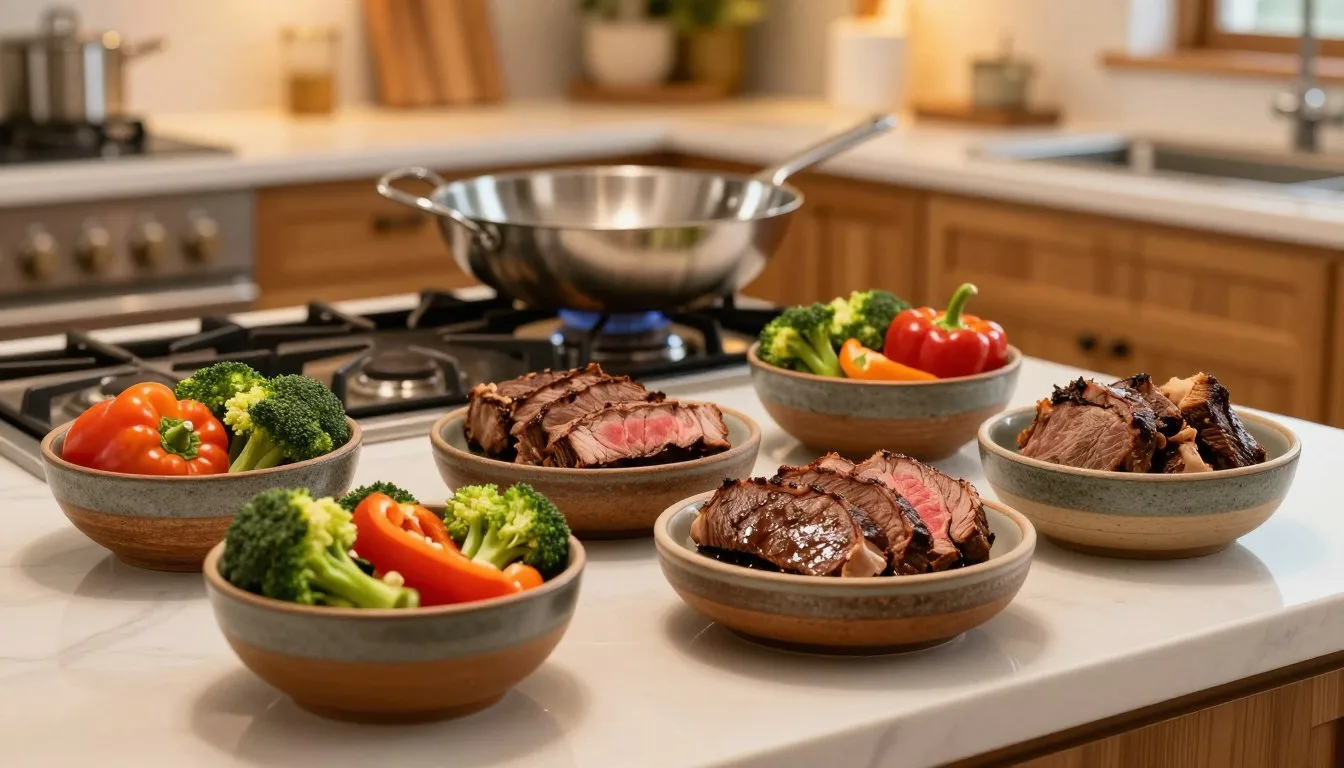
Keep the beef and vegetables ready in bowls before the wok heats, so the dinner moves quickly once the cooking starts.
Choosing the Right Beef for Stir Fry
Flank steak is the classic choice for beef stir fry, and top sirloin is the next best pick when flank steak is hard to find. Both cuts stay lean, which helps them cook fast in a hot wok. The cut you pick sets how much work your stir fry beef needs before it reaches the wok.
Flank steak has long grain that runs the length of the cut, so it needs a sharp knife and a cut across that grain. Choose a lean cut and trim away excess fat before you cook. Top sirloin is more tender than bottom sirloin, so it is a forgiving choice when you want a tender cut.
| Cut | Best Use | Key Point |
|---|---|---|
| Flank steak | Classic choice | Slice across its long grain |
| Top sirloin | Next best pick | More tender than bottom sirloin |
| Rump steak | Works for a fast fry | Slice thin against the grain |
| Ribeye | Works for a fast fry | Trim excess fat first |
| Chuck | Thicker, less expensive | Needs more tenderizing time |
A meat-cut guide from Texas A&M AgriLife explains that rib and loin cuts are generally more tender than cuts from the chuck and round. If you buy steak strips, check the label for flank or top sirloin. A thicker cut such as chuck needs a longer tenderizing time before it softens.
Trim any silver skin and thick fat from the beef before slicing, since fat that stays on the strips turns chewy in the wok.
Slicing Beef Against the Grain
Cut the beef across the grain, at a right angle to the thin lines in the meat. To prepare beef for stir-fry, find those lines, then slice the meat about 1/8 inch thick into 2-3 inch pieces. To cook diced beef for stir-fry, cut the cubes to a similar size and follow the same grain rule.
Hold a sharp knife at a slight angle for wider slices. The thin lines you see are muscle fibers, and they run the length of the cut. Always slice across the grain, never with it.
Soft meat tears under the knife, so firm it up before you slice. Thin slices come out clean from firm meat. Work slowly and let the blade do the cutting, since rushing makes ragged slices that cook unevenly.
Cut the pieces to a similar size so they cook at the same rate in the wok. If the strips still tear while you slice, freeze beef for about 15 minutes and cut again.
Velveting Beef for Tender Results
Toss 12 ounces of sliced beef with 1/4 teaspoon baking soda, then set it aside for at least 30 minutes. This short marinade is the tenderizing step, and it needs only a small amount of baking soda. To cook stir fry beef strips so they stay tender, coat them in baking soda first.
The baking soda works on the meat fibers, which is why the timing matters. Leaving beef in baking soda too long makes it mushy. Stay inside the window of 30 minutes to overnight.
- Toss the sliced beef with the baking soda using your fingertips so every strip is coated.
- Set the beef aside for at least 30 minutes, or leave it overnight.
- Rinse beef under cold water in a colander, then shake off the excess.
- Pat the beef lightly so it is damp, not soaking wet.
Blot the beef dry so the sear browns instead of steaming.
Mixing the Stir Fry Sauce
A simple stir fry sauce for beef combines 1 tablespoon light soy sauce, 1 tablespoon oyster sauce and a little sugar with stock, then thickens with cornstarch. This easy recipe for beef stir fry sauce makes enough for one 12-ounce batch of beef. Use light soy sauce as the base, not dark soy sauce.
A simple beef stir fry sauce needs only a few pantry items. You can make beef stir fry sauce by mixing soy sauce, oyster sauce, sugar and stock, then thickening it with cornstarch. Set aside 1 1/2 tablespoons of the sauce to coat the beef before it hits the wok.
Base Sauce Ingredients
Each ingredient in the base has one job. The table shows the amount for one 12-ounce batch and what each part adds.
| Ingredient | Amount | Job in the Sauce |
|---|---|---|
| Stock or warm water | 1/2 cup | Liquid base |
| Sesame oil | 1/2 teaspoon | Nutty aroma |
| Light soy sauce | 1 tablespoon | Salty base flavor |
| Dark soy sauce | 1 teaspoon | Deep color |
| Oyster sauce | 1 tablespoon | Savory depth |
| Sugar | 1/4 teaspoon | Balances the salt |
| Cornstarch slurry | 1 tablespoon cornstarch, 1 tablespoon water | Thickens the sauce |
If you need gluten-free, choose a certified gluten-free soy sauce or tamari. If you use Shaoxing wine, mirin, cooking sake or dry sherry works in its place.
Thickening With Cornstarch
Mix 1 tablespoon cornstarch with 1 tablespoon water to make a slurry. Add the slurry only after the flavorings are mixed, so no lumps form in the sauce. Stir the cornstarch slurry again just before pouring, since it settles to the bottom of the bowl.
How to Make Beef Stir Fry in the Wok
Heat the oil over high heat, then add the onions and garlic for about 10 seconds. To cook a good beef stir-fry, sear the beef in batches and add the vegetables in order. Stir the garlic only briefly, since stirring it too long makes it bitter.
You can make beef stir fry Chinese style by cooking fast in a hot wok. A food-processing textbook chapter defines stir-frying as rapidly cooking small or medium food pieces in a small amount of very hot fat with constant agitation. Heat the oil until it shimmers, and fill the wok no more than one-third of its total volume.
Searing the Beef in Batches
Sear the beef in a single layer for 30 seconds per side. A crowded wok cools down and steams the beef instead of searing it. Work in batches, since a few extra minutes saves the texture of every strip.
Remove the beef from the wok once it browns, and set it on a plate while the vegetables cook. This easy beef stir fry recipe stays quick because the cooking takes only a few minutes in the wok.
Cooking the Vegetables in Order
Add the firm vegetables and the white parts of the green onion first, and keep the pieces moving. Cook them until they start to soften, then return the beef to the wok. Harder vegetables need the longest time, so they always go in before the leafy ones.
Pour in the sauce once the vegetables are hot. Stir until the sauce bubbles and coats everything in the wok.
Finishing the Sauce and Serving
Add the leafy greens last, and toss them only until they wilt. Serve the stir fry over rice while everything is hot. Serve the stir fry the moment the sauce turns glossy, since the bok choy leaves keep wilting after you turn off the heat.
Which Vegetables Cook in Which Order
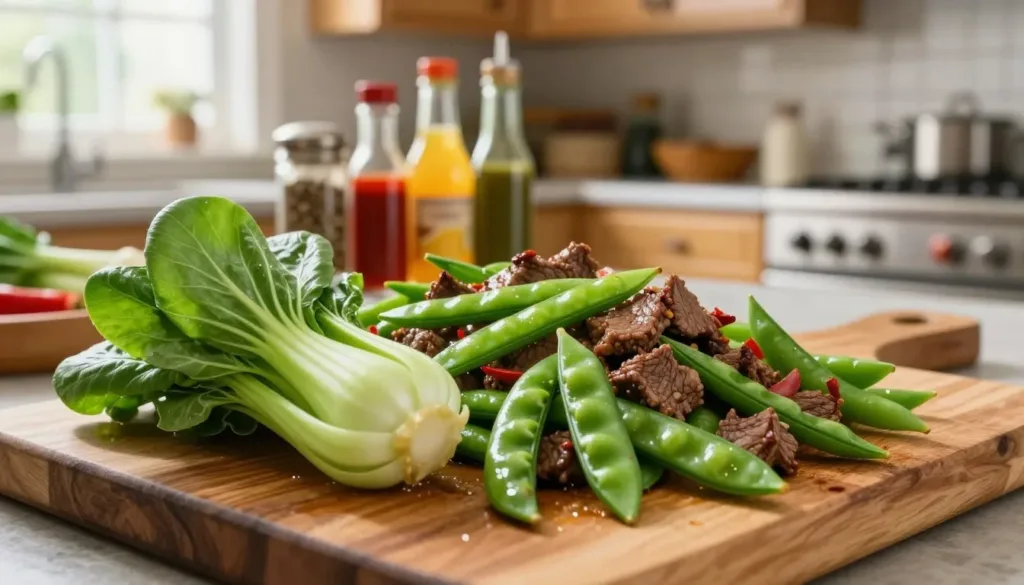
Bean sprouts and Chinese chives need no precooking and cook in 30 seconds to 1 minute, while carrots and broccoli need blanching first. Harder vegetables go in first, and leafy ones go in last. You can make beef stir fry with vegetables by adding the dense ones first and the leafy ones last.
| Vegetable | Cooking Time in the Wok | Prep Before Cooking |
|---|---|---|
| Bean sprouts | 30 seconds to 1 minute | None |
| Chinese chives | 30 seconds to 1 minute | None |
| Carrots | Cook after blanching | Blanch 30 seconds to 1 minute |
| Broccoli | Cook after blanching | Blanch 30 seconds to 1 minute |
| Mushrooms | 15 seconds | Slice |
| Snap peas | 20 seconds | Trim the ends |
| Bok choy | 20 seconds | Separate leaves from stems |
Mushrooms go in for 15 seconds before the snap peas and bok choy, which cook for another 20 seconds. Carrots and broccoli may need blanching first, since dense vegetables stay firm in a fast fry.
A few broccoli florets left raw keep the whole stir fry hard. Blanch them for 30 seconds to 1 minute, then drain them before they enter the wok. Cut every vegetable to a similar size so the whole wok cooks in the same time.
Serving Beef Stir Fry With Rice and Sides
Serve the stir fry over steamed white rice, since the sauce is generous enough to soak into every grain. A bowl of rice makes this beef stir fry with rice into a full meal. Other bases work just as well when you want a change.
- Steamed white rice, the classic base for the sauce
- Egg fried rice for a heartier plate
- Cauliflower rice for a low-carb meal
- Sesame noodles tossed with a little sesame oil
- Garnish of sliced green onion and sesame seeds
Finish the plate with sliced green onion and sesame seeds so the top looks fresh. Keep the rice on one side and the beef and vegetables on the other, so the plate looks neat.
Spoon the sauce over the rice rather than pouring it across the whole plate, so each bite gets both.
Storing and Reheating Leftovers
Refrigerate leftover stir fry within 2 hours, using small, shallow containers so it cools quickly. Consume or freeze refrigerated leftovers within 4 days. Label each container with the date so you know when it was cooked.
The Two-Hour Rule for Leftovers
Discard perishable food that has been left out for more than 2 hours. When the air is above 90°F, the limit drops to 1 hour. The food-safety danger zone is between 40°F and 140°F, so move leftovers into the fridge quickly.
Reheating Leftovers Safely
Reheat leftovers to an internal temperature of 165°F, either in a wok or in a microwave. The cornstarch sauce turns thin when reheated, so add a splash of water or stock. For make-ahead batches, arrowroot can replace cornstarch 1:1, since it stays thick when reheated.
When you use a microwave, cover the food and rotate it partway through heating. Check the temperature in several spots after the microwave rests, since cold pockets can remain.
Common Mistakes That Make Beef Tough
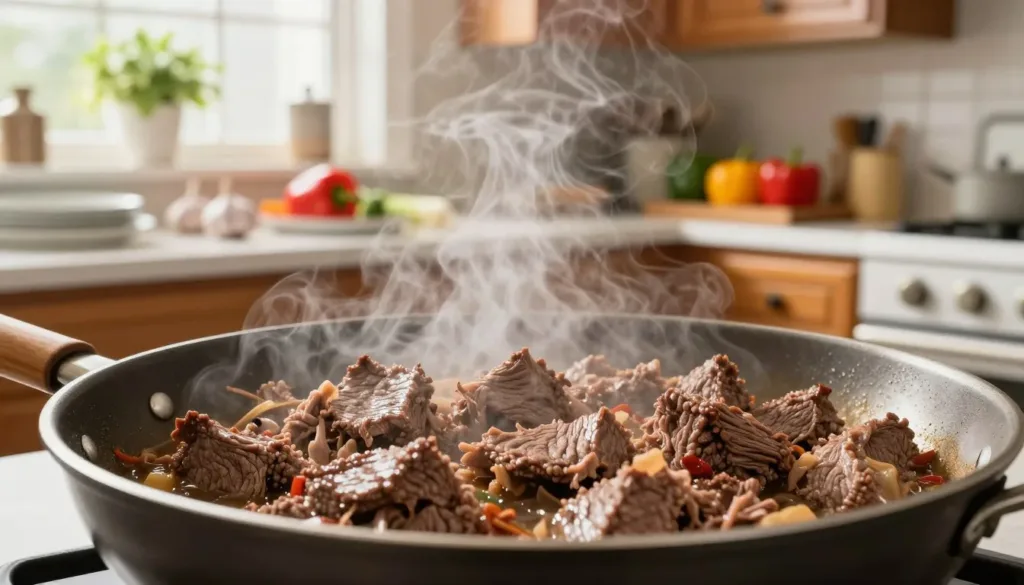
The most common mistake is cooking all the beef at once in one crowded pan, which steams it grey and chewy. Most cases of tough beef come from one of five mistakes, and each has a simple fix. Overcrowding the wok is the one that does the most damage.
- Slicing with the grain: cut across the grain instead.
- Leaving the beef in baking soda too long: rest it for 30 minutes to overnight, then rinse it.
- Crowding the wok: keep it no more than one-third full and sear in a single layer.
- Adding leafy greens too early: add them last and cook them for about 20 seconds.
- Starting with a cold wok: heat it until the oil shimmers before adding the beef.
Cook the beef in two batches when you double the recipe, since a crowded wok makes the beef chewy.
Conclusion
Tender beef stir fry comes down to three choices: a thin cut across the grain, a short baking soda rest, and a wok that is not crowded. Each choice takes little effort, and together they make the difference in every bite.
Make the sauce before you start the wok for your home cooking, so the seven steps run without a pause. Keep the bowls of beef, vegetables and sauce close to the stove.
FAQ
Do you need to rinse beef after velveting?
What is the secret ingredient to make beef tender?
How do Chinese make their beef so tender?
What is a simple marinade for beef stir-fry?
What sauce is best for beef stir-fry?
Ready to master more kitchen favorites? Explore all our tested chicken and beef recipes step by step: Read More
What Did You Think? Rate This Recipe
Absolutely Tender and Packed with Flavor!
I followed this guide step by step and the beef shank came out amazingly tender and full of flavor. The tips on maintaining moisture made all the difference. Highly recommended for anyone trying this cut for the first time!